Foundations of Gunsmithing and Armorer Essentials
Shop Safety Protocols
Safety is Non-Negotiable
Before you touch a single tool or firearm, we need to talk about safety. In gunsmithing, precision and care are everything. This focus begins with a strict, disciplined approach to how you handle firearms and your workspace. These aren't just suggestions; they are the bedrock of working safely and professionally.
Safety should always be your top priority when handling firearms.
The Four Universal Rules
Every responsible firearm owner knows the four universal safety rules. For a gunsmith, they are even more critical because you'll be handling firearms in various states of assembly. These rules must become instinct.
| Rule | Description |
|---|---|
| 1. Treat all guns as if they are always loaded. | Even if you know a firearm is unloaded, handle it as if it were loaded. This single habit prevents the vast majority of accidents. |
| 2. Never let the muzzle cover anything you are not willing to destroy. | This is about muzzle discipline. Always be aware of where the barrel is pointing, whether it's in your hands or on the bench. |
| 3. Keep your finger off the trigger until your sights are on the target. | On the workbench, this means keeping your finger and any tools away from the trigger and trigger guard unless you are specifically testing the trigger mechanism. |
| 4. Be sure of your target and what is beyond it. | In a shop, your "target" is a safe direction, like a clearing barrel or a designated wall. An accidental discharge must be contained safely. |
On the range, these rules are about firing a weapon. On your workbench, they're about handling, disassembling, and reassembling a mechanical object that happens to be a firearm. The context changes, but the principles remain absolute.
Setting Up a Safe Workspace
Your workbench is your operating room. It must be a , which means one thing above all else: no live ammunition. Not a single cartridge. Not in a box, not on a shelf, and certainly not on the bench itself. This is the cardinal rule of gunsmithing maintenance.
A clean, organized bench reduces the chance of mistakes. Have a designated spot for everything: tools, parts, and cleaning supplies. A cluttered space leads to lost parts and a distracted mind.
Before any firearm comes to your bench, it must be cleared. This isn't a quick glance. We use the Rule of Three for verification. This means you check, and then you check again, and then you check one more time to be absolutely certain the firearm is unloaded.
The Clearing Procedure (Rule of Three):
- Remove the source: Drop the magazine from the firearm.
- Open the action: Pull the slide or bolt to the rear to expose the chamber.
- Visually and physically inspect: Look into the chamber and magazine well to confirm they are empty. Then, use your finger to physically feel that both are empty. Repeat this entire three-step inspection process a total of three times.
This level of repetition might seem excessive, but it builds a powerful, life-saving habit. It combats complacency, which is the greatest danger in any workshop.
Gear Up for Safety
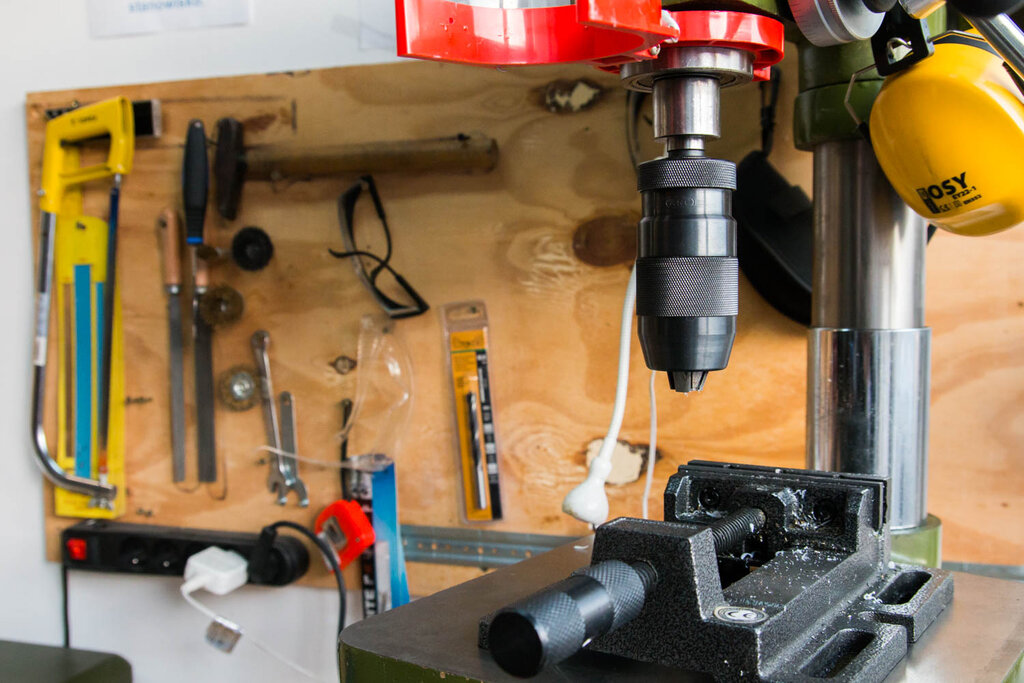
Even though you won't be firing the gun, Personal Protective Equipment (PPE) is mandatory. The two most important pieces of gear on your workbench are safety glasses and hearing protection.

Why? Small springs can launch themselves at high speed during disassembly. Cleaning solvents can splash. A stray piece of metal can fly off when you're filing or grinding. Your eyes are irreplaceable, so protect them at all times.
Hearing protection might seem less obvious, but some gunsmithing tasks, like hammering pins or testing certain parts, can be surprisingly loud. More importantly, it protects you in the highly unlikely but possible event of an accidental discharge. It’s better to have it on and not need it.
In the context of gunsmithing, what is the most critical characteristic of a "sterile workspace"?
The practice of verifying multiple times that a firearm is unloaded before working on it is known as the ________.