Foundations of Greek Humanities
Introduction to Ancient Greek Civilization
A Land of Islands and Mountains
Ancient Greece wasn't a single, unified country like modern nations. It was a collection of fiercely independent communities scattered across a rugged, sun-drenched landscape. The geography of the region is the key to understanding its culture.
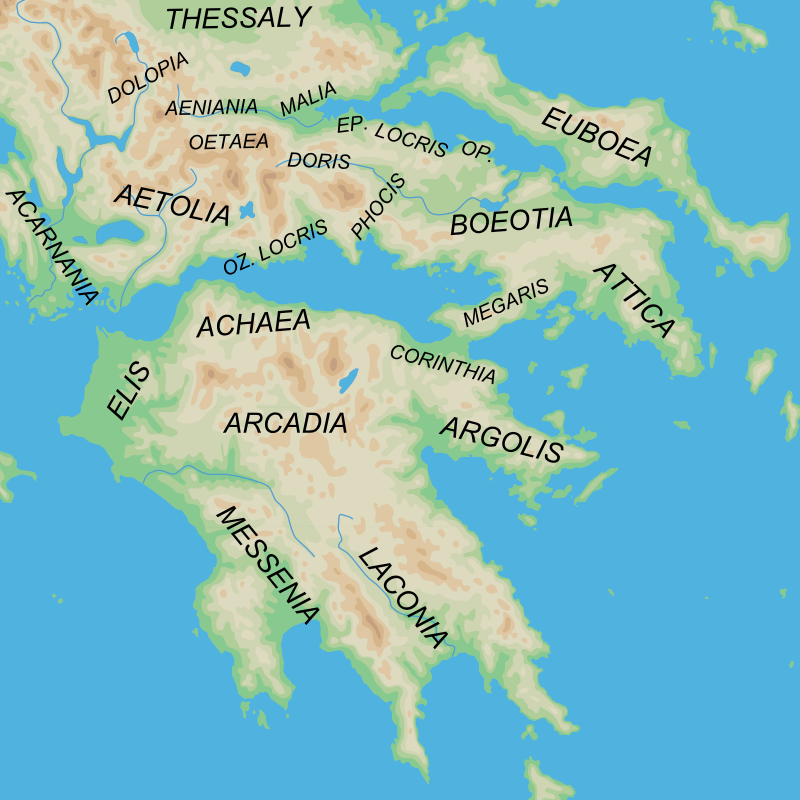
Steep mountains carved the mainland into isolated pockets, making overland travel and communication difficult. Instead of forming a vast, land-based empire, the Greeks turned to the sea. The Aegean Sea, dotted with thousands of islands, became their highway. It connected them to each other and to the wider world of the Mediterranean.
This unique geography encouraged the development of small, independent city-states rather than a single, unified kingdom.
Each community, nestled in a valley or on an island, developed its own government, its own army, and its own identity. The sea provided them with fish, a means for trade, and an escape route for colonization when their populations grew too large for their limited farmland. This relationship with the sea shaped the Greeks into skilled sailors, merchants, and explorers.
The Rise of the Polis
Ancient Greek history is typically divided into several key periods, each with distinct characteristics.
| Period | Dates (Approx.) | Key Developments |
|---|---|---|
| Bronze Age | 3000-1100 BCE | Minoan and Mycenaean civilizations flourish. |
| Greek Dark Ages | 1100-800 BCE | Widespread collapse and decline; loss of writing. |
| Archaic Period | 800-480 BCE | Rise of the city-state (polis), return of writing, colonization. |
| Classical Period | 480-323 BCE | Golden age of Athens; Persian and Peloponnesian Wars. |
| Hellenistic Period | 323-31 BCE | Spread of Greek culture after Alexander the Great's conquests. |
During the Archaic Period, the most important political innovation in Greece emerged: the polis, or city-state. A polis was more than just a city. It was a community of citizens who governed themselves. It typically consisted of a fortified urban center built around a high point, or acropolis, and the surrounding farmland.
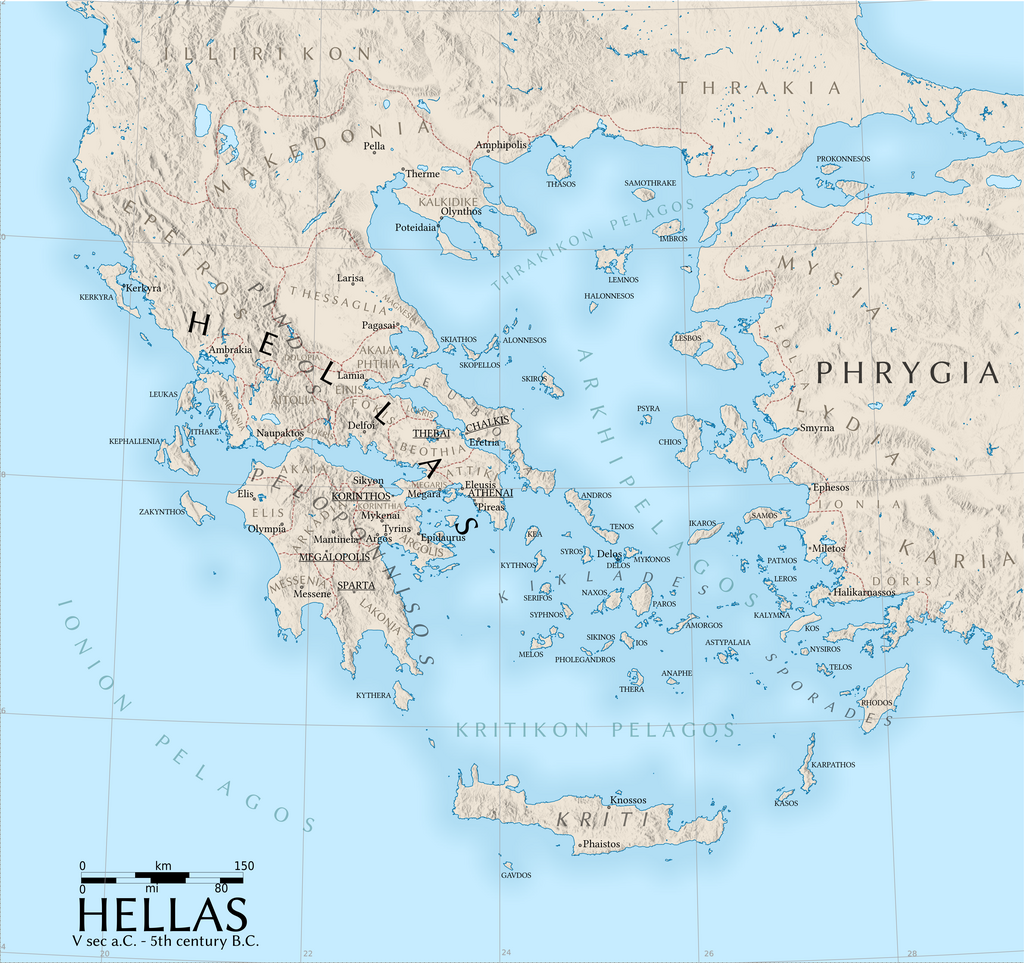
Citizenship was the core of the polis. It was a privilege, usually granted only to adult, land-owning men, that came with both rights and responsibilities, like voting and military service. While Athens is famous for developing democracy, other city-states had different systems, such as the rigid military oligarchy of Sparta. Despite their differences, these city-states shared a common language, religion, and culture, which set them apart from non-Greek "barbarians."
Trials by Fire
The Classical Period was defined by two monumental conflicts that shaped the course of Greek history.
First came the Persian Wars (499-449 BCE), a series of invasions by the massive Persian Empire.
The conflict began when Greek city-states in Ionia (modern-day Turkey) revolted against Persian rule, and Athens sent ships to aid them. In response, the Persian kings Darius and Xerxes launched huge invasions of mainland Greece. Against all odds, the smaller, disunited Greek city-states, led by Athens and Sparta, banded together to defend their freedom. Victories at Marathon, Salamis, and Plataea secured Greek independence and ushered in a period of unprecedented confidence and cultural achievement, particularly in Athens.
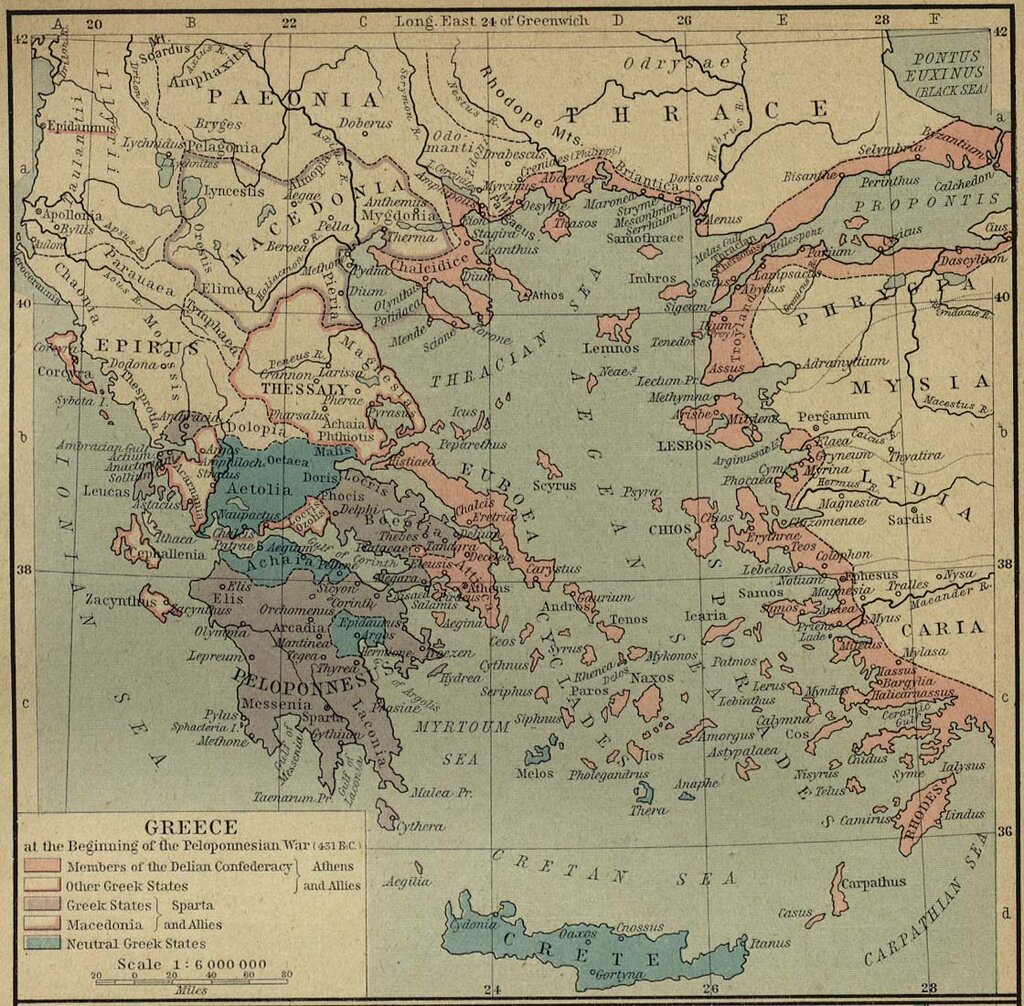
This golden age was not to last. The power Athens gained after the Persian Wars made other city-states nervous, especially its great rival, Sparta. This tension exploded into the Peloponnesian War (431-404 BCE), a long and devastating civil war that pitted Athens and its allies against Sparta and its allies.
The war dragged on for nearly three decades, devastating the Greek world. In the end, Sparta emerged victorious, but the conflict left all the city-states weakened and vulnerable. Their constant infighting made them an easy target for a new power rising in the north: Macedonia, led by Philip II and his son, Alexander the Great.
Now that we've covered the basic setting and history of ancient Greece, let's test your knowledge.
How did the mountainous and coastal geography of ancient Greece primarily influence its political structure?
What was the direct cause of the Persian Wars?