Foundations of Geometry
Points, Lines, and Planes
The Building Blocks of Space
Everything you see has a shape, a size, and a position. A house, a soccer ball, even a single letter on this screen. Geometry is the study of these properties. And it all starts with three simple ideas that are so fundamental we can't even define them using other terms. We just have to accept them as they are. These are the atoms of geometry: points, lines, and planes.
Point
noun
A specific location in space. It has no size, no width, no length, and no depth. It is represented by a dot.
Think of a point as a pinprick on a piece of paper. It just marks a spot. We usually label points with capital letters, like Point A or Point P.
Line
noun
A straight path that extends infinitely in both directions. It has length but no width or depth. It is made up of an infinite number of points.
A line is like a perfectly straight road that never ends. Any two points can define a unique line. We can name a line by any two points on it, like line , or with a single lowercase letter, like line .
Plane
noun
A perfectly flat surface that extends infinitely in all directions. It has length and width but no depth.
Imagine a sheet of paper that goes on forever. That’s a plane. It’s a two-dimensional surface. We often draw planes as parallelograms to give them a sense of perspective. A plane can be defined by any three points that aren't on the same line.
How They Relate
These three elements don't just exist on their own. They interact in specific, predictable ways. Understanding their relationships is the first step in building more complex geometric shapes and ideas.
| Relationship | Description | Visual Example |
|---|---|---|
| Two points | Determine exactly one line. | A straight line drawn through two dots. |
| Two lines | Can intersect at exactly one point. | The letter 'X' is formed by two intersecting lines. |
| Two planes | Can intersect to form exactly one line. | The corner of a room where two walls meet. |
| A line and a plane | Can intersect at exactly one point. | A pencil poking through a sheet of paper. |
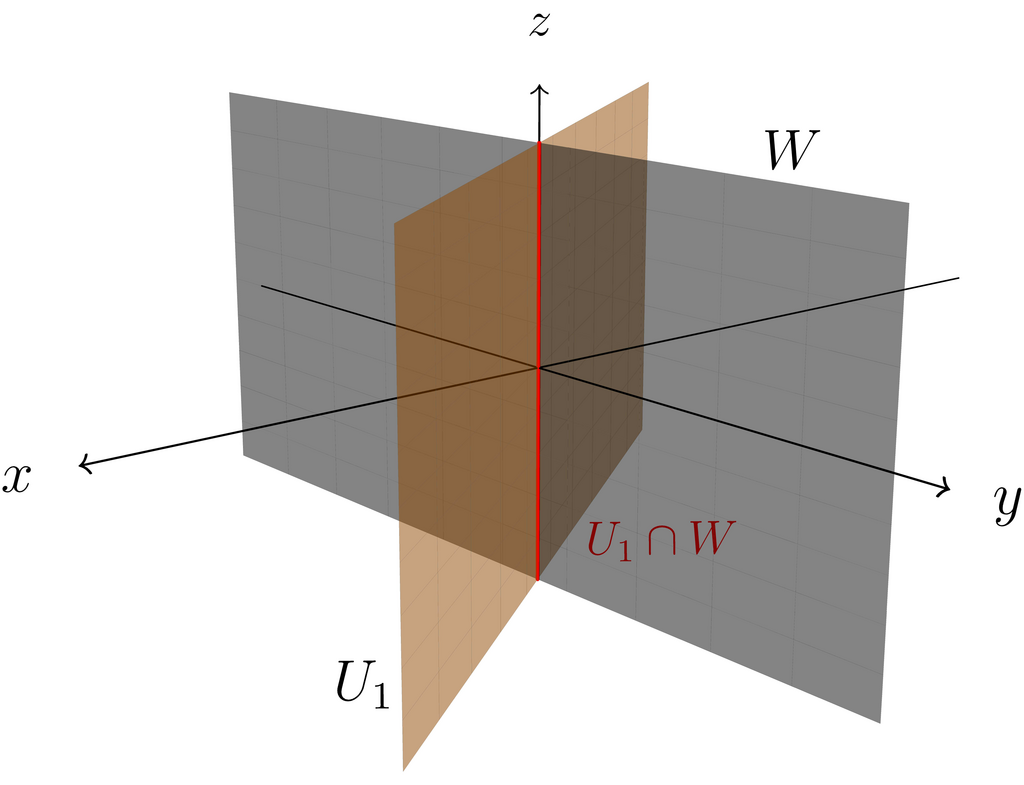
Of course, lines and planes don't always have to intersect. A line can lie entirely within a plane, like a line drawn on a piece of paper. Two lines on the same plane might be parallel, meaning they never cross. Two planes could also be parallel, like the floor and ceiling of a room.
On the Same Page
Sometimes points and lines group together in special ways. We have specific terms to describe these situations, and they are crucial for understanding geometric proofs and constructions.
Points that lie on the same line are called collinear.
If you have three or more points and you can draw a single straight line that passes through all of them, they are collinear. If you can't, they are non-collinear.
A similar concept applies to planes.
Points or lines that lie on the same plane are called coplanar.
Any three points are always coplanar. If you have a fourth point, it might be on the same plane, or it might be outside of it. For example, three legs of a tripod always rest flat on the ground (a plane), but the camera on top is a fourth point that is not on that plane. If an object is not coplanar, it is three-dimensional.
These simple elements—points, lines, and planes—and their relationships are the foundation for everything else in geometry. From simple squares and circles to complex three-dimensional objects, it all begins here.
Let's check your understanding of these fundamental concepts.
What are the three fundamental, undefined terms that are the building blocks of geometry?
What is the minimum requirement to define a unique plane?