Foundations of Geography
Introduction to Geography
The Five Themes of Geography
Geography is more than memorizing countries and capitals. It's about understanding the world as a complex, interconnected system. To make sense of it all, geographers use five core themes as a kind of mental framework. These themes help us ask the right questions about why things are the way they are, and where they are.
Using the themes can help you better organize your learning about geography.
Let's break them down one by one.
Location, Place, and Interaction
The first three themes help us pinpoint and describe what a spot on the map is all about.
Location
noun
Where something is on Earth. Geographers talk about this in two ways: absolute and relative.
Absolute location is a precise, fixed point on the globe, usually expressed with coordinates like latitude and longitude. It's like a street address for the planet. Your phone's GPS uses absolute location to find you.
Relative location, on the other hand, describes a place by what's around it. If you say your house is "two blocks past the library, next to the park," you're giving its relative location. It's less precise but often more useful in everyday life.
Once you know where a place is, you can ask, what is it like?
That's the theme of Place. Every place has a unique set of characteristics that distinguish it from others. These can be physical features, like mountains, rivers, and climate. They can also be human features, like language, architecture, population density, and religious beliefs. The combination of these traits gives a place its character.
Location tells you where it is. Place tells you what it's like there.
Of course, people don't just live in a place; they interact with it. Human-Environment Interaction explores this two-way relationship. We adapt to our environment, like wearing coats in the winter. We depend on it for resources like water and food. And we modify it, sometimes dramatically, by building cities, damming rivers, and clearing forests.
Movement and Regions
The last two themes zoom out to look at how places are connected to each other.
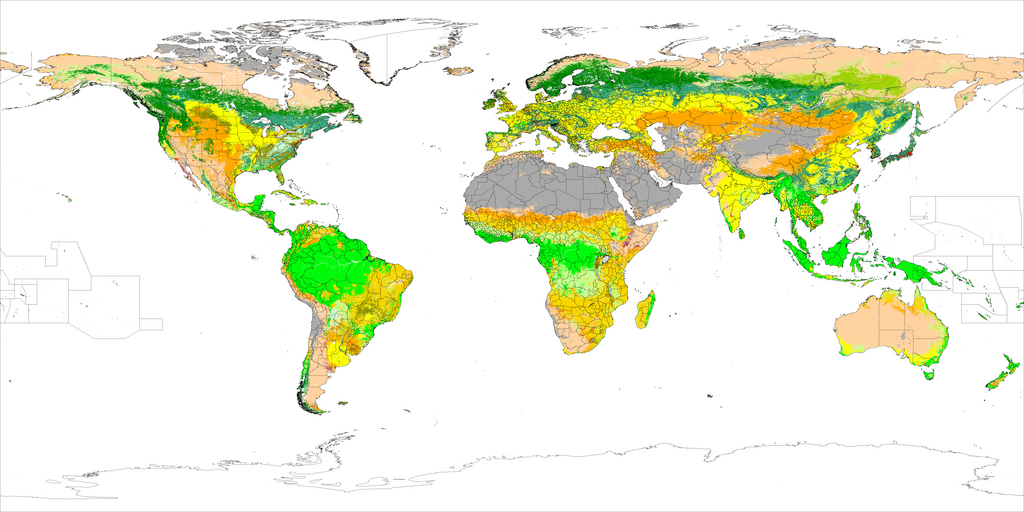
Movement refers to the travel of people, goods, and ideas across the planet. This can be as simple as your daily commute or as complex as international trade routes and the spread of information on the internet. Movement links places together and explains how they influence one another.
Finally, geographers use the theme of Region to simplify the world. A region is an area with one or more shared characteristics that set it apart from other areas. These characteristics can be:
- Formal: Defined by official boundaries, like countries, states, or cities.
- Functional: Organized around a central point or function, like the delivery area for a pizza shop or the broadcast area for a TV station.
- Vernacular: Defined by people's informal sense of place, like "The Midwest" or "Wine Country." These regions don't have exact borders, but people know what you mean when you say them.
Tools of the Trade
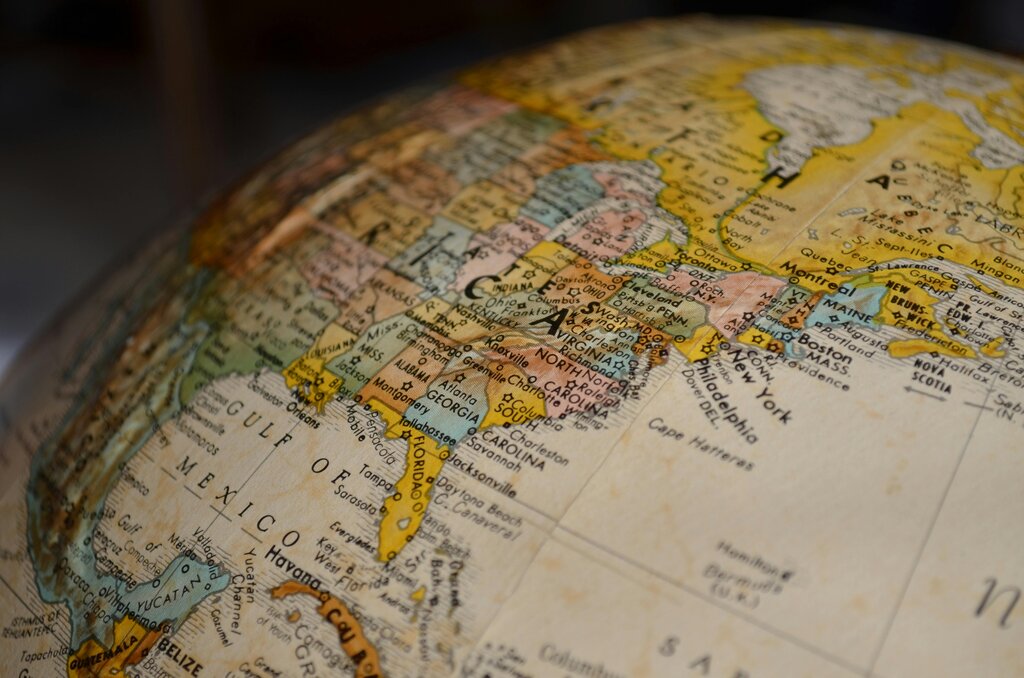
To study these themes, geographers rely on special tools. The most familiar are maps and globes. A globe is the most accurate representation of the Earth because it's a sphere, just like our planet. It shows the true shapes, sizes, and distances of landmasses and oceans.
However, globes are bulky. Maps are flat, portable, and can show incredible detail for a small area. The trade-off is that all flat maps distort reality in some way. It's impossible to perfectly project a round surface onto a flat one without stretching, shrinking, or skewing something.
In the modern era, geography has gone digital with Geographic Information Systems (GIS). Think of GIS as smart maps. A GIS is a computer system that captures, stores, checks, and displays data related to positions on Earth's surface.
Instead of a single flat map, a GIS can layer different kinds of information on top of each other. You could start with a base map of a city, then add layers showing streets, property lines, population density, and flood zones. By combining these layers, planners can make better decisions about where to build a new school or how to plan an evacuation route.
Ready to check your understanding of these core concepts?
The statement "My office is downtown, just a block away from the main post office," describes which geographic concept?
Describing a town by its unique climate, architecture, and the primary language spoken by its residents is an example of which theme?
These themes and tools are the foundation for exploring our world. They give us a way to organize information and see the hidden connections that shape everything from our daily lives to global events.