Foundations of Formal Logic
Introduction to Formal Logic
What Is Formal Logic?
Formal logic is the study of how arguments are structured. It's less about what you're arguing and more about how you're putting the pieces together. Think of it like a blueprint for reasoning. An architect doesn't need to know the color of the paint or the type of furniture to know if a house's structure is sound. They just look at the blueprint.
In the same way, formal logic uses symbols to strip away the content of an argument and look at its skeleton. This allows us to see if the conclusion truly follows from the premises, regardless of whether the statements are about cats, planets, or numbers.
Logic focuses on the structure of an argument to determine its validity, not the truth of its content.
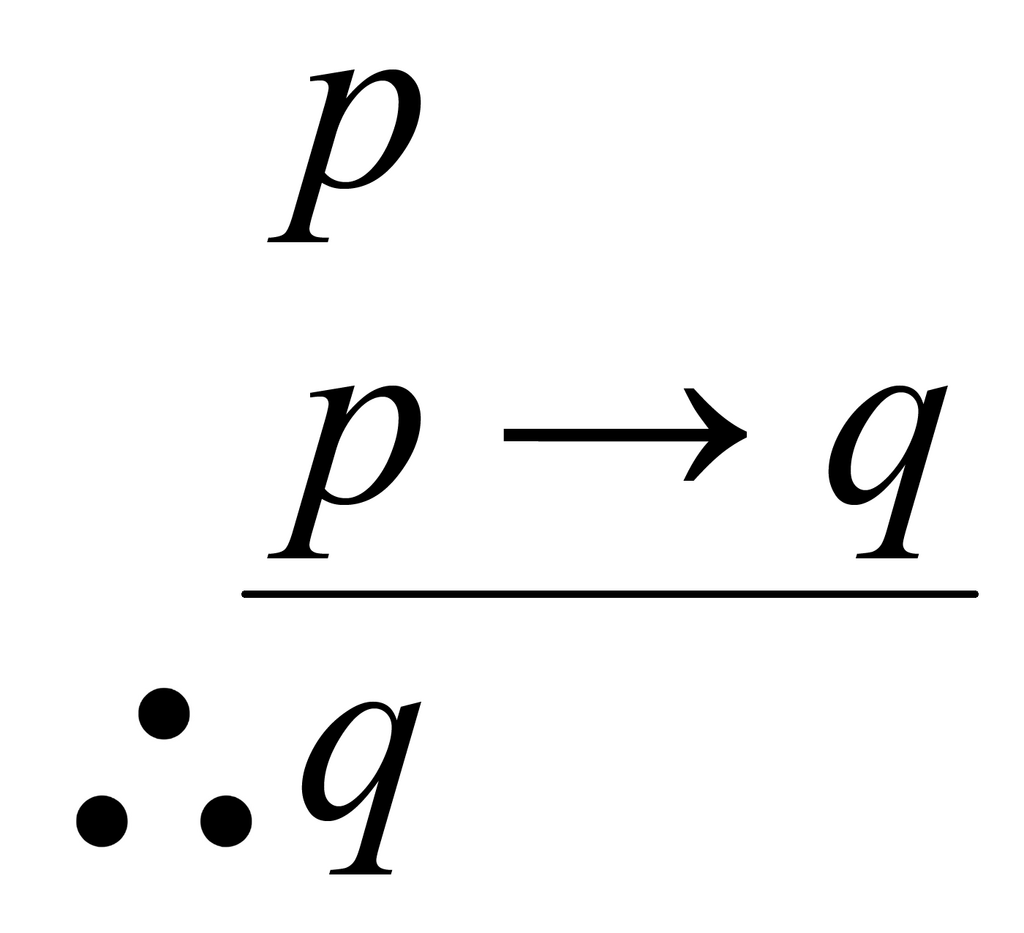
For example, consider this structure:
- If A is true, then B is true.
- A is true.
- Therefore, B is true.
This structure is logically valid. It doesn't matter what A and B represent. If the first two statements are true, the third one must be. This focus on form is what makes formal logic a powerful tool for clear thinking.
Formal vs. Informal Logic
When people talk about logic in everyday life, they're often referring to informal logic. This is the kind of reasoning you use when debating with a friend, reading an opinion piece, or listening to a political speech. It's messy, dependent on context, and deals with the persuasiveness of arguments in natural language.
Formal logic is different. It's precise, mathematical, and abstract. It swaps out ambiguous words for symbols and well-defined rules to achieve certainty.
| Feature | Formal Logic | Informal Logic |
|---|---|---|
| Language | Symbolic & mathematical | Natural language (e.g., English) |
| Goal | Validity & proof | Persuasion & soundness |
| Context | Abstract & universal | Highly context-dependent |
| Example | A mathematical proof | A courtroom argument |
Where Logic Shows Up
Formal logic isn't just an academic exercise; it's the foundation for several major fields.
In philosophy, it's used to analyze complex arguments about ethics, knowledge, and reality. It helps philosophers build sound arguments and spot flaws in the reasoning of others.
In mathematics, logic is the bedrock of proof. Every theorem you've ever seen is built upon a chain of logical deductions that start from a basic set of assumptions, or axioms.
In computer science, logic is everywhere. The physical circuits inside a computer chip are made of logic gates, which perform basic operations like AND, OR, and NOT. Programming languages also rely heavily on logic to control how a program behaves using conditional statements like if... then... else.
Two Key Flavors of Logic
There are many types of formal logic, but two of the most fundamental are propositional logic and predicate logic.
Propositional logic, sometimes called sentential logic, deals with simple statements, or propositions. A proposition is just a statement that can be either true or false, like "The sky is blue" or "It is raining." This type of logic combines these simple statements using logical connectors like "and," "or," and "if...then..." to form more complex arguments.
For example, if P stands for "It is raining" and Q stands for "The ground is wet," propositional logic can analyze the structure of the argument "If P, then Q."
Predicate logic is more powerful. It can look inside propositions to analyze their components. It deals with objects, their properties, and the relationships between them. Predicate logic introduces concepts like variables (x, y, z) and quantifiers, such as "all" () and "some" ().
This lets us analyze statements like "All humans are mortal." In propositional logic, this is just a single statement, P. But in predicate logic, we can break it down to talk about the property of being human, the property of being mortal, and how the group of all humans relates to the group of all mortals.
Think of propositional logic as the basic arithmetic of reasoning, while predicate logic is more like the algebra.
With these foundations, you can begin to see how arguments are built and evaluated with precision.