Foundations of Financial Trading
Market Basics
What is a Market?
At its heart, trading is simply the act of buying and selling. In financial markets, what's being bought and sold are financial instruments like stocks, bonds, or currencies. The goal is usually to profit from changes in their prices. Think of it like a massive, global marketplace where the goods are shares in a company or barrels of oil, instead of fruits and vegetables.
Asset
noun
A resource with economic value that an individual, corporation, or country owns or controls with the expectation that it will provide a future benefit.
The Players in the Game
Financial markets aren't just a chaotic jumble of transactions. There are distinct groups of participants, each with a different role.
Individual Investors: This is likely you. Often called retail investors, these are everyday people buying and selling assets for their personal accounts. They might be saving for retirement, a down payment on a house, or simply trying to grow their wealth.
Institutional Investors: These are the big players. Think of pension funds, mutual funds, insurance companies, and hedge funds. They manage huge pools of money on behalf of others and their large trades can significantly move market prices.
Market Makers: These are firms or individuals that provide liquidity to the market. They stand ready to buy and sell a particular asset at publicly quoted prices. By doing so, they ensure there's always someone to trade with, making it easier for individuals and institutions to execute their orders smoothly.
Where Trading Happens
When a company wants to raise money, it can sell ownership stakes, or stocks, to the public for the very first time. This initial sale happens on the primary market. The most common example of this is an Initial Public Offering, or IPO.
In an IPO, a company sells its shares directly to investors, and the money from that sale goes straight to the company to fund its growth, pay off debt, or expand operations.
But what happens after the IPO? Once those shares are in the hands of the public, they can be bought and sold among investors. This is where the secondary market comes in. It's where the vast majority of trading occurs. When you hear news anchors talk about "the stock market," they're almost always referring to the secondary market.
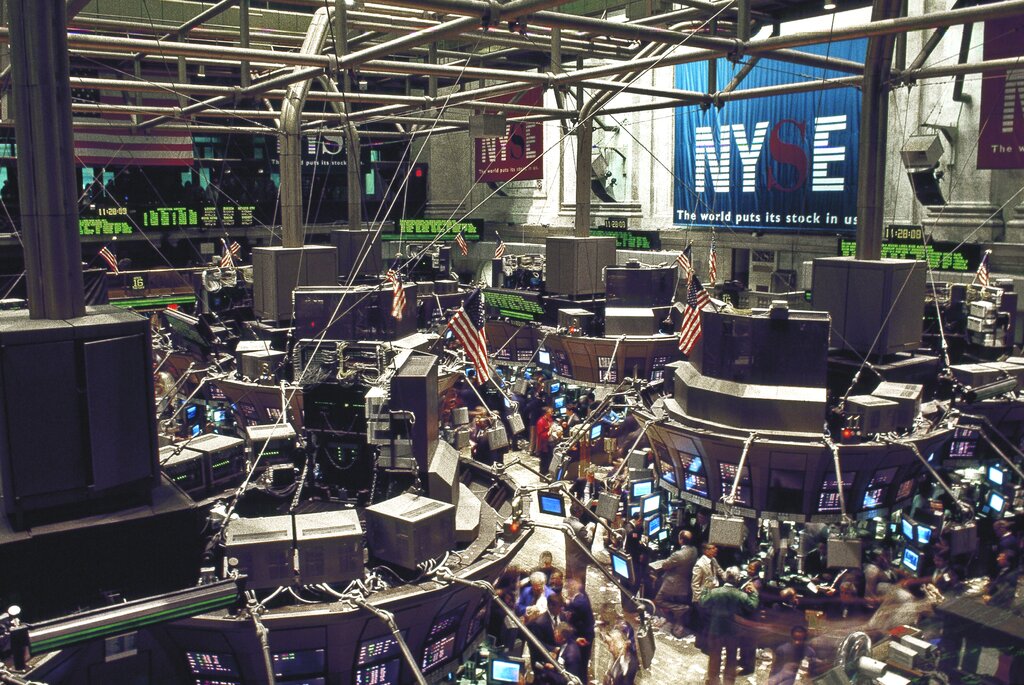
Secondary markets themselves come in two main flavors: exchanges and over-the-counter (OTC) markets.
An exchange is a centralized, regulated marketplace. Think of the New York Stock Exchange (NYSE) or Nasdaq. All trades are routed through one central system, prices are public, and there are strict rules to ensure fairness and transparency.
An over-the-counter (OTC) market, on the other hand, is decentralized. Instead of a central location, trading occurs directly between two parties through a network of dealers. This market is often used for assets that aren't listed on major exchanges.
| Feature | Exchanges | Over-the-Counter (OTC) |
|---|---|---|
| Location | Centralized, physical or electronic | Decentralized network of dealers |
| Regulation | Highly regulated | Less regulated |
| Transparency | High (prices are public) | Low (prices are negotiated) |
| Examples | NYSE, Nasdaq | Foreign currencies, many bonds |
Now that you know the basic structure of the market, let's test your knowledge.