Foundations of Finance
Introduction to Finance
The Language of Money
Finance is the art and science of managing money. It's about how individuals, businesses, and governments get money, how they spend or invest it, and how they protect it. Think of it as the language that money speaks. Whether you're creating a personal budget or a corporation is deciding to build a new factory, the underlying principles are the same: making smart decisions with financial resources.
The field can be broken down into two main areas. Personal finance deals with your own money: budgeting, saving for a home, planning for retirement. Corporate finance, on the other hand, focuses on how companies manage their funds, from raising capital by issuing stock to deciding which projects are worth investing in.
A Dollar Today
One of the most fundamental ideas in all of finance is the time value of money. It’s the simple concept that a dollar today is worth more than a dollar tomorrow. Why? Because you could invest that dollar today and it would start earning interest. By tomorrow, or a year from now, you'd have more than a dollar.
Imagine someone offers you $100 today or $100 one year from now. You should always take the money today. Even if you just put it in a simple savings account earning 2% interest, in a year you’d have $102. That extra $2 is the time value of your money.
This concept is captured in a basic formula that calculates the future value (FV) of an investment:
Here’s what that means:
- PV is the Present Value, or the initial amount of money.
- r is the interest rate per period.
- n is the number of periods.
So, if you invest $100 (PV) at an annual interest rate of 5% (r) for one year (n), the future value is:
This principle is the bedrock for everything from calculating loan payments to valuing a company.
Where the Money Moves
Most of us don't lend our savings directly to a business owner who needs a loan. Instead, we use financial institutions. These are the intermediaries of the financial world, connecting those who have money (savers) with those who need it (borrowers).
The most common examples are banks and credit unions. When you deposit money into a savings account, the bank doesn't just let it sit there. It pools your money with deposits from others and lends it out to people who want to buy a house or to businesses looking to expand. In return for using your money, the bank pays you interest. This circulation of money is vital for economic growth, as it directs capital to where it can be used most productively.
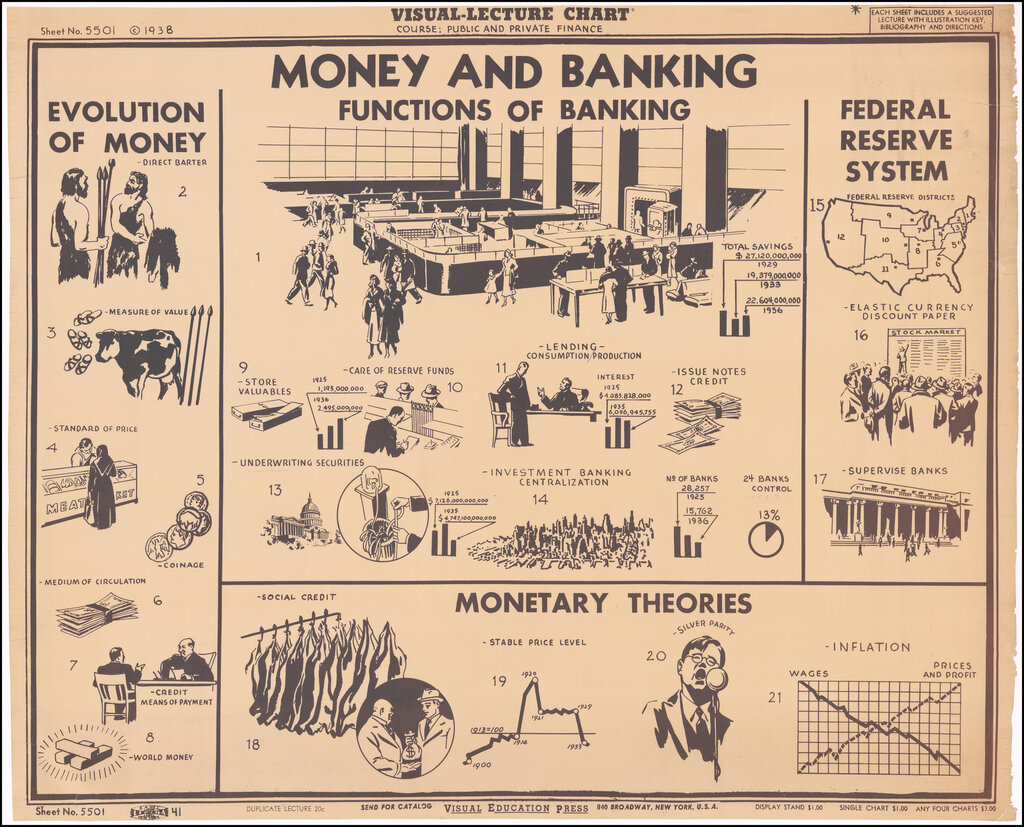
Other institutions, like investment banks, stock exchanges, and insurance companies, play different but equally important roles in helping money flow through the economy.
Making Smart Choices
At its core, finance is about making decisions under uncertainty. A few key principles guide this process. The first is the risk-return tradeoff. In simple terms, this means that to get a higher potential return, you generally have to accept higher risk.
A government bond is considered very safe, but it offers a low return. Investing in a brand-new tech startup could potentially make you a fortune, but there's also a very real chance it could fail and you could lose your entire investment. There’s no free lunch in finance; risk and potential reward go hand in hand.
Another guiding principle is diversification. You've probably heard the phrase, "Don't put all your eggs in one basket." That's diversification. By spreading your investments across different types of assets, you can reduce your overall risk. If one investment performs poorly, the others may do well, smoothing out your overall return.
Finally, all financial decisions revolve around cash flow. For a company, cash flow is the money moving in and out of the business. Positive cash flow means more money is coming in than going out, which is a sign of a healthy company. The same is true for your personal finances. Smart financial decision-making is often about maximizing positive cash flow and using it effectively.
What is the fundamental concept behind the "time value of money"?
According to the risk-return tradeoff, which of these investments would likely offer the highest potential return?