Foundations of English
Greetings and Introductions
Saying Hello
Let's start with the basics. The most common way to greet someone in English is simple.
Hello.
"Hello" works in almost any situation, whether you're talking to a friend or a stranger. For a more casual greeting, you can use "Hi."
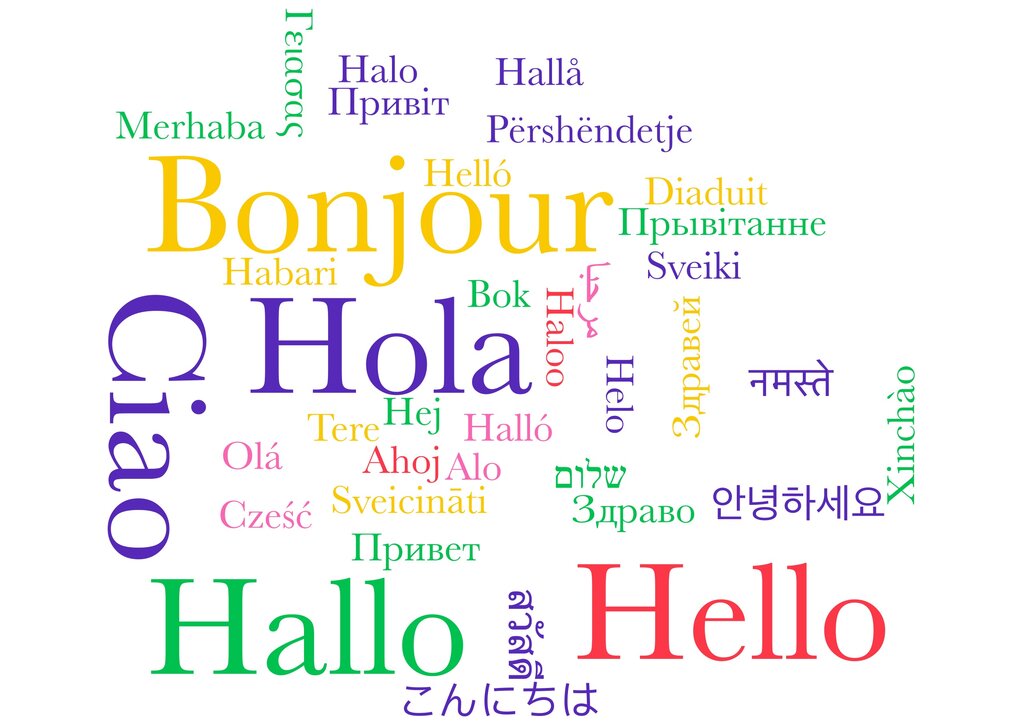
You can also greet people based on the time of day. These greetings are a bit more formal and are great for professional settings, like an office or a store.
- Good morning (from waking up until noon)
- Good afternoon (from noon until about 5 or 6 PM)
- Good evening (from 6 PM onwards)
What about "Good night"? We only use this when leaving someone or going to bed. It's a way to say goodbye, not hello.
Introducing Yourself
After you've said hello, it's time to introduce yourself. The most straightforward way is to say:
My name is... (your name)
For example, "My name is Sarah." A more casual way to say this is:
"I'm... (your name)"
So you could say, "I'm Sarah."
To ask for someone else's name, you simply say, "What's your name?" Let's see how that looks in a short conversation.
Alex: Hello. My name is Alex. What's your name?
Maria: Hi, Alex. I'm Maria.
Your First Conversation
Once you know each other's names, the next step is usually a polite phrase.
Nice to meet you.
The typical response is, "Nice to meet you, too" or simply, "You too."
Another very common question is "How are you?" This is often just a polite way of continuing the greeting. You don't need to give a long, detailed answer. Here are some standard replies:
| Question | Common Responses |
|---|---|
| How are you? | I'm fine, thanks. And you? |
| How are you doing? | I'm doing well, thank you. How about you? |
| How's it going? | Not bad. You? |
Notice how each response includes a question back to the other person. This is an important part of sounding friendly and keeping the conversation going.
Cultural Notes
In many English-speaking cultures, like the United States and the United Kingdom, it's common to make eye contact when you greet someone. This shows that you are engaged and confident. When meeting someone for the first time in a formal or business setting, people often shake hands. A firm, brief handshake is standard.
A friendly tone of voice is also key. Even if your pronunciation isn't perfect, a smile and a warm tone make a great impression.
Now, let's review the key phrases we've learned.
Ready to test your knowledge? Take this short quiz to see what you remember.
You see your friend at the grocery store in the afternoon. Which greeting is the most casual and common?
At 7 PM, you arrive at a restaurant for a business dinner. What is the most appropriate way to greet your colleagues?
Great job. With these simple phrases, you're ready to greet people and start basic conversations in English.