Foundations of Engineering Economics
Introduction to Engineering Economics
Beyond the Blueprints
Engineering is about solving problems. You design a bridge to cross a river, a circuit to power a device, or a process to purify water. But building the best solution isn't just about physics or chemistry. It's also about money. This is where engineering economics comes in. It's the practical field of using economic principles to evaluate engineering designs and projects.
Engineering economics is concerned with the monetary consequences (or) financial analysis of the projects, products and processes that engineers design.
Think of it this way: there might be a dozen ways to build that bridge. One design uses steel, another concrete. One is built quickly but requires more maintenance, while another costs more upfront but lasts for a century. Which one is the right choice? The answer often lies in the financial trade-offs. Engineering economics provides the tools to compare these options systematically, ensuring the final decision is not just technically sound, but also financially smart.
Decisions, Decisions
Every engineering project is a series of decisions. These choices aren't made in a vacuum. They are constrained by budgets, resources, and the need to generate value. An engineer might ask:
- Should we repair this old machine or buy a new one?
- Which of these three proposed materials is the most cost-effective for the product's lifespan?
- Is it worth investing more now in automation to save on labor costs later?
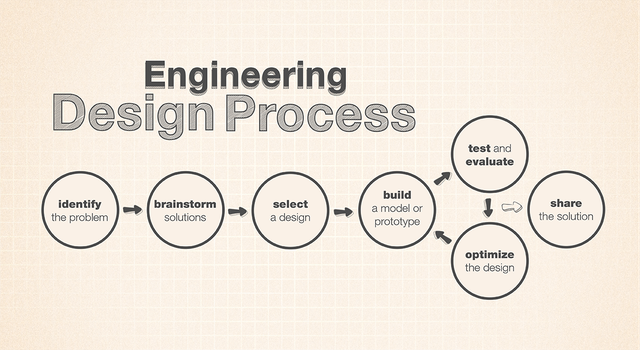
Answering these questions requires a blend of technical knowledge and financial analysis. Simply choosing the cheapest option upfront can lead to expensive problems down the line. For example, a low-cost pump might use more energy and break down frequently, costing more in the long run than a pricier, more efficient model. Engineering economics helps you see the whole picture.
The Value of Time
A core principle in this field is the time value of money. This is the simple but powerful idea that money available today is worth more than the same amount in the future. Why? Because money you have now can be invested and earn interest, growing into a larger sum over time.
A dollar today is worth more than a dollar tomorrow.
This concept is crucial for comparing costs and benefits that occur at different points in time. For instance, if you're evaluating a project that costs $100,000 today but promises to save $20,000 a year for the next 10 years, you can't just add up the savings to $200,000 and call it a day. You have to account for the time value of money to understand what those future savings are worth in today's dollars. The basic formula to find the Future Value (FV) from a Present Value (PV) is:
By using this and other related formulas, engineers can compare the long-term financial implications of different choices on an equal footing. This allows for a more accurate assessment of a project's profitability and viability.
Cost Estimation and Analysis
Before you can compare alternatives, you need to know what they cost. Cost estimation is a vital first step in any engineering economic analysis. This isn't just about the price of materials and labor. It also includes costs over the entire life cycle of a project:
- Initial Costs: Design, purchase, and installation.
- Operating Costs: Energy, labor, and routine maintenance.
- Disposal Costs: Decommissioning and cleanup at the end of its life.
| Cost Type | Example for a Manufacturing Robot |
|---|---|
| Initial Cost | Price of the robot, shipping, installation, software setup |
| Operating Cost | Electricity, yearly maintenance contract, replacement parts |
| Disposal Cost | Cost to remove the robot, potential scrap value |
Once costs are estimated, financial analysis techniques are used to evaluate and compare the alternatives. These methods, which we will explore in later sections, use the principles of the time value of money to provide clear metrics for decision-making. They help determine which project offers the best return on investment and aligns with the company's financial goals.
What is the primary goal of applying engineering economics to a project?
The principle of the "time value of money" is a core concept in engineering economics. What is the primary reason that money available at the present time is considered more valuable than the same amount in the future?
Ultimately, engineering economics is about making informed, justifiable decisions. It bridges the gap between technical design and business reality, ensuring that the solutions engineers create are not only innovative and functional but also economically sustainable.