Foundations of Educational Software
Introduction to Educational Software
What Is Educational Software?
At its core, educational software is any computer program designed specifically to help people learn. Think of it as a digital tool created with a teaching purpose in mind. This can range from a simple app that teaches toddlers the alphabet to a complex simulation that medical students use to practice surgery.
Educational Software
noun
A type of computer software designed to facilitate and support teaching and learning processes. It can be used by students to learn new concepts or by teachers to manage and deliver curriculum.
Unlike general-purpose software like a word processor, educational software is built around specific learning objectives. Its goal isn't just to help you complete a task, but to deepen your understanding of a subject. It serves as a bridge between a learner and a new concept, often making complex ideas more accessible and engaging.
A Quick Trip Through Time
Educational software isn't a new idea. Its roots go back to the 1960s with early experiments in computer-aided instruction (CAI) on large mainframe computers. Systems like PLATO (Programmed Logic for Automatic Teaching Operations) were pioneers, allowing students to learn at their own pace through text-based lessons on terminals.
The real boom came with the personal computer in the 1980s. Suddenly, computers were in schools and homes, creating a market for programs like The Oregon Trail and Reader Rabbit. These games cleverly disguised learning within an interactive and fun experience. The 1990s brought CD-ROMs, which added rich multimedia like video and audio, making learning even more dynamic.
With the rise of the internet in the 2000s, educational software moved online. This shift led to web-based learning platforms, collaborative tools, and the mobile apps we use today. The focus changed from standalone programs to connected, constantly updated learning ecosystems.
What's the Point?
Educational software has several key purposes. One of the biggest is to increase student engagement. By turning lessons into interactive games, challenges, or immersive stories, software can capture a learner's attention in ways a textbook often can't.
It transforms passive learning into an active process. Instead of just reading about a topic, students can experiment with it, test ideas, and see the immediate results of their actions.
Another major goal is personalization. We all learn differently and at different speeds. Educational software can adapt to an individual's needs, offering extra help on tricky subjects or providing more advanced challenges for those who are ready. This tailored approach ensures that no student is left behind or held back.
Finally, these tools are designed to support educators. They can automate administrative tasks like grading quizzes, help track student progress, and offer a vast library of resources for building lesson plans. This frees up teachers' time to focus on what they do best: teaching.
Part of a Bigger Picture
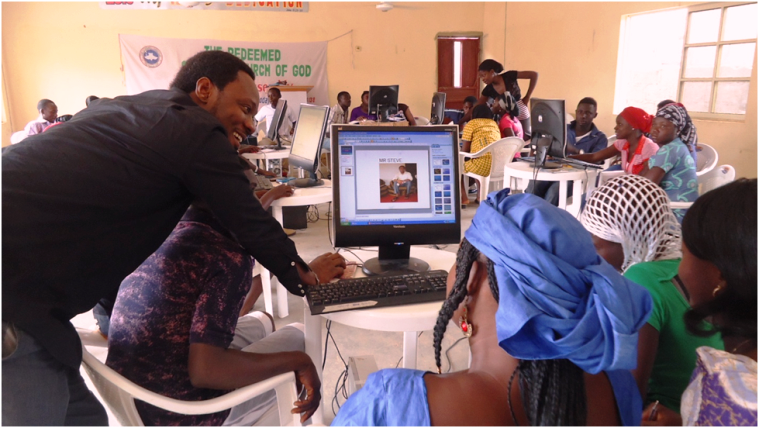
It's important to remember that educational software doesn't exist in a vacuum. It's part of a broader movement known as technology integration in education. This concept is about thoughtfully weaving digital tools into the fabric of the curriculum to enhance the learning process.
Educational software provides valuable insights into students’ participation, progress, and achievements.
Simply having laptops in a classroom isn't enough. Effective technology integration happens when educators strategically choose the right software to meet specific learning objectives. The goal is to use technology not for its own sake, but as a powerful tool to create richer, more effective, and more equitable learning experiences for everyone.