Foundations of Education Technology
Introduction to EdTech
What is Educational Technology?
At its core, educational technology, or EdTech, is about using technology to improve learning. It’s a broad field that goes far beyond just putting computers in classrooms. It involves the design, development, use, and evaluation of processes and resources for learning. Think of it as the intersection where teaching methods meet the tools of the modern world.
EdTech
noun
The practice of facilitating learning and improving performance by creating, using, and managing appropriate technological processes and resources.
This isn't just about the hardware like tablets and smartboards. It's also about the software, online platforms, and digital curricula that help students engage with material in new ways. The goal is to make education more effective, accessible, and personalized for everyone involved.
Effective technology integration in the classroom allows teachers to deliver interactive lessons, personalise learning, and provide students with engaging, flexible, and collaborative learning experiences.
A Brief History
EdTech didn't begin with the internet. Its roots stretch back much further. Early forms of educational technology were things we now consider low-tech, like the chalkboard in the 1800s or the overhead projector in the 1930s. These tools were revolutionary for their time, allowing teachers to share information with an entire class at once.
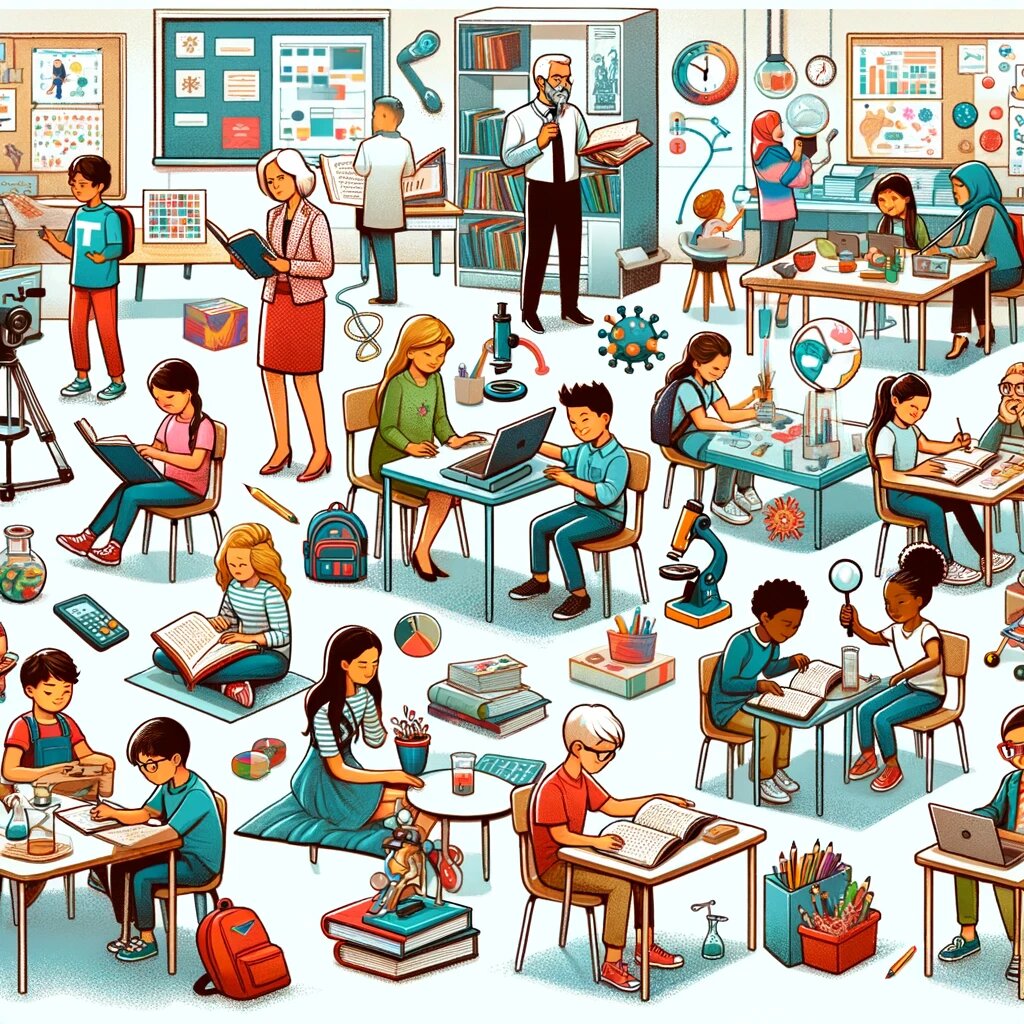
The 20th century brought radio and television into schools, offering lessons from afar. The real shift began with the personal computer in the 1980s, which introduced educational games and word processing. The rise of the internet in the 1990s and 2000s opened the floodgates, leading to online courses, digital libraries, and collaborative tools. Each step built on the last, moving from mass instruction to more individualized learning opportunities.
The Modern EdTech Landscape
Today, EdTech is a dynamic and rapidly evolving field. Several key trends are shaping the future of learning.
Artificial Intelligence (AI) is being used to create personalized learning paths, automate grading, and provide students with instant feedback. It acts like a digital tutor, adapting to each student's pace and style.
Gamification incorporates game-like elements such as points, badges, and leaderboards into learning to boost motivation and engagement.
Immersive Learning with virtual reality (VR) and augmented reality (AR) allows students to take virtual field trips, conduct complex science experiments, or explore historical sites from their classroom.
These innovations are pushing the boundaries of what's possible in education, making learning more interactive and tailored to individual needs.
The EdTech Ecosystem
EdTech isn't just one thing; it's a complex system with many interacting parts and players. Understanding these stakeholders is key to seeing the bigger picture.
Each group plays a vital role. Students and learners are the ultimate consumers. Educators and institutions (like schools and universities) are the facilitators who integrate these tools into their teaching. EdTech companies are the creators, building the hardware and software. Finally, policymakers and governments often shape the landscape through funding, regulations, and educational standards. A successful EdTech environment depends on all these groups working together effectively.
Ready to check your understanding? Let's see what you've learned about the fundamentals of EdTech.
What is the fundamental goal of Educational Technology (EdTech)?
True or False: The history of educational technology began with the invention of the personal computer in the 1980s.
This foundation gives us a starting point for exploring how technology is actively shaping the way we learn and teach.