Foundations of Dog Training
Understanding Canine Behavior
Reading Your Dog
Dogs don't use words, but they are constantly talking. They communicate through a rich and nuanced language made up of body postures, facial expressions, and sounds. Learning to interpret this language is the first and most crucial step in building a strong, trusting relationship with your canine companion. It allows you to understand their needs, anticipate their reactions, and respond in a way that makes them feel safe and understood.
Dogs communicate through a combination of vocalizations, body language, and scent.
Before you can teach, you must learn to listen. This isn't about commands or tricks. It's about perception and empathy. By paying close attention to your dog's signals, you can move from simply coexisting to truly communicating.
More Than a Wagging Tail
The most famous dog signal, the tail wag, is also one of the most misunderstood. A wagging tail doesn't always mean a happy dog. It simply indicates emotional arousal. The key is to look at the rest of the tail's story: its height and the speed of the wag.
A relaxed, neutral tail, held at about back level, suggests a calm dog. When the tail rises higher, it can signal increased alertness or confidence. If it goes up and becomes stiff and still, it might be a sign of a potential threat. A tail tucked between the legs, on the other hand, is a clear sign of fear, anxiety, or submission.
| Tail Position & Motion | Possible Meaning |
|---|---|
| Held high and stiff | Alertness, assertiveness, or challenge |
| Broad, sweeping wag | Friendly, happy, relaxed |
| Tucked between legs | Fear, submission, stress |
| Low, slow wag | Insecurity, uncertainty |
| Fast, high-frequency wag | High arousal, excitement, or nervousness |
Ears are another critical indicator. When a dog's ears are forward, they're typically engaged and interested. When they're pinned back flat against the head, it's often a sign of fear or submission. Relaxed ears sit in a neutral, natural position for the breed.
Don't forget the eyes and mouth. A relaxed dog will have soft eyes, with normal-sized pupils and a loose jaw, perhaps with its mouth slightly open. A stressed or fearful dog might show the whites of its eyes (known as "whale eye"), have dilated pupils, and a tightly closed mouth. Yawning and lip-licking, when not related to being tired or hungry, are common signs of stress.
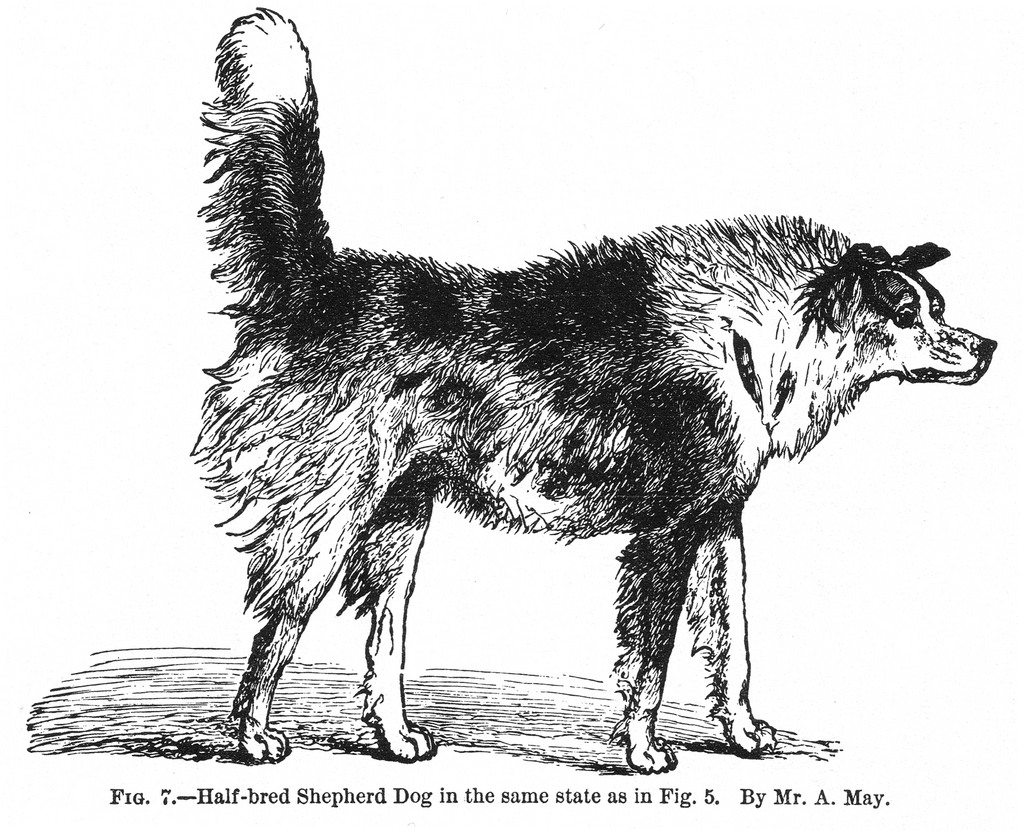
These signals rarely happen in isolation. A truly happy dog might have a relaxed body, soft eyes, and a broad, sweeping tail wag. A fearful dog might have a tucked tail, pinned-back ears, and be licking its lips. Reading the whole dog is key.
The Sound of a Dog
Beyond body language, dogs use a variety of sounds to express themselves. Barking is the most obvious, but like the tail wag, it's not a one-size-fits-all signal. The pitch, frequency, and context of a bark change its meaning.
Vocalization
noun
The act of producing sound with the voice, used as a form of communication.
A series of high-pitched barks can signal excitement, like when you grab the leash for a walk. A deep, low-pitched bark might be a warning to a stranger approaching the house. Rapid, continuous barking often indicates urgency or alarm, while a single, sharp bark can be a sign of surprise.
Growling is an essential piece of communication that should never be punished. A growl is your dog's way of saying, "I'm uncomfortable with this situation. Please stop." It's a clear warning. By punishing the growl, you might teach your dog to skip the warning and go straight to a bite.
Other sounds, like whines and whimpers, can signal a need for attention, excitement, or pain. A soft groan or sigh can be a sign of contentment as your dog settles down for a nap. Learning the different sounds your dog makes will add another layer to your understanding of their emotional state.
Stress vs. Relaxation
Recognizing when your dog is stressed is one of the most important skills you can develop. Stressful situations can lead to unwanted behaviors, and long-term stress can affect a dog's health. Look for clusters of signals.
A single yawn might just mean a dog is tired. But a yawn combined with pinned-back ears and a tucked tail tells a story of anxiety.
Common signs of stress include:
- Panting when not hot or thirsty
- Lip licking and yawning out of context
- Whale eye, where the whites of the eyes are visible
- Pinned-back ears
- A tucked tail
- A tense, rigid body posture
- Shaking or trembling
In contrast, a relaxed and comfortable dog will show opposite signs:
- A loose, wiggly body
- A soft mouth, sometimes slightly open
- Soft, relaxed eyes without a hard stare
- Ears in a neutral position
- A gently wagging or neutral tail
By observing these cues, you can assess how your dog is feeling in any given situation. This allows you to remove them from stressful environments before they become overwhelmed, helping them see you as a safe and reliable leader.
Now, let's test your ability to interpret some of these signals.
A wagging tail is a universal sign that a dog is happy and friendly.
You approach a dog that has its ears pinned back flat against its head, its tail tucked between its legs, and it's licking its lips. What is this dog most likely feeling?
Becoming fluent in dog language takes time and practice. Every dog is an individual, but these foundational principles will give you the tools to start understanding your own dog on a deeper level.