Foundations of Digital Marketing
Digital Marketing Basics
What Is Digital Marketing?
Simply put, digital marketing is any marketing effort that uses an electronic device or the internet. It's how businesses of all sizes connect with their customers where they spend a lot of their time: online.
Unlike traditional marketing (think billboards or magazine ads), digital marketing allows for real-time interaction and feedback. It's not just about selling; it's about building a relationship with your audience through valuable and engaging content.
Digital marketing is the art and science of using online technologies to communicate a brand’s value, promote its offerings, and nurture relationships with customers.
Digital vs. Traditional Marketing
The biggest difference between digital and traditional marketing is the medium. Traditional marketing uses channels like print, broadcast, and direct mail. Digital marketing uses online channels like search engines, social media, and email.
This difference leads to several key advantages for digital. It's often more cost-effective, its results are easier to measure, and it allows for a level of audience targeting that's impossible with traditional methods.
| Feature | Traditional Marketing | Digital Marketing |
|---|---|---|
| Communication | One-way (broadcast) | Two-way (interactive) |
| Targeting | Broad, demographic-based | Highly specific, behavior-based |
| Measurement | Difficult, often estimated | Precise, real-time data |
| Cost | Often high with less control | More flexible and scalable budgets |
Key Channels to Know
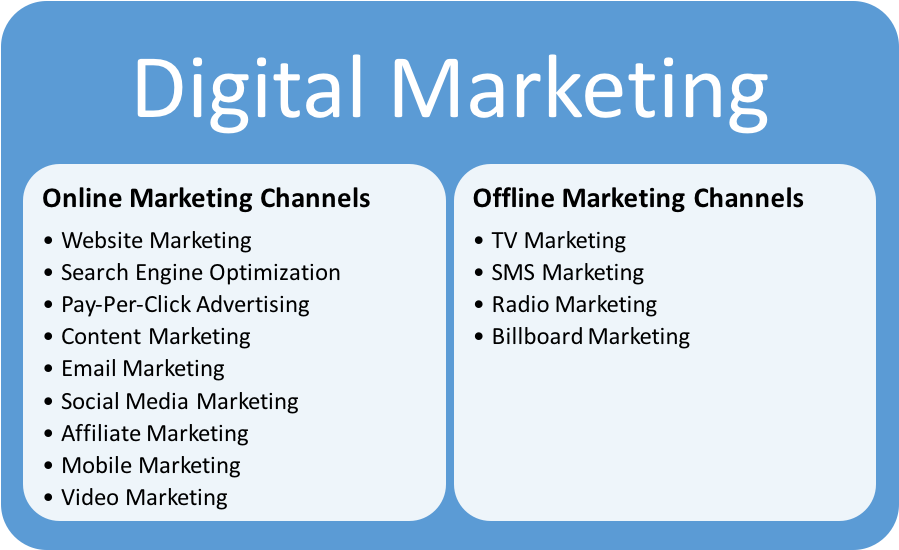
A digital marketer has a diverse toolkit. While there are many channels, most strategies are built around a few core pillars:
-
Search Engine Optimization (SEO): The process of optimizing your website to rank higher in search engine results, increasing organic (free) traffic.
-
Content Marketing: Creating and sharing valuable free content—like blog posts, videos, and ebooks—to attract and convert prospects into customers.
-
Social Media Marketing: Using social media platforms like Facebook, Instagram, and LinkedIn to build your brand, drive traffic, and generate sales.
-
Pay-Per-Click (PPC) Advertising: Placing ads on search engines and other websites. You pay a fee each time someone clicks on one of your ads, hence the name.
-
Email Marketing: Communicating with your audience through email. It's used to promote content, share discounts, and direct people toward your website.
Each channel serves a different purpose, but they work best when used together.
Building Your Strategy
A successful digital marketing strategy isn't just about being active on every channel. It's about making deliberate choices to reach your business goals. It starts with a solid foundation.
The most important part of this process is understanding who you're trying to reach. Everything else—from the content you create to the channels you use—flows from knowing your audience.
To excel in digital marketing, the first step is to truly understand your audience.
Let's check what you've learned about the fundamentals of digital marketing.
What is the primary characteristic that defines digital marketing?
A company wants to improve its visibility in Google search results without paying for ads. Which digital marketing pillar should be their primary focus?
With these basics in mind, you're ready to explore how each of these digital marketing channels works in more detail.