Foundations of Digital Marketing
Digital Marketing Basics
What Is Digital Marketing?
Digital marketing is any marketing effort that uses an electronic device or the internet. Businesses leverage digital channels such as search engines, social media, email, and their websites to connect with current and prospective customers.
Digital Marketing is the process of promoting products, services, and personal brands using the internet and digital technologies.
Think about the last time you wanted to buy something. Did you see an ad on TV, or did you search for it online? Maybe you saw a post from a friend on social media or got an email about a sale. If you did any of those things, you've seen digital marketing in action.
In today's connected world, being online is essential for almost any business. It’s where the customers are. Digital marketing allows companies to reach a massive audience in a way that is both measurable and cost-effective. It's not just about selling; it's about building a brand, creating a community, and providing value to your audience.
Digital vs. Traditional
Traditional marketing includes things like print ads in magazines, commercials on TV, billboards, and direct mail. While still useful in some cases, it has key differences from its digital counterpart.
| Feature | Traditional Marketing | Digital Marketing |
|---|---|---|
| Audience | Broad, general audience | Highly specific, targeted audience |
| Interaction | One-way communication | Two-way, interactive communication |
| Measurement | Difficult to measure results precisely | Highly measurable with analytics |
| Cost | Often expensive with high upfront costs | More cost-effective and flexible budgets |
| Speed | Slow to launch and change | Fast to launch and easy to adjust |
With a magazine ad, you're sending a message to every single reader, hoping some of them are interested. With a digital ad, you can show it specifically to people who have searched for your product, live in a certain city, or have specific hobbies.
More importantly, digital marketing allows you to track your results. You can see exactly how many people clicked on your ad and how many made a purchase. This data is invaluable for improving your strategy over time.
The Main Channels
A good digital marketing strategy usually involves a mix of different channels, all working together. Each one has a unique role to play.
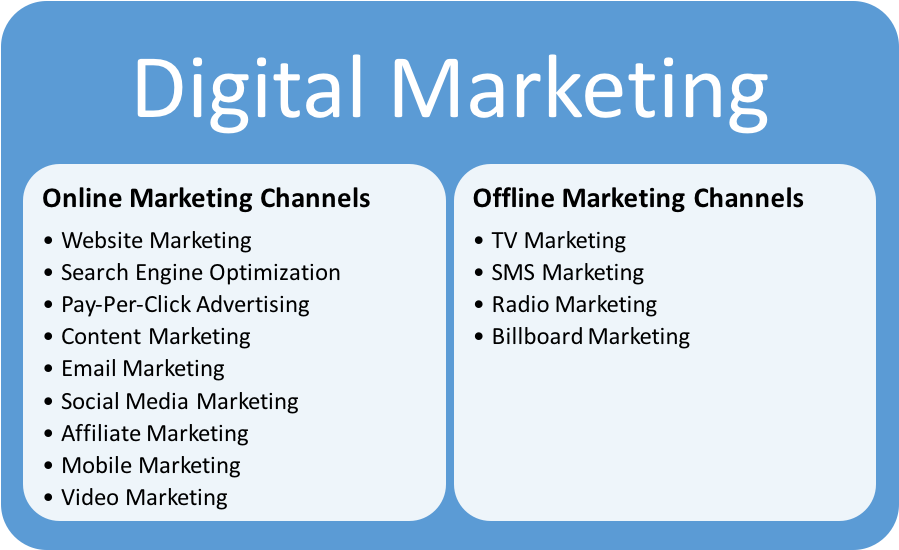
Here are some of the most important channels:
-
Search Engine Optimization (SEO): This is the process of optimizing your website to rank higher in search engine results pages (like Google) for specific keywords. The goal is to attract organic, or free, traffic. When you have a question and you Google it, the non-ad results you see are there because of good SEO.
-
Search Engine Marketing (SEM): This is a broader term that includes SEO, but it most commonly refers to paid advertising on search engines. You might hear this called pay-per-click (PPC), where businesses bid to have their ads show up for certain search queries. These are the listings you see marked as "Ad" or "Sponsored."
-
Social Media Marketing: This involves using social media platforms like Facebook, Instagram, LinkedIn, and X (formerly Twitter) to build your brand, engage with your audience, and drive traffic to your website. It can be a mix of free posts and paid ads.
-
Content Marketing: The focus here is on creating and distributing valuable, relevant, and consistent content to attract and retain a clearly defined audience. This includes blog posts, videos, podcasts, and infographics. Instead of directly pitching your products, you provide useful information that builds trust.
-
Email Marketing: This is one of the oldest but most effective digital marketing channels. It involves sending targeted messages directly to a list of subscribers' inboxes. It's great for nurturing leads, announcing new products, and promoting sales.
-
Affiliate Marketing: This is a performance-based type of marketing where a business rewards one or more affiliates for each visitor or customer brought by the affiliate's own marketing efforts. You essentially pay others a commission to promote and sell your products for you.
Current Trends
The digital world changes fast, but a few key trends are shaping marketing right now. More people are browsing the internet on their phones than on desktops, so having a mobile-friendly website is no longer optional—it's essential.
Video content, especially short-form video on platforms like TikTok and Instagram Reels, is booming. It's an engaging way to capture attention quickly.
Finally, personalization is key. Customers now expect experiences tailored to their interests. This means using data to show relevant content and offers, making each person feel like you're speaking directly to them. Successful digital marketing isn't just about using the tools; it's about using them to create a genuine connection with your audience.
Which of the following best defines digital marketing?
What is a primary advantage of digital marketing compared to traditional marketing like a magazine ad?
Now you have a solid grasp of the fundamentals of digital marketing. You know what it is, how it differs from traditional methods, and the main channels that marketers use to reach their audiences.