Foundations of Cryptocurrency Creation
Introduction to Blockchain
What Is a Blockchain?
At its heart, a blockchain is a special kind of digital notebook. Think of it like a ledger that’s shared among many people. Instead of one person holding the master copy, everyone has an identical version. When a new entry is made, the notebook is updated for everyone at the same time.
At its most basic level, a blockchain is a digital ledger maintained by a decentralized network of computers.
This digital ledger is made up of individual records, called blocks. Each block is linked to the one before it, forming a sequence or a chain. This structure is maintained and verified by a network of computers called nodes. Together, these three components—blocks, chains, and nodes—create a secure and reliable way to record information.
The Building Blocks
Let's look closer at the components. A block is like a page in our digital notebook. It contains a list of transactions or data, a timestamp showing when it was created, and a unique digital fingerprint called a hash. Crucially, it also contains the hash of the block that came before it.
This is what creates the chain. Each block points back to the previous one, forming an unbreakable link. This chronological and cryptographic connection makes the entire chain secure. If someone tried to alter the data in an old block, its hash would change. This would break the link to the next block, and the discrepancy would be easily spotted by everyone else in the network.
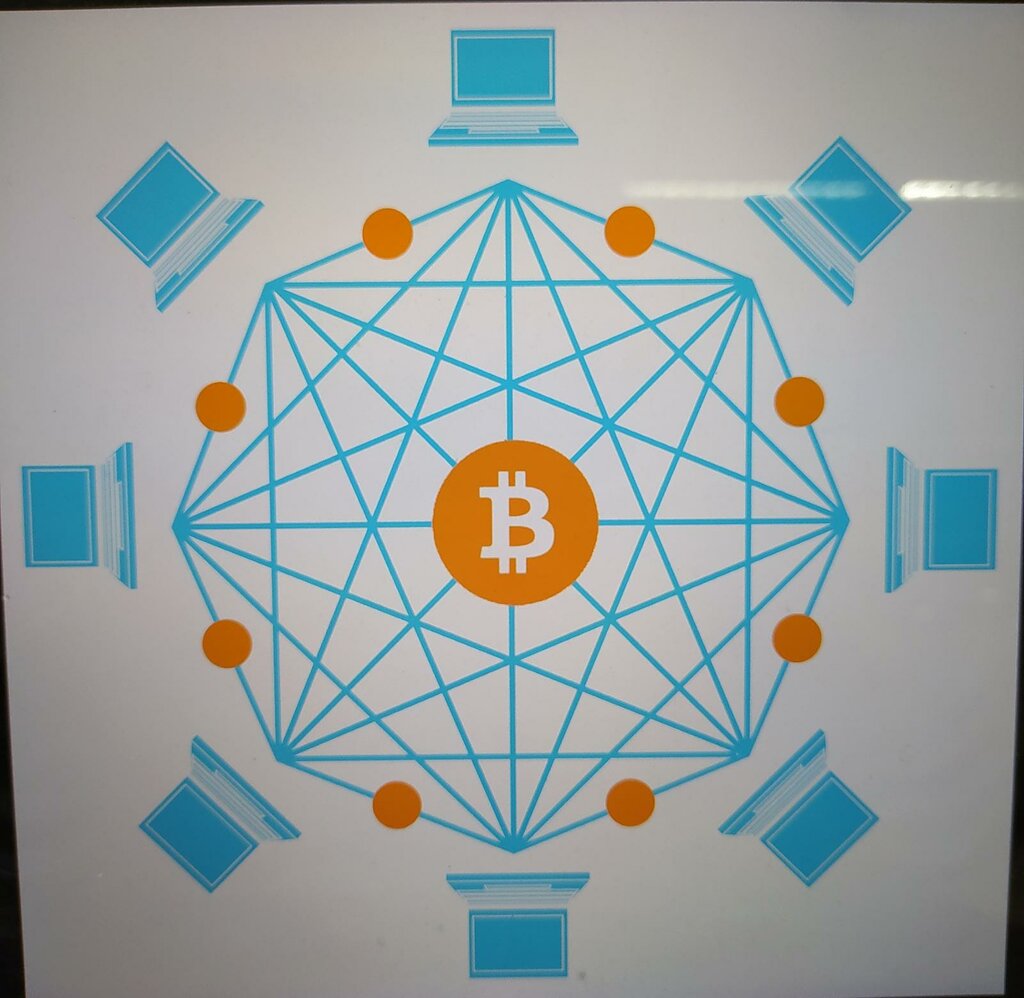
And who is this "everyone else"? They are the nodes. A node is simply a computer that participates in the blockchain network. Each node keeps a full copy of the ledger. By constantly communicating and comparing their copies, the nodes ensure that the ledger remains consistent and accurate for everyone.
This network of nodes creates a distributed system where control is spread out, not concentrated in one place.
Core Principles
Blockchains are built on three important ideas: decentralization, transparency, and immutability.
Decentralization means there is no single point of control. Unlike a traditional bank that stores all its records on a central server, a blockchain's data is copied and spread across a network of computers. This makes the system more resilient. If one computer goes offline, the network keeps running without interruption.
Transparency means that transactions recorded on the blockchain are visible to its participants. For public blockchains like Bitcoin, anyone can view the transaction history. This openness helps build trust among users, as everyone can verify the records for themselves.
Immutability refers to the inability to change or tamper with data once it has been recorded on the blockchain. Because each block is cryptographically linked to the one before it, altering a block would require altering all subsequent blocks, an incredibly difficult and computationally expensive task. This makes the blockchain a highly secure and permanent record.
Together, these principles create a system that is robust, open, and tamper-proof.
Types of Blockchains
Not all blockchains are the same. They can be categorized into three main types, depending on who can participate and access the data.
| Type | Who Can Join? | Who Can View? | Best For |
|---|---|---|---|
| Public | Anyone | Anyone | Cryptocurrencies, voting systems |
| Private | By invitation only | By permission only | Supply chain management, internal auditing |
| Consortium | By permission from a group | By permission from a group | Banking, research collaborations |
Public blockchains are completely open. Anyone can join the network, view the ledger, and participate in the transaction process. Bitcoin and Ethereum are famous examples.
Private blockchains are controlled by a single organization. The controlling entity decides who can join the network, view data, and submit transactions. This offers more privacy and control, making it suitable for businesses.
Consortium blockchains are a hybrid of the two. They are governed by a group of organizations rather than just one. This model is useful when multiple companies need to collaborate and share data in a trusted environment, but don't want the information to be public.
What is the primary role of a 'node' in a blockchain network?
The principle that data recorded on a blockchain cannot be changed or tampered with is known as ______.
Understanding these fundamentals—the structure, principles, and types of blockchains—is the first step to grasping how cryptocurrencies and other digital assets work.