Foundations of Cost Accounting
Cost Accounting Basics
What is Cost Accounting?
Imagine you run a small business that makes custom t-shirts. You sell a shirt for $25. At the end of the month, you look at your bank account and see you've made a profit. Great! But which t-shirt design is your most profitable? How much does it really cost to make one shirt, including the ink, the electricity for the printing press, and a fraction of your workshop's rent? Answering these questions is the job of cost accounting.
Cost accounting is an internal tool managers use to understand the costs of running a business. It's all about tracking, analyzing, and interpreting the money spent to create a product or provide a service.
Unlike other forms of accounting that look at the company as a whole, cost accounting zooms in on the details. Its main goals are:
- Cost Control: By knowing exactly where money is going, managers can spot inefficiencies and find ways to reduce waste.
- Profitability Analysis: It helps determine the profit margin on individual products, services, or even customers.
- Decision-Making: It provides the data needed to make smart choices, like setting the right price for a product, deciding whether to make a component in-house or buy it from a supplier, or figuring out if a new product line is worth launching.
Cost vs. Financial Accounting
You might be more familiar with financial accounting. That's the process that leads to official reports like the income statement and balance sheet. While both are crucial, they serve different purposes and audiences.
Financial accounting is for outsiders: investors, banks, and government agencies like the IRS. It provides a standardized, high-level summary of the company's financial health. It’s strictly regulated by rules like the Generally Accepted Accounting Principles (GAAP) to ensure consistency and comparability.
Cost accounting, on the other hand, is for insiders: the managers running the show. It’s flexible, forward-looking, and detailed. The reports can be tailored to answer specific questions for a specific department. It doesn't have to follow GAAP because its audience is internal.
| Feature | Cost Accounting | Financial Accounting |
|---|---|---|
| Users | Internal managers | External parties (investors, creditors) |
| Rules | Flexible, no set rules | Must follow GAAP/IFRS |
| Time Focus | Present and future | Historical performance |
| Scope | Segments of the business | The entire organization |
| Purpose | Decision-making, planning, control | Reporting financial position |
The Four Flavors of Cost
To manage costs, you first have to understand them. In cost accounting, costs are often broken down into different categories based on their behavior. The two most common pairings are direct vs. indirect and fixed vs. variable.
Let's stick with our t-shirt business. A direct cost is any expense that can be easily and directly traced to a specific product. For a t-shirt, this would be the blank shirt itself and the ink used for the design.
direct cost
noun
A price that can be directly tied to the production of specific goods or services.
An indirect cost, often called overhead, is an expense that supports the business but isn't tied to a single shirt. Think of the rent for your workshop, the electricity to power the lights, or the salary of the person who manages the website. These are necessary costs, but you can't say exactly how much of the monthly rent went into making one specific t-shirt.
indirect cost
noun
Costs that are not directly accountable to a cost object (such as a particular project, facility, function or product).
The other key distinction is between fixed and variable costs.
A variable cost changes in direct proportion to how many t-shirts you produce. The more shirts you make, the more blank shirts and ink you need to buy. Your total variable costs go up as production increases.
variable cost
noun
A cost that varies with the level of output.
A fixed cost remains the same each month, regardless of your production volume. Your workshop rent is $1,000 whether you make one shirt or one thousand shirts. Other examples include insurance payments and the annual subscription for your design software.
fixed cost
noun
Business costs, such as rent, that are constant whatever the quantity of goods or services produced.
Understanding these categories is powerful. For example, direct and variable costs (like blank shirts) are linked. Indirect costs (like rent) are often fixed. By combining these concepts, a manager can calculate the minimum price they need to charge to cover their costs and make a profit.
Why Accuracy Matters
The core principle of cost accounting is simple: costs should be measured and allocated as accurately as possible. This seems obvious, but the consequences of getting it wrong can be significant.
If you underestimate the cost of producing a t-shirt, you might set your selling price too low. You'll be busy with orders, but you could actually be losing money on every sale. On the other hand, if you overestimate the cost, you might price your shirts too high, driving customers to competitors.
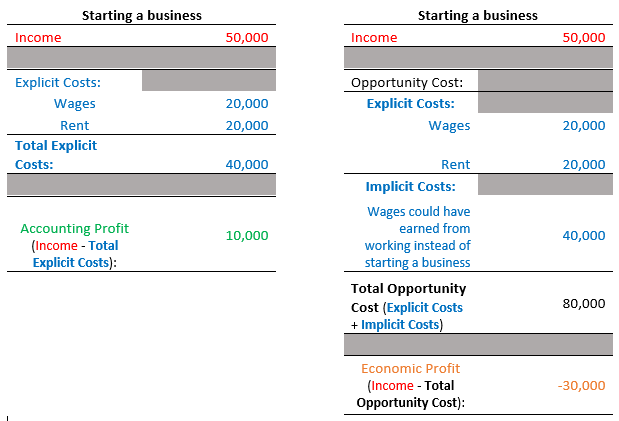
Accurate cost measurement isn't just about pricing. It informs nearly every strategic decision. It helps you identify which products to promote and which to discontinue. It guides decisions about investing in new equipment or streamlining a production process. Without a clear picture of costs, managers are essentially flying blind, making decisions based on intuition rather than data.
Time to review what we've covered.
What is the primary audience for the reports and data generated by cost accounting?
In a t-shirt printing business, which of the following is the best example of a direct cost?