Foundations of Computer Science Certification
Introduction to Computer Science
The Core Idea
At its heart, a computer is a machine that processes data. It takes in information, does something with it, and then produces an output. Think of it as a very fast and obedient assistant that only understands a very specific set of instructions.
All computers, from your smartphone to a massive supercomputer, follow this basic model. They have four fundamental jobs: taking input, storing information, processing it, and then providing an output.
Here's a breakdown:
- Input: This is how you give the computer information. A keyboard, mouse, touchscreen, and microphone are all input devices.
- Memory: This is where the computer temporarily holds data it's working on. It's like the computer's short-term memory.
- CPU (Central Processing Unit): This is the brain. It executes commands and performs all the calculations. It fetches instructions from memory and carries them out.
- Output: This is how the computer gives you information back. Your screen, speakers, and printer are all output devices.
A Quick Trip Through Time
The idea of a machine that calculates is not new. Mechanical devices like the abacus have existed for thousands of years. In the 19th century, Charles Babbage designed the Analytical Engine, a mechanical computer that, had it been built, would have been programmable. But it wasn't until the 20th century that electronics changed everything.
Early electronic computers like ENIAC, built in the 1940s, were massive. They filled entire rooms and used vacuum tubes, which were unreliable and generated a lot of heat. A major turning point was the invention of the transistor in 1947. Transistors did the same job as vacuum tubes but were far smaller, faster, and more reliable.
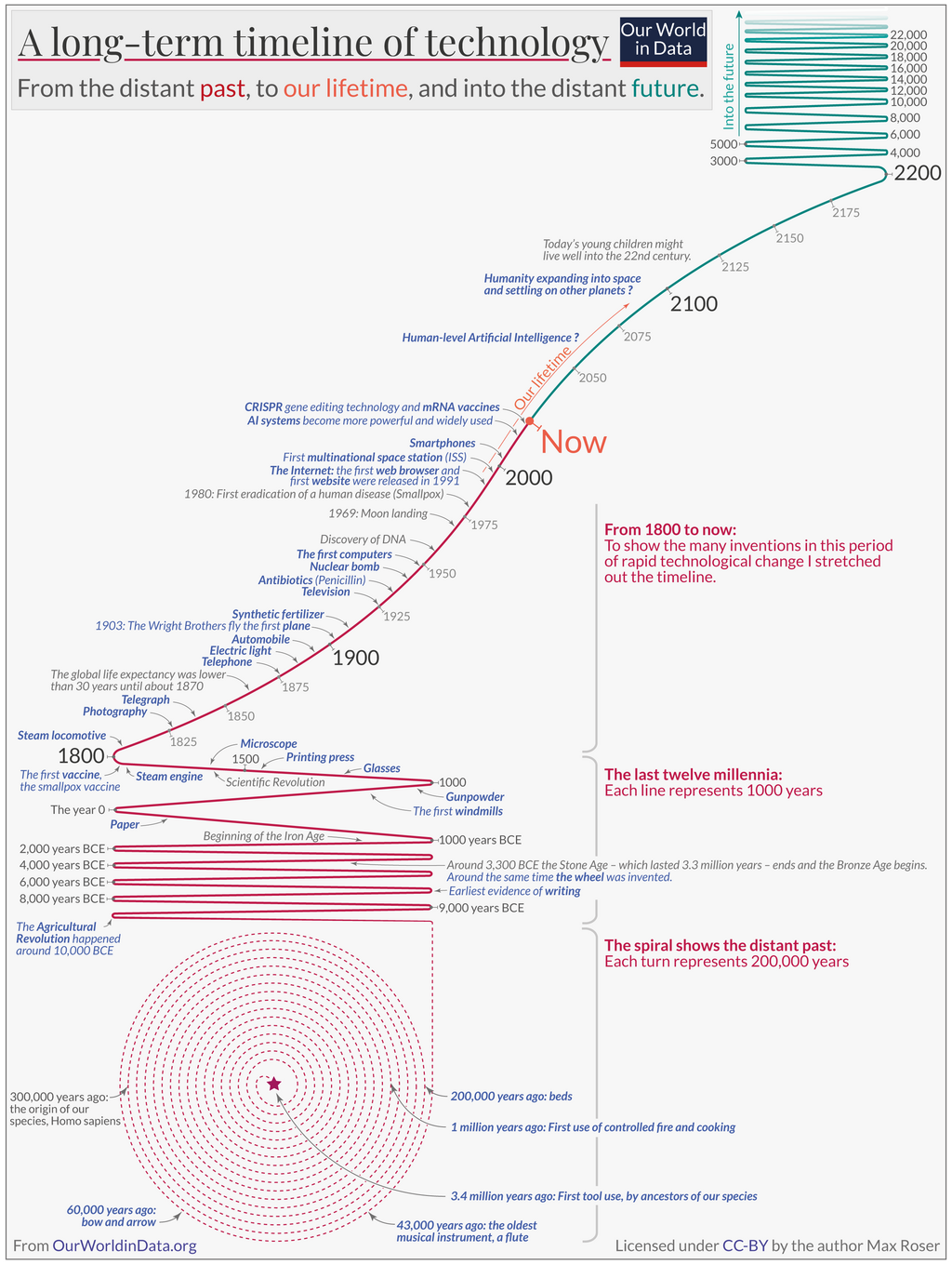
The next leap forward was the integrated circuit in the 1950s, which placed millions or even billions of transistors onto a tiny silicon chip. This innovation paved the way for the personal computers, smartphones, and all the other digital devices we use today.
The Language of On and Off
Computers don't understand words or numbers the way we do. At their most basic level, they operate on electricity. A circuit can either be on or off. That’s it. To work with this simple two-state system, computers use a number system called binary.
bit
noun
The smallest unit of data in a computer, represented as either a 0 (off) or a 1 (on). The word is a portmanteau of "binary digit."
By itself, one bit isn't very useful. But when you group them together, you can represent almost anything. A standard grouping is a byte, which is made up of eight bits.
byte
noun
A unit of digital information that most commonly consists of eight bits.
With 8 bits in a byte, you have $2^8$, or 256, possible combinations of 0s and 1s. This is enough to represent every letter of the alphabet (both uppercase and lowercase), all the digits from 0 to 9, and various punctuation marks. This is how all text, images, and sounds are stored on a computer—as massive sequences of 0s and 1s.
Here’s how we count from zero to five using a 4-bit system:
| Decimal | Binary |
|---|---|
| 0 | 0000 |
| 1 | 0001 |
| 2 | 0010 |
| 3 | 0011 |
| 4 | 0100 |
| 5 | 0101 |
Hardware, Software, and You
The physical parts of a computer system—the CPU, memory, keyboard, and screen—are called hardware. You can touch them.
But hardware is useless without instructions. The set of instructions that tells the hardware what to do is called software. Your web browser, your operating system (like Windows or macOS), and the apps on your phone are all examples of software.
Think of it like a musician and a piano. The piano is the hardware. It's a physical object capable of producing music. The sheet music is the software. It contains the instructions. The musician (that's you, the user) uses the software to tell the hardware what to do, creating the output—in this case, music.
Hardware is the physical machine. Software is the set of instructions. The user tells the software what to do with the hardware.
Computer science is the study of what's possible with this hardware and software. It's about figuring out how to solve problems, manage information, and create new ways for people to interact with technology. It all starts with these foundational ideas of processing information using simple on-off signals.
What are the four fundamental jobs of any computer?
The "brain" of the computer, which executes commands and performs all calculations, is called the ______.
These core concepts are the building blocks for everything else in computer science. Understanding them gives you a solid base for exploring more complex topics.