Foundations of Computer Science
Introduction to Computer Science
From Abacus to Algorithm
Humans have always built tools to solve problems. We used levers to move heavy stones and telescopes to see distant stars. Computers are just another tool in this long history, but they are uniquely powerful. They are tools for manipulating information.
The earliest computing devices were mechanical. Think of the abacus, used for arithmetic, or Charles Babbage's Analytical Engine in the 1800s, a machine designed to perform complex calculations automatically. These were computers made of gears and levers.
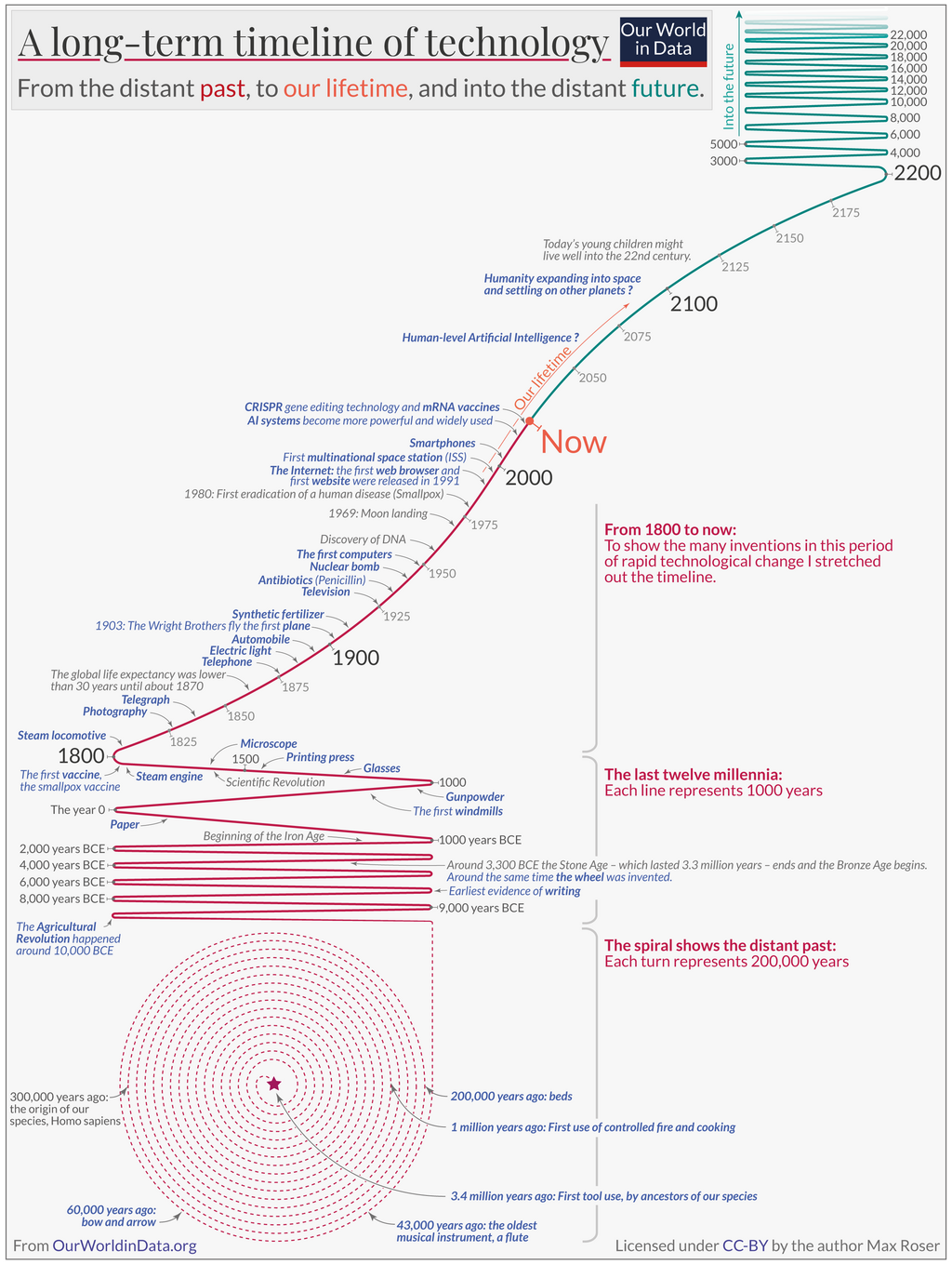
The 20th century brought the electronic age. Vacuum tubes, then transistors, allowed for machines that could process information at incredible speeds. Early electronic computers filled entire rooms. Today, a device that fits in your pocket is millions of times more powerful. This rapid evolution is what makes computer science such a dynamic field.
The Ghost and the Machine
Every computer system, from your phone to a massive supercomputer, is made of two fundamental parts: hardware and software.
Hardware is the physical stuff you can touch. It's the screen, the keyboard, the silicon chips, and the wires connecting everything. It's the machine itself.
Software is the set of instructions that tells the hardware what to do. It's the ghost in the machine. An app, a website, or an operating system are all examples of software. Without software, the hardware is just a useless collection of metal and plastic.
Think of it like a piano. The piano itself—the keys, strings, and wooden frame—is the hardware. The music written on the sheet is the software. The hardware creates the sound, but the software provides the instructions to make it a beautiful melody.
At the heart of the hardware is a core set of components that work together to run the software.
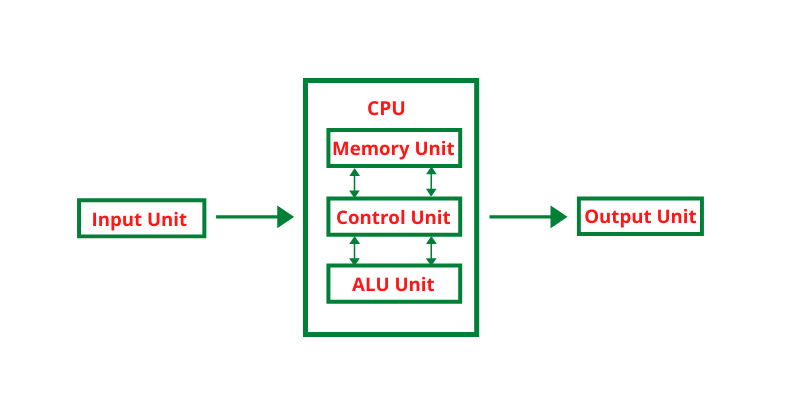
This structure is known as the Von Neumann architecture, and most modern computers follow this basic design:
- Input Unit: This is how you get information into the computer. Keyboards, mice, and microphones are all input devices.
- Central Processing Unit (CPU): The brain of the operation. The CPU executes instructions. It contains a few key parts, including the Control Unit, which directs traffic, and the Arithmetic Logic Unit (ALU), which performs calculations.
- Memory Unit: This is the computer's short-term memory (RAM). It holds the data and instructions that the CPU is actively working with.
- Output Unit: This is how the computer gets information back to you. A monitor, speakers, or a printer are all output devices.
Thinking Like a Computer Scientist
Computer science isn't just about learning to code. It's about learning a new way to solve problems. This approach is called computational thinking. It involves breaking down complex problems into smaller, more manageable pieces that a computer can help solve.
Computational thinking has four key parts.
| Technique | Description | Example |
|---|---|---|
| Decomposition | Breaking a large problem into smaller, simpler sub-problems. | To build a car, you first design and build the engine, chassis, wheels, and interior separately. |
| Pattern Recognition | Finding similarities or trends among the sub-problems. | When making different sandwiches, you notice they all follow a bread-filling-bread pattern. |
| Abstraction | Focusing on the important details while ignoring irrelevant information. | Driving a car doesn't require knowing how the engine works. You just need to know how to use the steering wheel, pedals, and shifter. |
| Algorithm Design | Developing a step-by-step solution to the problem, or rules to follow to solve it. | A recipe for baking a cake is an algorithm. It gives you a precise sequence of steps to follow. |
Mastering these four techniques is the first step toward using the power of computers to solve real-world problems. It's a way of thinking that is valuable not just in programming, but in almost any field.
What is the primary function of a computer as a tool?
Which of the following is an example of software?