Foundations of Business Information Systems
Introduction to Business Information Systems
What Are Business Information Systems?
At its core, a Business Information System (BIS) is a way for a company to manage information. Think of it as the nervous system of an organization. It's not just about computers and software; it's a combination of hardware, software, data, procedures, and the people who use them. Together, these components work to collect, process, store, and distribute information to support the company's operations and decision-making.
Information systems combine people, processes, technology, and data to help organizations achieve their goals more efficiently and effectively.
Why does this matter? In today's market, information is a company's most valuable asset. A well-designed BIS helps a business run smoothly day-to-day, from tracking sales to managing inventory. More importantly, it turns raw data into meaningful insights, allowing managers to make smarter, faster decisions. This ability to leverage information is what gives companies a competitive edge.
Types of Information Systems
Not all information systems do the same job. They are often categorized based on the level of the organization they support. Let's look at a few key types, starting from the ground up.
Transaction Processing System
noun
A system that performs and records the daily routine transactions necessary to conduct business, such as sales orders, hotel reservations, payroll, and shipping.
Transaction Processing Systems (TPS) are the workhorses of a business. They are all about capturing the raw data from daily activities. Every time you buy a coffee, book a flight, or withdraw money from an ATM, a TPS is working behind the scenes to record that event.
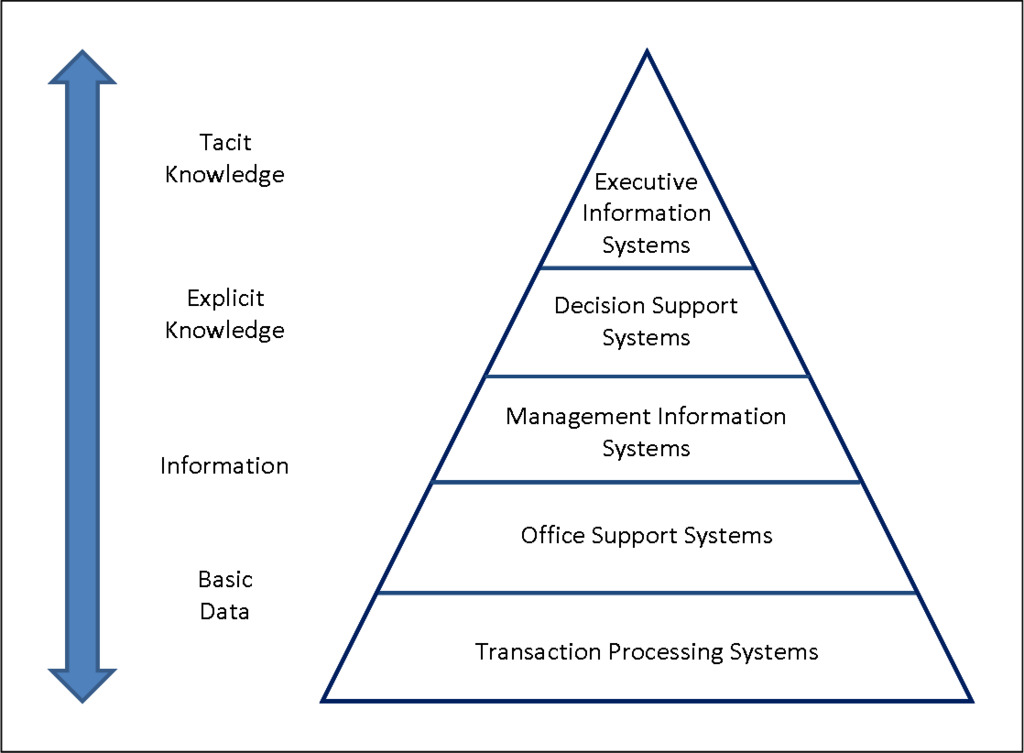
The data from a TPS feeds into higher-level systems. A Management Information System (MIS) takes this raw data and summarizes it into reports for middle managers. For example, an MIS might generate a weekly sales report for a store manager, showing which products are selling best. These reports help managers monitor performance and control operations.
A Decision Support System (DSS) goes a step further. It helps senior managers make unique, non-routine decisions. A DSS might use data from internal systems (like an MIS) and external sources (like stock market trends) to help a company decide whether to open a new factory. It focuses on providing tools for analysis rather than just summary reports.
Bringing It All Together
In the past, a company might have had separate systems for each department: one for accounting, another for human resources, and a third for manufacturing. This created information "silos," making it hard to get a complete picture of the business.
Enterprise Resource Planning (ERP) systems were created to solve this problem. They are integrated software suites that manage a company's core business processes in one central system.
An ERP system allows different departments to share information seamlessly. When a salesperson enters an order, the system automatically alerts the warehouse to ship the product, tells the factory to produce more if stock is low, and updates the accounting department's records. This integration improves efficiency, reduces errors, and gives everyone in the company access to the same, up-to-date information.
Ultimately, the role of any BIS is to help a company achieve its strategic goals. Whether it's by cutting operational costs, improving customer service, or identifying new market opportunities, these systems provide the information foundation necessary for success. They transform raw data into a powerful tool for navigating the complexities of the modern business world.
What are the five fundamental components that make up a Business Information System (BIS)?
An ATM withdrawal or a purchase at a grocery store checkout is recorded by which type of information system?
By understanding these fundamental systems, you can begin to see how businesses harness information to not only function but to thrive.