Foundations of Astrological Understanding
Introduction to Astrology
What Is Astrology?
At its heart, astrology is the study of how the movements of stars and planets relate to life and events on Earth. It's an ancient practice that looks for meaning in the patterns of the cosmos, suggesting a connection between the heavens and human experience.
People have used it for millennia to gain insight into personality, relationships, and the future. It operates on the principle of "as above, so below"—the idea that the macrocosm of the heavens is reflected in the microcosm of our lives.
Astrology has woven itself into human history as a guiding force, influencing civilizations and cultures from ancient times to the modern world.
Astrology vs. Astronomy
Though they share a common origin in watching the sky, astrology and astronomy are very different today. They were once intertwined, but their paths diverged during the Scientific Revolution. One is a system of interpretation, while the other is a scientific discipline.
| Astrology | Astronomy | |
|---|---|---|
| Goal | Interpret the influence of celestial bodies on human life. | Study the physical universe, including stars and planets. |
| Method | Creates horoscopes and predictions based on celestial positions. | Uses the scientific method, observation, and physics. |
| Status | A belief system or pseudoscience. | A natural science. |
Think of it this way: an astronomer can tell you the mass, composition, and orbit of Mars. An astrologer will interpret what Mars's position in the sky means for your career or love life.
A Trip Through Time
Astrology didn't appear overnight. It evolved over thousands of years, with different cultures adding their own unique ideas.
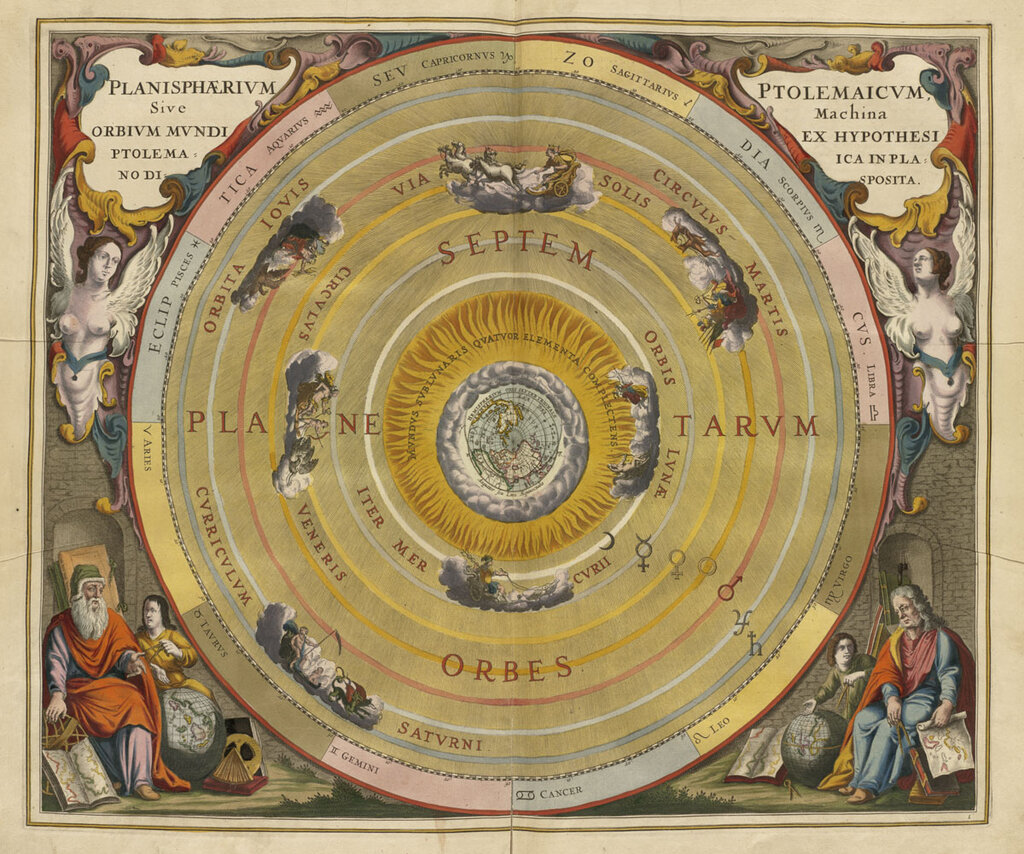
The story often begins with the Babylonians around 2,000 BCE. They were meticulous sky-watchers who created detailed astronomical records. For them, the movements of the planets were omens from the gods that predicted the fate of their king and kingdom, not individuals.
The Egyptians adopted and adapted these ideas, linking them to their solar calendar and creating the concept of decans—groups of stars used to tell time at night. This helped lay the groundwork for a more structured system.
It was the Greeks who truly shaped what we now know as Western astrology. After Alexander the Great's conquests, Babylonian and Egyptian traditions flowed into the Greek world. Greek philosophy and mathematics transformed astrology from a system of public omens into a tool for understanding an individual's life. Thinkers like Ptolemy in the 2nd century CE codified the system, explaining the planets, zodiac signs, and the houses in his work, the Tetrabiblos, which remains a foundational text.
The big shift happened with the Greeks: astrology moved from predicting the future of empires to charting the destiny of a single person.
This Greco-Roman framework is the direct ancestor of most modern Western astrology. While other vibrant astrological traditions exist around the world, such as in India and China, the system of birth charts and zodiac signs popular today has its roots firmly planted in the ancient Mediterranean.