Foundations of Artificial Intelligence
Introduction to AI
What Is Artificial Intelligence?
Artificial intelligence is the science and engineering of creating smart machines. The goal is to build systems that can perform tasks that normally require human intelligence. This includes things like learning from experience, understanding language, recognizing objects, solving problems, and making decisions.
At its core, AI is about enabling computers to learn and reason in ways that resemble human thought.
Think of it like this: traditionally, we give computers explicit instructions for every single task. To add two numbers, we write a program that tells the computer exactly how to perform addition. With AI, we shift our approach. Instead of giving step-by-step instructions, we create systems that can learn the instructions themselves by analyzing vast amounts of information.
Artificial Intelligence
noun
A branch of computer science dedicated to creating systems capable of performing tasks that typically require human intelligence, such as learning, reasoning, problem-solving, and perception.
Why We Build AI
The primary objective of AI is not just to replicate human intelligence, but to create tools that can solve complex problems and augment our own abilities. The world is filled with challenges that are too big or too complex for the human mind to tackle alone. Analyzing massive datasets to find new medical treatments, predicting intricate weather patterns, or managing global supply chains are all areas where AI can make a significant impact.
By automating routine tasks, AI frees up human creativity and intellect for more strategic work. It acts as a powerful partner, helping us make sense of a complicated world and push the boundaries of science and technology. This partnership is why AI has become such a significant and transformative force in nearly every industry.
A Meeting of Minds
Artificial intelligence isn't just a subfield of computer science; it's a truly interdisciplinary pursuit. It draws crucial ideas and techniques from many different areas of study, each contributing a unique piece of the puzzle.
Here’s how some of these fields contribute:
- Computer Science provides the programming languages, algorithms, and computational power to build AI systems.
- Mathematics offers the formal framework for reasoning and learning, especially through probability, statistics, and calculus.
- Psychology lends insights into how humans think, learn, and perceive the world, which inspires models of artificial cognition.
- Neuroscience studies the physical structure of the brain, providing a biological blueprint for artificial neural networks.
- Philosophy explores the fundamental questions of intelligence, consciousness, and ethics, guiding the purpose and principles of AI development.
Without contributions from all these areas, modern AI would not be possible.
The Branches of AI
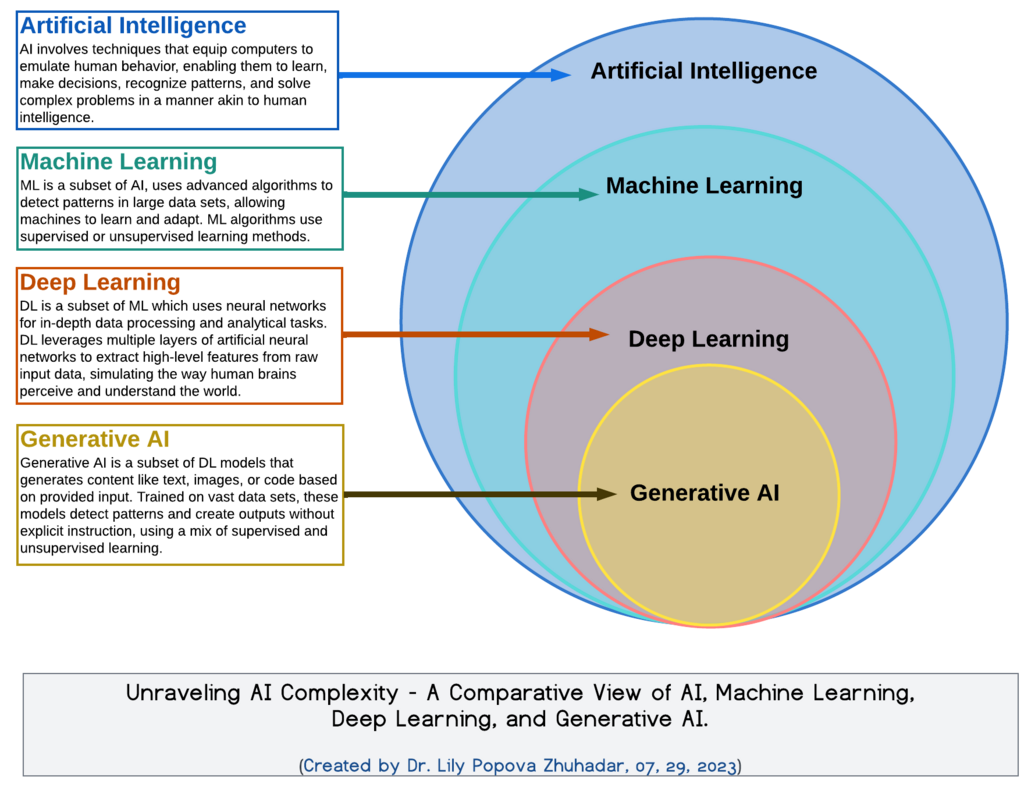
AI is a vast field with many specialized subfields. While they all share the common goal of creating intelligent systems, they focus on different problems and use different techniques.
Think of AI as the main trunk of a tree, with each subfield branching out to tackle a specific aspect of intelligence.
Here are a few of the most important branches:
Machine Learning (ML): This is perhaps the most well-known subfield. Instead of being explicitly programmed, ML systems learn patterns directly from data. This is the technology behind spam filters, recommendation engines, and medical diagnoses.
Natural Language Processing (NLP): NLP focuses on enabling computers to understand, interpret, and generate human language. It powers chatbots, language translation services, and sentiment analysis tools.
Computer Vision: This area deals with how computers can be made to gain high-level understanding from digital images or videos. It’s used in facial recognition, self-driving cars, and medical imaging analysis.
Robotics: This field integrates AI with physical machines, allowing them to perceive their environment and move within it. Robotics is used in manufacturing, exploration, and healthcare.
These subfields often overlap and build on one another, leading to the sophisticated AI applications we see emerging today.
Now that we have a grasp of what AI is and what it aims to do, let's test your understanding.
What is the primary difference between traditional programming and the approach used in Artificial Intelligence?
According to the text, what is a primary objective of Artificial Intelligence?
This introduction lays the groundwork for understanding the complex and fascinating world of artificial intelligence.