Foundations of Artificial Intelligence
Introduction to Artificial Intelligence
What Is Artificial Intelligence?
At its core, artificial intelligence is the science of making machines smart. It's a field of computer science dedicated to creating systems that can perform tasks that typically require human intelligence. This includes things like learning from experience, understanding language, recognizing objects, solving problems, and making decisions.
This introduction to this special issue discusses artificial intelligence (AI), commonly defined as “a system’s ability to interpret external data correctly, to learn from such data, and to use those learnings to achieve specific goals and tasks through flexible adaptation.”
Think about how you recommend a movie to a friend. You consider what they've liked in the past, the genres they prefer, and maybe even their current mood. AI-powered recommendation engines on streaming services do something similar, but they analyze data from millions of users to make their suggestions. They aren't 'thinking' like a human, but they are using data to perform a task that requires a form of intelligence.
A Quick Trip Through Time
The dream of creating intelligent machines is not new. It goes back to ancient myths about artificial beings. But the modern field of AI really began to take shape in the mid-20th century. One of the key figures was the British computer scientist Alan Turing. In 1950, he proposed a test, now called the Turing Test, to determine if a machine could exhibit intelligent behavior indistinguishable from that of a human.
The term "artificial intelligence" itself was coined in 1956 at a conference at Dartmouth College. This event brought together the founding fathers of the field and set the agenda for AI research for decades to come. The years that followed were filled with excitement and big promises. Early successes included programs that could solve algebra word problems and prove logical theorems.
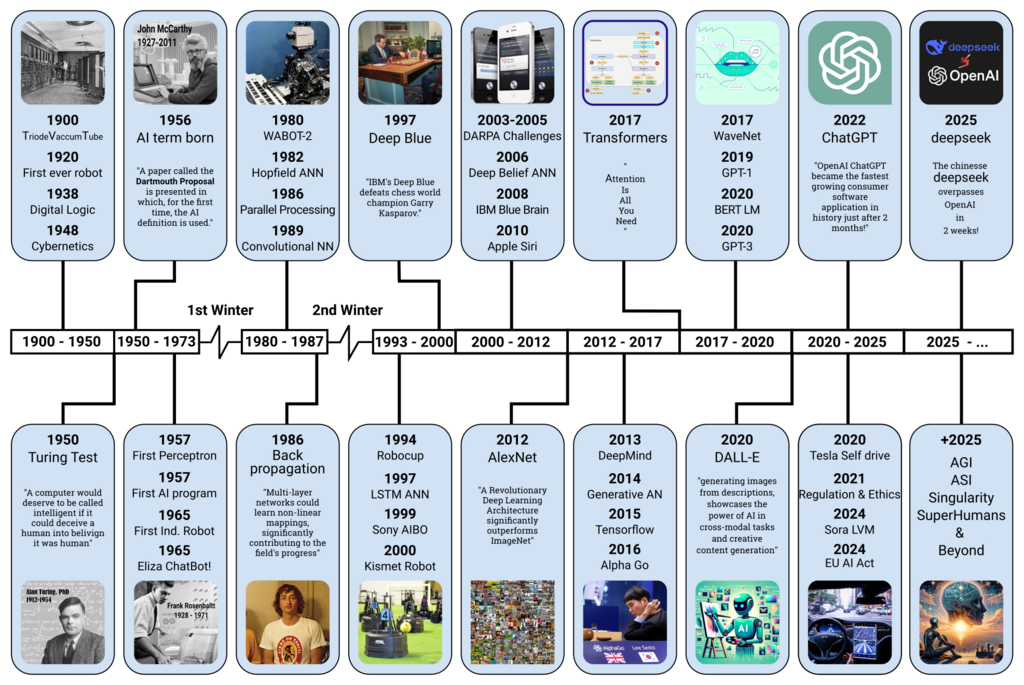
However, the initial optimism soon ran into obstacles. The complexity of creating true intelligence was far greater than anticipated, and the available computer power was limited. This led to periods known as "AI winters," when funding dried up and progress slowed. But the field always bounced back, spurred by advances in computing power, the availability of vast amounts of data, and the development of new algorithms.
Two Kinds of AI
When people talk about AI, they are usually referring to one of two broad categories. Understanding the difference is key to understanding what AI can and can't do today.
Artificial Narrow Intelligence
noun
Also known as Weak AI, this is AI that is designed and trained for a particular task. It operates within a limited, pre-defined range.
Virtually all the AI we use today is narrow AI. This includes everything from spam filters in your email and voice assistants on your phone to the systems that recommend products on e-commerce sites. These systems can be incredibly powerful and outperform humans at their specific tasks, but they cannot operate outside of them. The AI that can play chess at a grandmaster level cannot, for instance, tell you how to bake a cake or recognize a cat in a photo unless it was also specifically trained for those tasks.
Artificial General Intelligence
noun
Also known as Strong AI, this is a theoretical form of AI where a machine would have an intelligence equal to humans. It would have a self-aware consciousness and the ability to solve problems, learn, and plan for the future.
AGI is the kind of AI you often see in movies, like the intelligent computers and robots that can think, reason, and interact with the world just like a person. It is the ultimate goal for many AI researchers, but creating AGI is an incredibly complex challenge that we have not yet solved. All current AI systems are specialized tools, not general-purpose minds.
Ethics and Impact
As AI becomes more integrated into our daily lives, it raises important questions. The technology is not neutral; it reflects the data it's trained on and the values of the people who create it. This leads to significant ethical challenges and societal impacts that we need to consider carefully.
One of the biggest concerns is bias. If an AI system is trained on biased data, it will produce biased results. For example, if a hiring tool is trained on historical data from a company that has primarily hired men, it might learn to discriminate against female candidates. This can reinforce and even amplify existing societal inequalities.
Other ethical issues include concerns about privacy, as AI systems often require large amounts of personal data to function. There are also questions of accountability: if a self-driving car causes an accident, who is responsible? The owner, the manufacturer, or the programmer?
The societal impact of AI is equally profound. On one hand, AI has the potential to solve some of the world's biggest problems, from diagnosing diseases to combating climate change. It can automate tedious tasks, freeing up humans for more creative and strategic work.
On the other hand, there are concerns about job displacement as AI takes over tasks previously done by people. There's also the risk of AI being used for malicious purposes, such as creating autonomous weapons or spreading misinformation on a massive scale. Navigating these challenges requires careful planning, regulation, and a public conversation about the kind of future we want to build with AI.
Now, let's test your understanding of these foundational concepts.
What is the primary goal of the field of artificial intelligence?
The voice assistant on your phone, which can answer questions but cannot reason about complex emotional situations, is an example of what?