Foundations of Art and Design Theory
Elements of Art
The Building Blocks of Art
Every work of art, from a simple sketch to a massive sculpture, is made from the same basic ingredients. These are the elements of art. Think of them like the words a writer uses to build a sentence or the notes a musician arranges into a song. By understanding these seven elements, you can learn to see art in a new way and appreciate how artists bring their ideas to life.
Line
A line is the most basic element. It’s a mark made on a surface, a path between two points. But a line is much more than that. It has length and direction. It can be thick or thin, straight or curved, smooth or jagged.
Lines can be used to outline objects, create texture, and guide a viewer's eye through a composition. A series of vertical lines might make something feel tall and proud, while wavy lines can suggest the calm movement of water. Jagged, sharp lines can create a feeling of energy, chaos, or excitement.
Shape and Form
When a line curves around and connects to its starting point, it creates a shape. A shape is a flat, two-dimensional area. It has height and width, but no depth. Shapes can be geometric, like circles, squares, and triangles, which are precise and often found in man-made objects.
They can also be organic, which are the irregular, free-flowing shapes we see in nature, like clouds, leaves, or puddles.
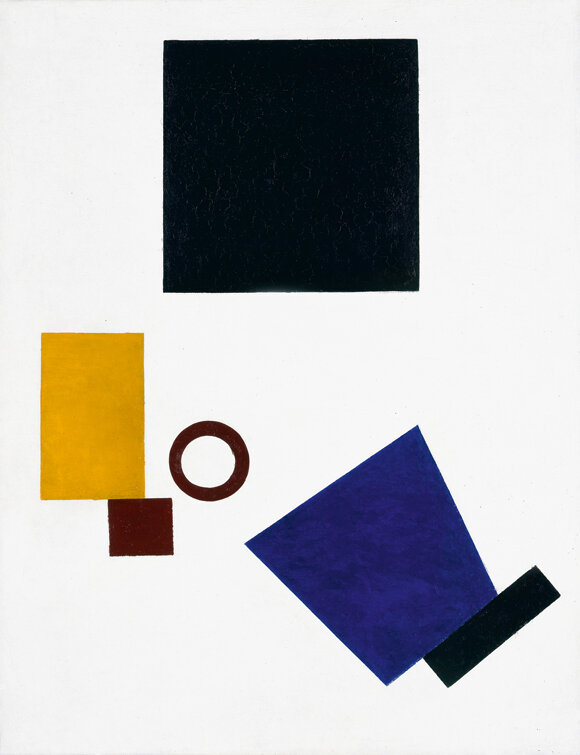
Form takes shape one step further. Form is three-dimensional; it has height, width, and depth. A square is a shape, but a cube is a form. A circle is a shape, but a sphere is a form.
On a flat surface like a canvas or piece of paper, artists create the illusion of form. They use techniques like shading and perspective to make a flat shape look like it has real depth and volume.
Space, Value, and Texture
Space refers to the area within and around objects. Artists think about space in two ways. Positive space is the area the main subjects or objects take up. Negative space is the empty area surrounding them. The interplay between positive and negative space is crucial for creating a balanced and interesting composition.
Value is the lightness or darkness of a color. It's the range from pure white to pure black, with all the shades of gray in between. High contrast, with strong differences between light and dark, can create drama and grab your attention. Low contrast, with many similar shades, can create a softer, calmer mood.
Value is one of the most important tools an artist uses to create the illusion of form and depth.
Texture is the element that deals with how something feels, or how it looks like it would feel if you could touch it. Some artworks have actual texture, like a thick oil painting where you can see and feel the bumps of paint. This is called physical texture.
More often, artists create visual texture, which is the illusion of texture on a flat surface. A drawing of a stone wall looks rough and bumpy, and a painting of a silk dress looks smooth and soft, all because the artist skillfully used other elements like line and value.
Color
Color is often the most expressive and noticeable element. It has three main properties: hue, value, and intensity.
- Hue is just the name of the color, like red, yellow, or blue. These three are the primary colors because they can't be made by mixing other colors. Mixing them creates the secondary colors: orange, green, and violet.
- Value, as we've seen, is the color's lightness or darkness. Adding white makes a tint (like pink), and adding black makes a shade (like maroon).
- Intensity (or saturation) is the brightness or dullness of a color. A color is at its full intensity when it's pure and unmixed. Mixing a color with its opposite on the color wheel (its complement) will dull its intensity.
Colors can also be described as warm (reds, oranges, yellows) or cool (blues, greens, violets). Warm colors tend to feel energetic and advance toward the viewer, while cool colors often feel calm and recede into the background. Artists use these properties to create mood, draw attention to certain areas, and build a harmonious composition.
Now, test your understanding of these core concepts.
An artist draws a perfect circle on a canvas. To give it the illusion of being a three-dimensional sphere, which element of art would be most crucial to add?
In a portrait painting, the area of the canvas taken up by the person being painted is referred to as what?
These seven elements are the foundation of all visual art. On their own, they are simple. But in the hands of an artist, they combine to create complex, beautiful, and powerful works.