Foundations of Arabic and English
Arabic Alphabet and Pronunciation
The Arabic Alphabet
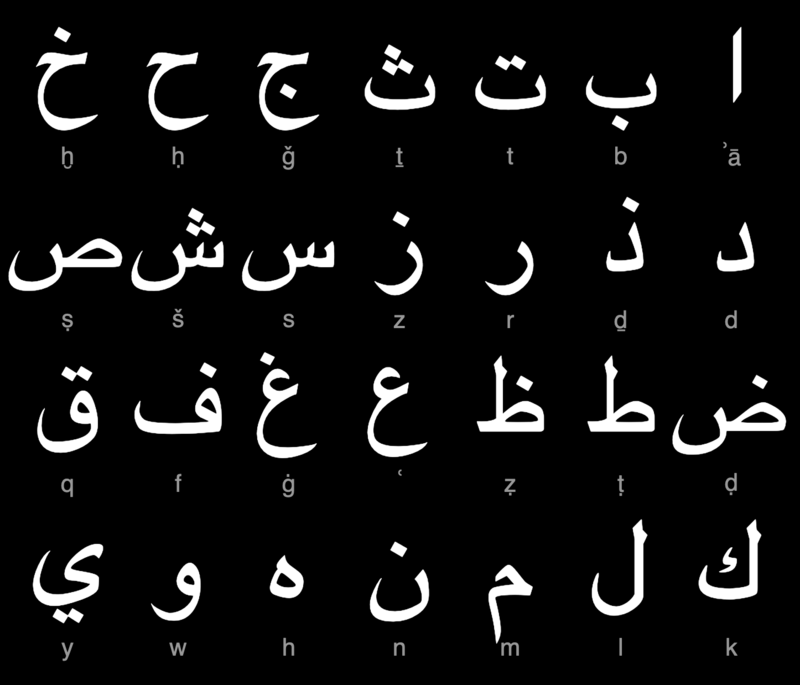
The Arabic script is the foundation of the language. Unlike the Latin alphabet used for English, Arabic is written from right to left. It consists of 28 letters, and at first glance, they might look like intricate art. But once you understand the logic, it all clicks into place.
Most of these letters are consonants. Vowels are typically shown with small marks, called diacritics, written above or below the letters. However, in most everyday writing like books and newspapers, these marks are left out. Native speakers know the pronunciation from context, much like you know "rd" is read as "read" and not "rid" in the sentence, "I rd a book yesterday."
One Letter, Four Shapes
One of the most important concepts is that Arabic letters are cursive, meaning they connect to each other in a word. Because of this, most letters have four different forms, depending on where they appear: at the beginning of a word (initial), in the middle (medial), at the end (final), or by themselves (isolated).
Think of it like cursive handwriting in English. The letter 's' looks different when it's at the beginning of a word versus when it connects to a letter before and after it.
This might sound complicated, but the shapes are all related and follow a consistent pattern. The isolated form is the letter's base shape. The other forms are slight modifications to allow them to connect smoothly to their neighbors.
| Letter | Isolated | Initial | Medial | Final |
|---|---|---|---|---|
| ب (Bā’) | ب | بـ | ـبـ | ـب |
| س (Sīn) | س | سـ | ـسـ | ـس |
| ع (ʿAyn) | ع | عـ | ـعـ | ـع |
| م (Mīm) | م | مـ | ـمـ | ـم |
A small group of letters, sometimes called the "non-connecting" letters, are a bit different. They only have two forms: isolated and final. They will connect to a letter that comes before them (on the right), but never to a letter that comes after them. One such letter is the very first letter of the alphabet, 'alif' (ا).
Sounds You'll Learn
Many Arabic sounds will be familiar to English speakers. For example, ب sounds like 'b', ت sounds like 't', and م sounds like 'm'. But a few sounds are unique to Arabic and will require some practice.
These new sounds are produced deeper in the throat than most English sounds. Let's look at a few of the most common ones.
ح
other
A voiceless, breathy 'h' sound made from the throat. It's like the sound you make when you're cleaning a pair of glasses with your breath.
ع
other
A voiced sound produced by constricting the muscles in the back of your throat. It has no equivalent in English and is one of the most distinctive Arabic sounds.
خ
other
A raspy, throaty sound similar to the 'ch' in the Scottish word "loch" or the German composer "Bach."
Mastering these sounds takes time and practice. Try watching videos of native speakers and mimicking the way they move their mouths and throats. Recording yourself can also be a big help to check your pronunciation.
Focus on Pronunciation: Proper pronunciation is crucial for effective communication in Arabic.
Ready to test what you've learned about the script and its sounds?
In which direction is the Arabic script written?
Why do most Arabic letters have four different forms (initial, medial, final, isolated)?
Getting comfortable with the alphabet is the first and most important step. Everything else in Arabic builds on this foundation.