Foundations of AI Engineering
Introduction to AI
What Is AI Anyway?
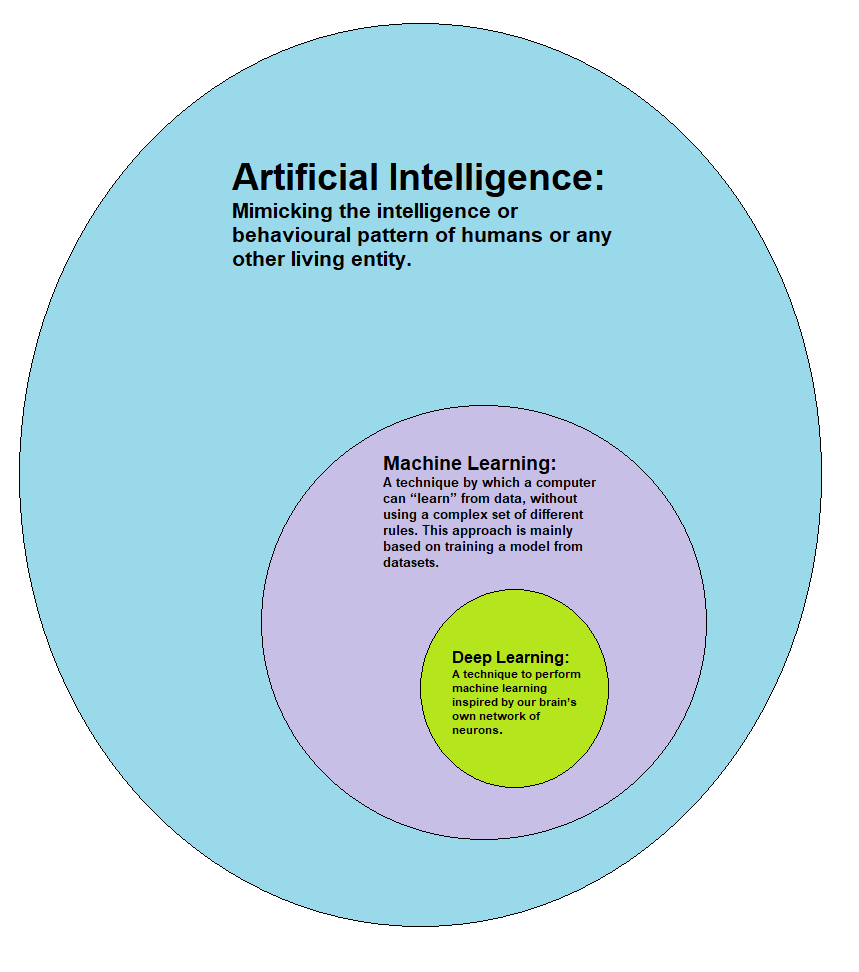
Artificial intelligence is the science of making machines that can think or act like humans. The goal is to create systems that can perform tasks that normally require human intelligence, like learning, reasoning, problem-solving, and understanding language.
At its core, AI is about creating intelligence outside of a biological brain.
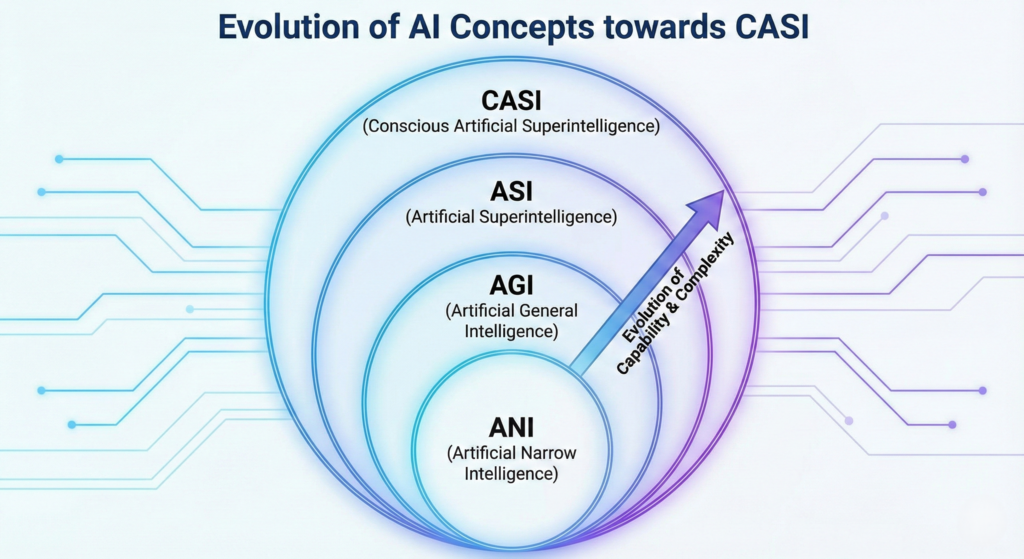
When people talk about AI, they're usually referring to one of two types. The first, and the only one we have today, is Artificial Narrow Intelligence (ANI). ANI is designed to perform a specific, narrow task. Think of the AI that recommends shows on Netflix, the voice assistant on your phone, or the software that filters spam from your email. These systems are incredibly good at their one job, but they can't operate outside of it.
The second type is Artificial General Intelligence (AGI). This is the kind of AI you see in science fiction. AGI would have the ability to understand, learn, and apply knowledge across a wide range of tasks at a human level. It could write a symphony, discover a scientific breakthrough, or have a meaningful conversation. We are not there yet. Beyond AGI is the concept of Artificial Superintelligence (ASI), a hypothetical AI that would surpass human intelligence in every way.
A Quick History
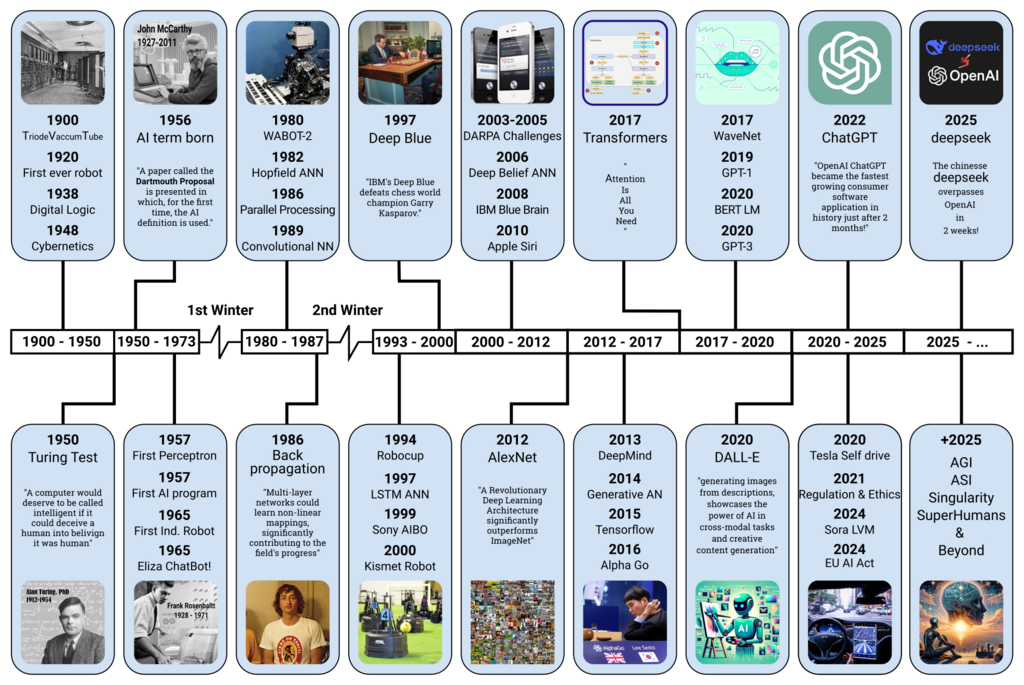
The idea of intelligent machines has been around for centuries, but the formal field of AI research began in the summer of 1956 at a workshop at Dartmouth College. It was there that the term "artificial intelligence" was coined. Early researchers were optimistic, predicting that machines with human-like intelligence were just a few decades away.
Progress wasn't a straight line. The field went through several "AI winters," periods when funding dried up and public interest faded because the technology couldn't live up to the hype. But breakthroughs in computing power and the explosion of available data in the 21st century sparked a renaissance. Today, AI is advancing faster than ever.
The Branches of AI
AI is not a single technology but a broad field with many specialized branches. Each focuses on a different aspect of intelligence.
| Subfield | Focus |
|---|---|
| Machine Learning | Systems that learn from data to improve performance. |
| Natural Language Processing | Enabling computers to understand and generate human language. |
| Computer Vision | Allowing machines to interpret and understand visual information. |
| Robotics | Building physical machines that can perform tasks in the real world. |
| Expert Systems | Emulating the decision-making ability of a human expert. |
These subfields often overlap. For example, a self-driving car uses computer vision to "see" the road, machine learning to predict the behavior of other cars, and robotics to control its own movement. Together, these branches push the boundaries of what machines can do.
Ethical Questions
As AI becomes more powerful and integrated into our lives, it raises important ethical questions. These aren't just for philosophers; they have real-world consequences.
The main concerns revolve around bias, privacy, accountability, and the impact on jobs. If an AI system denies someone a loan, who is responsible? If a facial recognition system is less accurate for certain demographic groups, how do we ensure fairness?
There's also the question of data privacy. AI systems often require vast amounts of data to learn, which can include personal information. Ensuring this data is used responsibly and securely is a major challenge.
Developing AI ethically means building systems that are fair, transparent, and accountable. It involves thinking carefully about the potential impact on society and creating safeguards to prevent harm. As AI continues to evolve, these conversations will become even more critical.

Now, let's test your understanding of these foundational AI concepts.
What is the primary goal of Artificial Intelligence as a scientific field?
The AI that recommends movies on a streaming service is an example of which type of AI?
Understanding these core ideas is the first step in exploring the complex and fascinating world of artificial intelligence.