Foundations of Affective Neuroscience and Emotion Theory
Historical Theory Foundations
An Evolutionary Echo
How do we know what someone else is feeling? Often, we can see it on their face. A smile means joy, a frown means sadness. For a long time, people thought these expressions were unique to humans, perhaps even divine gifts. Charles Darwin disagreed.
In his 1872 book, The Expression of the Emotions in Man and Animals, Darwin argued that our emotional expressions are not random. They are relics of our evolutionary past. He proposed that they stem from a few core principles. The first is the 'principle of serviceable associated habits.' This suggests that expressions which were once useful for survival became linked with certain feelings. For instance, the way we wrinkle our noses in disgust might have started as a practical reflex to keep from inhaling something foul.
Another key idea was the 'direct action of the nervous system.' Darwin noticed that intense excitement could cause the body to react in ways that weren't necessarily useful, like trembling from fear or joy. He saw this as an overflow of nervous energy. These principles placed emotion firmly in our biology, suggesting they are universal traits we share with our ancestors.
Which Comes First?
Darwin explained why we have emotions, but not how we experience them. That question sparked a major debate, beginning with a radical idea from William James and Carl Lange in the 1880s. Common sense tells us that we see a bear, feel fear, and then run. The James-Lange Theory flips this script completely.
The theory argues that we don't run from the bear because we are afraid. We are afraid because we run.
According to this view, the conscious experience of emotion is simply our perception of our body's physiological response. An event triggers a specific physical reaction—a racing heart, sweaty palms, tense muscles. It is only when our brain senses these changes that we label the feeling as 'fear.' The bodily arousal comes first; the feeling follows. Emotion isn't the cause of our physical state, but the result of it.
A Challenge from the Brain
The James-Lange theory was revolutionary, but it didn't sit right with everyone. In the 1920s, physiologists Walter Cannon and Philip Bard mounted a significant challenge. They argued that the body's responses are too slow and often too similar across different emotions to be the source of our distinct feelings. Can a racing heart mean you're scared, excited, or angry? If so, how does the brain know which emotion to feel?
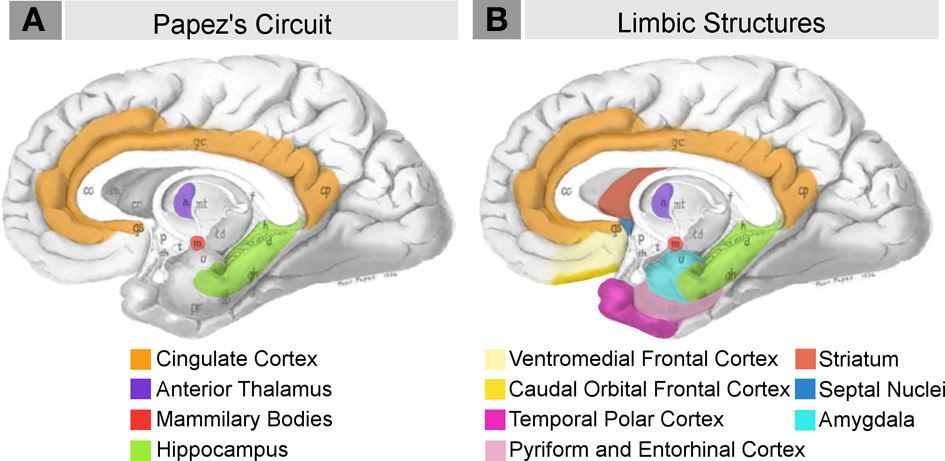
The Cannon-Bard Theory proposed that emotional experiences and physiological arousal happen at the same time, not one after the other. They suggested a specific brain region, the thalamus, was the key. When you see the bear, the thalamus receives the signal and simultaneously sends messages in two directions: up to the cortex to create the conscious feeling of fear, and out to the body to trigger the fight-or-flight response.
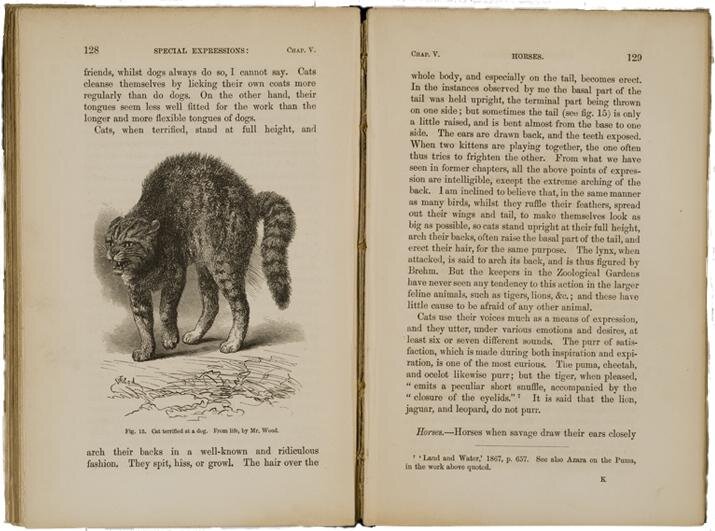
Cannon and Bard backed their theory with experimental evidence. They worked with —cats whose sympathetic nervous system connections from the brain to the body's organs were severed. According to the James-Lange theory, these cats shouldn't be able to feel emotions because their brains couldn't receive feedback about a racing heart or tense muscles. Yet, when confronted with a dog, the cats still hissed, arched their backs, and showed all the classic signs of rage. This suggested the body's feedback wasn't required to produce an emotional response.
This early research established a fundamental debate that continues to shape neuroscience today: the tension between 'body-first' and 'brain-first' views of emotion. Do we feel because our body reacts, or does our brain create the feeling and direct the body's response? The work of these pioneers laid the groundwork for understanding the intricate dance between mind and body.
According to Charles Darwin, what is the origin of human emotional expressions like smiling or frowning?
The James-Lange theory of emotion would suggest the following sequence of events: You see a bear, your heart starts racing, and then you feel fear.