Foundations of 9th Grade Physical Science
Matter and Energy
What's Everything Made Of?
Look around you. The chair you're sitting on, the air you're breathing, the device you're reading this on—it's all matter. In simple terms, matter is the "stuff" that makes up the universe. Anything that has mass and takes up space is matter.
Matter
noun
Anything that has mass and occupies space (volume).
We can describe different types of matter by their properties. Think about the difference between a bowling ball and a beach ball. They're about the same size, but one is much heavier. This is because of a property called density. Density is a measure of how much mass is packed into a certain volume. The bowling ball is dense, while the beach ball is not.
The Faces of Matter
Matter usually exists in one of three main states: solid, liquid, or gas. The state of matter depends on how its particles (atoms and molecules) are arranged and how they move.
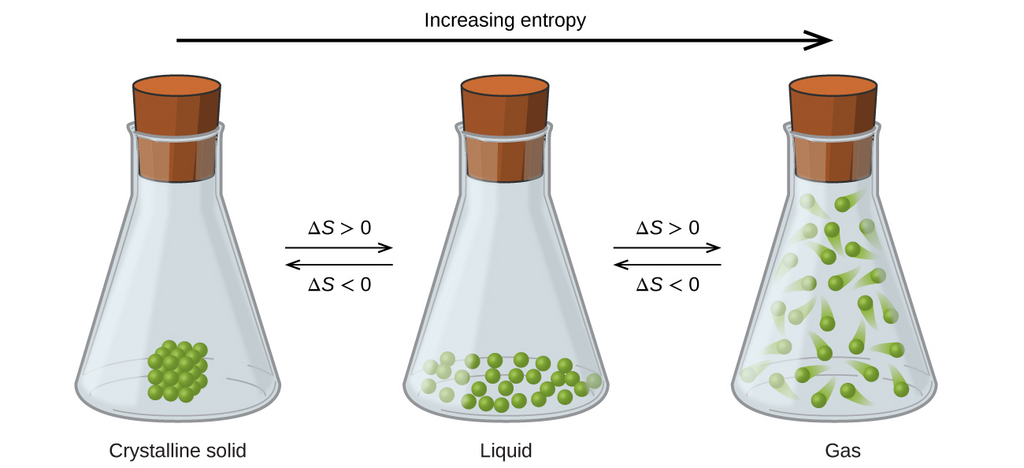
- Solids: Particles are packed tightly in a fixed arrangement. They vibrate but don't move around. A rock is a solid; it keeps its shape and volume.
- Liquids: Particles are close together but can slide past one another. A liquid takes the shape of its container but has a fixed volume. Think of pouring water from a glass into a bowl.
- Gases: Particles are far apart and move randomly and quickly. A gas expands to fill any container it's in. The air around us is a mix of gases.
The Building Blocks
If you could zoom in on any piece of matter, you would eventually find its fundamental building blocks: atoms. An atom is the smallest unit of an element that maintains the properties of that element.
Atoms themselves are made of even smaller subatomic particles:
- Protons: Positively charged particles found in the center, or nucleus, of the atom.
- Neutrons: Neutral particles (no charge) also located in the nucleus.
- Electrons: Negatively charged particles that move in the space around the nucleus.
The number of protons determines what element an atom is. An atom with one proton is always hydrogen; an atom with eight protons is always oxygen.
Energy: The Mover and Shaker
While matter is the "stuff," energy is what makes the stuff do things. Energy is the ability to do work or cause change. It doesn't have mass or volume, but we can observe its effects everywhere.
Energy is never created or destroyed; it only changes from one form to another. This is known as the law of conservation of energy.
Energy comes in many forms. Here are a few key types:
- Kinetic Energy: The energy of motion. A rolling ball, a flowing river, and a gust of wind all have kinetic energy.
- Potential Energy: Stored energy. A book on a shelf has potential energy because of gravity. If it falls, that potential energy is converted into kinetic energy.
- Thermal Energy: Also known as heat, this is the energy of moving particles within matter. The hotter something is, the more thermal energy it has.
- Electrical Energy: The energy of moving electrons, which powers our homes and devices.
- Chemical Energy: Energy stored in the bonds of atoms and molecules. The food we eat contains chemical energy our bodies use to function.
This constant conversion is happening all the time. When you turn on a flashlight, chemical energy in the batteries transforms into electrical energy, which then becomes light and heat. When you eat an apple, your body converts the chemical energy stored in the fruit into the kinetic and thermal energy you need to move and stay warm.
Ready to check your understanding?
Which of the following best defines matter?
In which state of matter are particles close together but able to slide past one another, taking the shape of their container?
Understanding matter and energy is the first step into the world of physical science. These concepts form the foundation for nearly everything else you will learn.