Foundational Physics and Mechanics
Advanced Kinematics
Motion in Two Dimensions
In the real world, objects rarely move in a perfectly straight line. A ball is thrown, a car turns a corner, a planet orbits a star. To describe this kind of motion, we need to think in more than one dimension. The key is to break down complex, two-dimensional movement into two simpler, one-dimensional problems: one for the horizontal (x-axis) and one for the vertical (y-axis).
Imagine a velocity vector, , pointing at an angle above the horizontal. This single vector has two effects happening at once. It's moving the object forward and also upward. We can represent these two effects using vector components: for the horizontal part and for the vertical part.
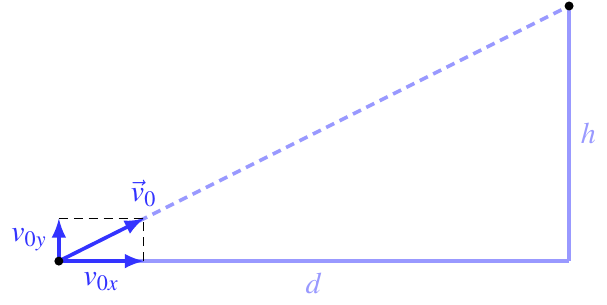
This decomposition is incredibly powerful. The motion in the x-direction is completely independent of the motion in the y-direction. The only thing they share is time. This simple idea unlocks the ability to analyze a huge range of complex movements, most notably projectile motion.
The Arc of a Projectile
There is one key element to projectile motion---and it is this: You can treat the horizontal motion (x-direction) and the vertical motion (y-direction) as two separate one-dimensional kinematics problem.
A projectile is any object that is thrown, shot, or launched into the air and then moves under the influence of gravity alone. For now, we'll work in a vacuum model, which means we ignore complications like and the rotation of the Earth.
In this ideal scenario, things are beautifully simple:
- Horizontal (x-axis): There are no forces acting in this direction. According to Newton's first law, the object's horizontal velocity, , remains constant.
- Vertical (y-axis): Gravity is the only force acting here. It causes a constant downward acceleration, , which is approximately near the Earth's surface.
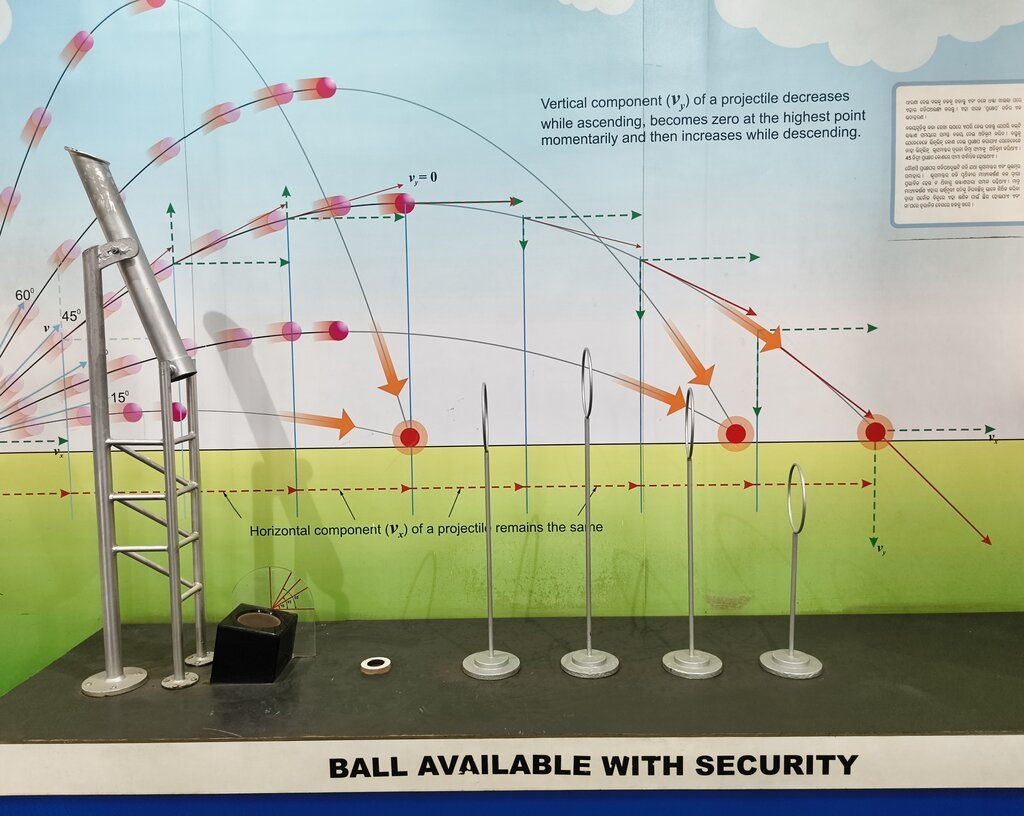
With these two principles, we can write out the kinematic equations for projectile motion. If a projectile is launched from the origin with an initial velocity at an angle :
| Horizontal Motion (x) | Vertical Motion (y) | |
|---|---|---|
| Acceleration | ||
| Velocity | ||
| Position |
By solving these equations, we can predict a projectile's entire path, from its launch to the moment it lands.
Flight Time and Range
Two of the most common questions about projectiles are: how long will it be in the air, and how far will it go? We can answer both using the equations we just established.
To find the time of flight, we need to find how long it takes for the projectile to return to its starting height. If we assume it launches from the ground (), we can set the position equation for to zero and solve for .
This equation gives two solutions for : (the moment of launch) and the total time of flight, .
Once we know the total time of flight, calculating the range, , is easy. The range is simply the horizontal distance traveled during that time. Since the horizontal velocity is constant, we just multiply it by the total flight time.
This final formula for range reveals something interesting. Since the maximum value of is 1, which occurs when , the maximum range is achieved when the launch angle is . This is a classic result in kinematics, but remember it only holds true when we ignore air resistance.
Relative Motion
Velocity is always measured relative to a frame of reference. For example, if you are on a train moving at 50 km/h and you throw a ball forward at 10 km/h, the ball's speed relative to the train is 10 km/h. But to someone standing on the ground, the ball is moving at $50 + 10 = 60$ km/h. This is the core idea of .
We can formalize this with vector addition. Let's say we have three objects: A, B, and the ground (G). The velocity of A relative to the ground is the sum of the velocity of A relative to B, and the velocity of B relative to the ground.
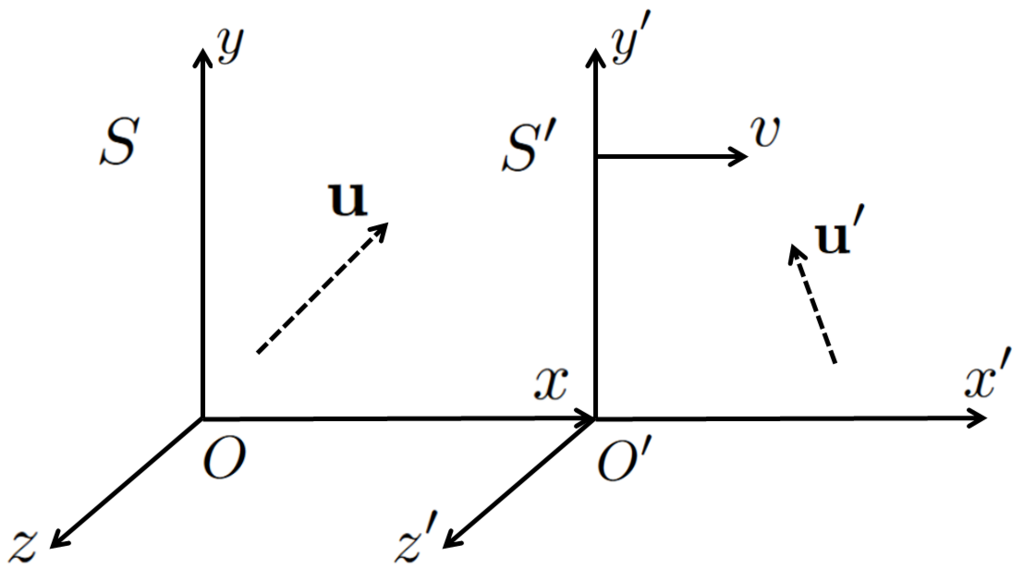
This principle is crucial for navigating in environments where the medium itself is moving, like a boat crossing a river or an airplane flying in the wind. By breaking the velocities into components and applying this vector addition rule, we can solve for the aircraft's true path over the ground or the time it takes to cross the river.
When analyzing projectile motion in a vacuum, the horizontal (x-axis) and vertical (y-axis) components of motion are treated as completely independent of each other.
In the idealized model of projectile motion (ignoring air resistance), what is true about the acceleration of the object after it has been launched?
By breaking motion into independent components, we can describe and predict the movement of objects in two dimensions. This foundation is essential for understanding the forces that cause these motions, which is the heart of dynamics.