Foundational Model Construction
Introduction to Language Models
The Heart of Language AI
At its core, a language model is a tool that understands and predicts language. Think of it as an advanced version of the autocomplete on your phone. When you type "The cat sat on the…" your phone might suggest "mat." It does this by calculating the probability of which word comes next, based on the vast amount of text it has been trained on.
A language model's main job is to determine the likelihood of a sequence of words. It answers the question: how probable is it that this word follows the previous ones?
This simple-sounding task is the foundation for almost everything we see in modern artificial intelligence that deals with human language. This field is called Natural Language Processing, or NLP. Language models are the engines that power NLP, allowing computers to work with text in sophisticated ways.
Language Model
noun
A computational model that learns the statistical patterns of a language to predict the probability of a given sequence of words.
A Brief History
Language models weren't always so complex. The earliest versions, known as n-gram models, were much simpler. An n-gram is just a sequence of n words. A 2-gram (or bigram) model, for example, would look at only the previous word to predict the next one. If it saw "San Francisco" thousands of times in its training data, it would know that after "San," the word "Francisco" is very likely.
| N-gram Type | Description | Example from "the quick brown fox" |
|---|---|---|
| Unigram (1-gram) | A single word | "the", "quick", "brown", "fox" |
| Bigram (2-gram) | A two-word sequence | "the quick", "quick brown", "brown fox" |
| Trigram (3-gram) | A three-word sequence | "the quick brown", "quick brown fox" |
These models were useful, but they had a major limitation: they lacked context. A bigram model doesn't understand the meaning of the sentence as a whole. It only knows which words tend to appear together.
The big shift came with the introduction of neural networks. Instead of just counting word co-occurrences, neural language models learn to represent words as vectors of numbers called embeddings. These embeddings capture the relationships, meanings, and context of words in a much deeper way. This allows them to understand that "king" and "queen" are related in a way that "king" and "cabbage" are not.
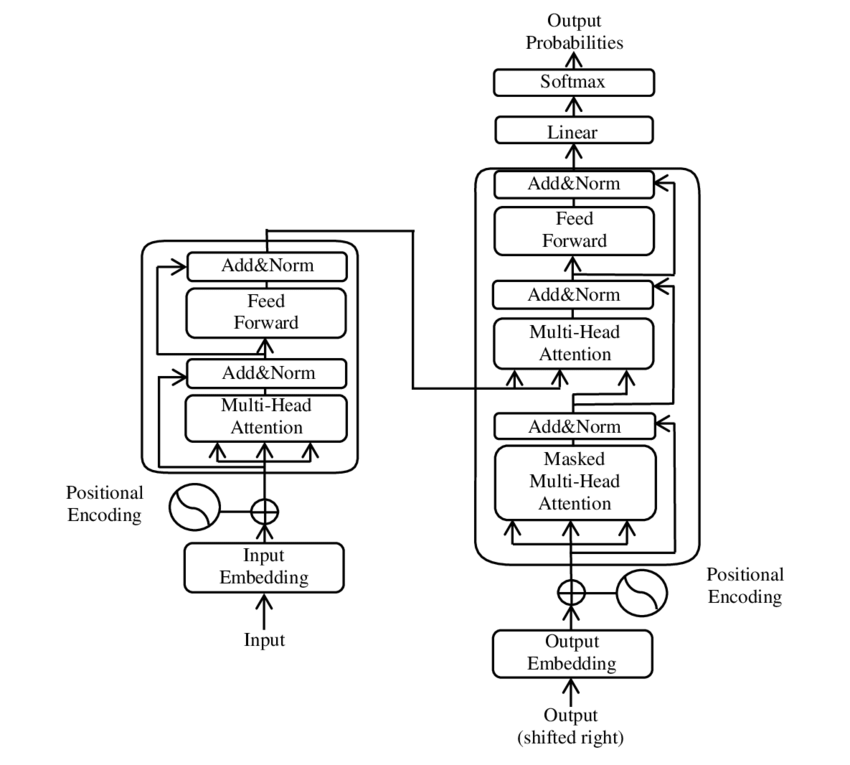
This leap forward enabled models to generate much more coherent and contextually aware text, paving the way for the powerful AI we interact with today.
What They Can Do
Because language models are fundamentally about understanding the patterns in language, they can be applied to a huge range of tasks. Their versatility is what makes them so powerful.
By predicting words in a sequence, language models can be adapted to generate entirely new text, translate between languages, analyze sentiment, and even answer questions.
Here are a few key applications:
-
Text Generation: This is the most direct application. Autocomplete, chatbots, and writing assistants all rely on a model's ability to predict the next word over and over again to form coherent sentences and paragraphs.
-
Machine Translation: Models can learn the patterns of two different languages and how they map to each other. By understanding the context of a sentence in one language, they can generate the equivalent sentence in another.
-
Sentiment Analysis: Businesses use language models to analyze customer reviews or social media posts to determine if the sentiment is positive, negative, or neutral. The model learns to associate certain words and phrases with particular emotions.
-
Summarization: A model can read a long document and generate a shorter version that captures the key points. It learns to identify the most important sentences and rephrase them concisely.
Understanding these core concepts is the first step toward building your own models. While modern models are incredibly complex, they all build on this fundamental idea of predicting the next word in a sequence.
What is the fundamental task of a language model?
The major limitation of early n-gram models was their lack of contextual understanding.