Foundational Leadership Skills
Introduction to Leadership
What Makes a Leader?
Leadership isn't about a title or a corner office. At its core, it's about influence. It's the ability to guide and inspire others toward a common goal. A manager can keep a team on task, but a leader motivates them to want to achieve something great together. Anyone can be a leader, whether they're in charge of a company or just a small project.
Leadership
noun
The action of leading a group of people or an organization, or the ability to do this.
But what does that influence look like? And where does it come from? Our ideas about leadership have changed a lot over time.
An Evolving Idea
Early on, many people believed in the “Great Man” theory. This idea suggested that leaders were simply born, not made. They had inherent traits like charisma, intelligence, and confidence that set them apart. If you didn't have these natural gifts, you couldn't be a leader. It was a simple, but very limited, view.
Over time, researchers shifted their focus. Instead of asking what leaders are, they started asking what leaders do. This led to behavioral theories. The new thinking was that leadership is a set of skills and actions that can be learned and practiced. This was a major breakthrough because it meant anyone could develop into a leader.
Then, thinking evolved again. The next wave of theories recognized that context matters. Known as situational or contingency theories, they proposed that the best leadership style depends entirely on the situation. A leader might need to be commanding during a crisis but more collaborative when brainstorming new ideas. Effective leadership isn't one-size-fits-all; it's about adapting your approach to the needs of your team and the challenge at hand.
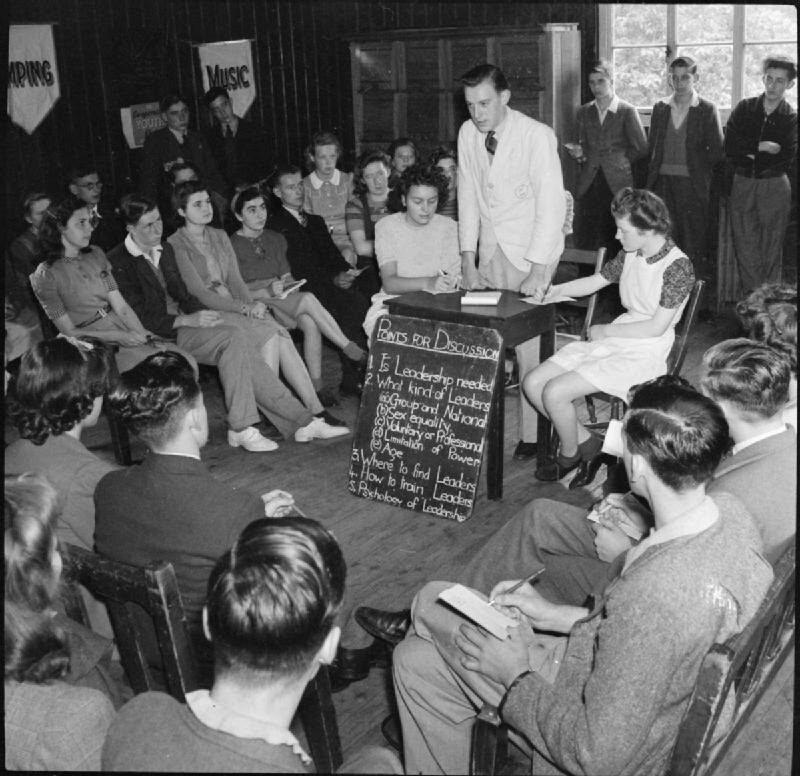
Modern Leadership Styles
Today, we often talk about two contrasting styles that grew out of these earlier ideas: transactional and transformational leadership.
Transactional leadership is based on exchange. The leader sets clear goals and expectations, and followers are rewarded for meeting them or disciplined for failing. It’s a straightforward approach focused on structure, order, and performance.
This style works well in environments where tasks are clear and consistent. Think of a manager ensuring a production line runs smoothly and meets its daily quota. The system is clear: do the job right, get paid. It maintains the status quo effectively.
Transformational leadership, on the other hand, is about inspiration. These leaders don't just assign tasks; they create a vision that motivates people to go above and beyond. They build trust and empower their teams to be creative and take ownership of their work.
A transformational leader is focused on growth and innovation. They challenge their teams to rethink what’s possible and support them in developing their own skills. This style is powerful for driving change and fostering a culture of continuous improvement.
Neither style is inherently better than the other. The most effective leaders often blend both, applying transactional methods to ensure clarity and consistency while using transformational techniques to inspire and innovate.
The Leader's Role
In any organization, a leader wears many hats. Their fundamental role is to provide direction and create an environment where people can succeed. This involves several key functions:
- Setting a Vision: A leader clarifies where the team is going and why it matters. This shared purpose helps align everyone's efforts.
- Motivating People: Leaders connect with their team, understand what drives them, and create conditions that foster enthusiasm and commitment.
- Making Decisions: From day-to-day choices to strategic pivots, leaders are responsible for making tough calls, often with incomplete information.
- Building the Team: This means selecting the right people, fostering collaboration, and managing conflict to ensure the group works together effectively.
Ultimately, a leader's job is to enable others to achieve their full potential in pursuit of a collective goal. It’s a dynamic role that requires adapting to people, context, and challenges.
Time to check what you've learned.
Which leadership theory first introduced the idea that leadership skills can be learned and are not just innate qualities?
A leader who focuses on maintaining the status quo by ensuring tasks are completed correctly in exchange for rewards is best described as what kind of leader?
Understanding these foundational ideas is the first step in developing your own leadership abilities. It's not about being born a certain way, but about learning, adapting, and inspiring.