Foundational Identification Skills
Introduction to Object Recognition
Making Sense of the World
Look around you. You're likely surrounded by objects: a chair, a screen, a cup. Without a second thought, you know what each one is. This seemingly instant ability is called object recognition. It's the mental process of identifying what something is, giving a name and meaning to the things we see.
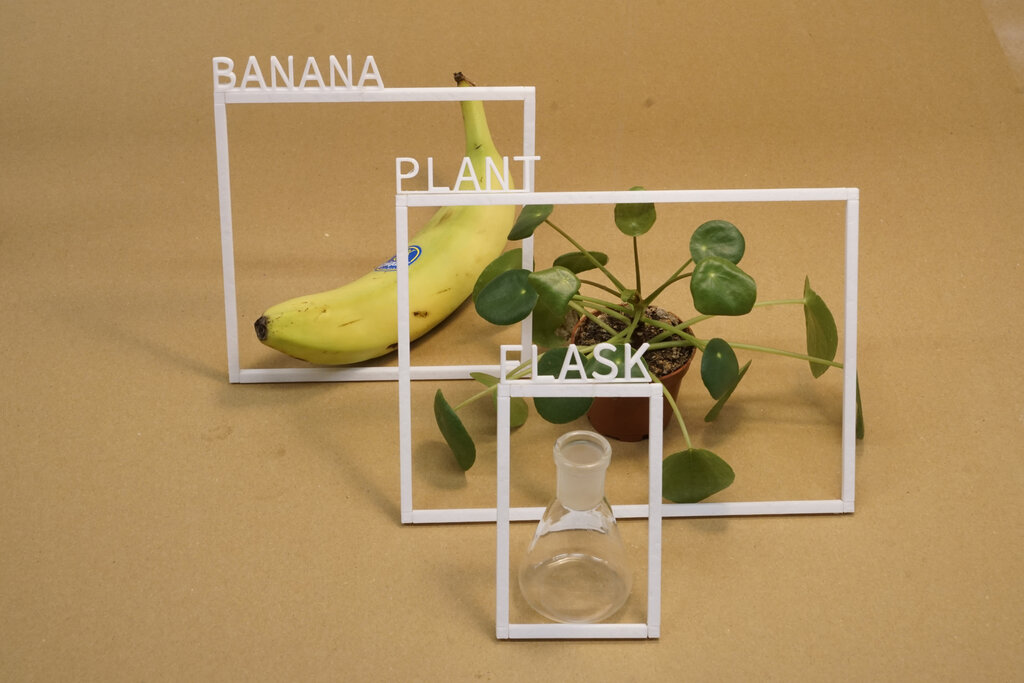
This process feels effortless, but it's a complex cognitive feat. Your brain takes in a flood of visual information—light, color, lines, and textures—and transforms it into a coherent, understandable world. It all begins with perception.
Perception Is More Than Seeing
Perception isn't just about what your eyes detect. It's about how your brain interprets that raw data. A camera can capture an image as millions of pixels, but it doesn't understand what it's recording. Your brain does. It actively organizes sensory signals into meaningful patterns.
When you look at a dog, your eyes register shapes, colors, and movement. Your brain then pieces these features together, recognizing a tail, fur, four legs, and a snout. This assembly of features is the first crucial step. Your brain doesn't just see a random collection of parts; it perceives a unified whole.
Once your brain perceives the object's features, the next step is categorization. This is how you connect what you're seeing to your existing knowledge about the world.
Putting Things in Boxes
Categorization is the process of grouping things based on shared properties. It’s like having mental folders for everything you know. You have a folder for "fruit," a folder for "animals," and a folder for "furniture." When you see a new object, your brain quickly tries to file it into the right category.
This filing system is incredibly efficient. Instead of having to analyze every single apple you ever encounter from scratch, your brain has a general concept of "apple." This concept includes typical features: round, edible, grows on trees, can be red or green. When you see an object that matches most of these features, you recognize it as an apple.
This process allows us to make sense of new things. Even if you've never seen a specific breed of dog, you can still recognize it as a dog because it fits the general characteristics of your "dog" category.
This combination of perception and categorization is the core of object recognition. It's a rapid, unconscious process that lets us navigate our environment, make decisions, and interact with the world. It turns a chaotic scene of shapes and colors into a structured reality filled with familiar objects.
Ready to test your understanding? Let's see what you've learned about the fundamentals of recognition.
What is the primary definition of object recognition?
According to the text, what is the main purpose of categorization in object recognition?
Understanding how we recognize objects is the first step toward understanding many other complex cognitive functions, from reading language to recognizing faces.