Foundation Repair Principles
Foundation Types
The Unseen Support
Every building, from a small house to a towering skyscraper, needs a solid base. This base is called the foundation. Its job is simple but critical: to safely transfer the entire weight of the structure, plus everything in it, to the ground below. The ground, however, isn't always uniform. It can be soft clay, loose sand, or hard rock. The type of foundation a building needs depends on the building's size and the strength of the soil it rests on.
Strip Foundations
The most common type for residential homes and other small buildings is the strip foundation. Imagine drawing the floor plan of a house directly onto the ground. Now, imagine digging a trench under every load-bearing wall and filling it with concrete. That's essentially a strip foundation.
It's a continuous line, or strip, of concrete that provides a wide, stable base for the walls. By making the foundation wider than the wall, it spreads the weight over a larger area of soil, reducing the pressure and preventing the building from sinking. This method is effective and economical, but it requires the ground to be relatively strong and stable close to the surface.
Pad Foundations
Not all buildings use continuous walls to bear weight. Many larger structures, like office buildings and warehouses, are supported by a skeleton of columns. Each of these columns carries a significant, concentrated load. A strip foundation wouldn't make sense here. Instead, builders use pad foundations.
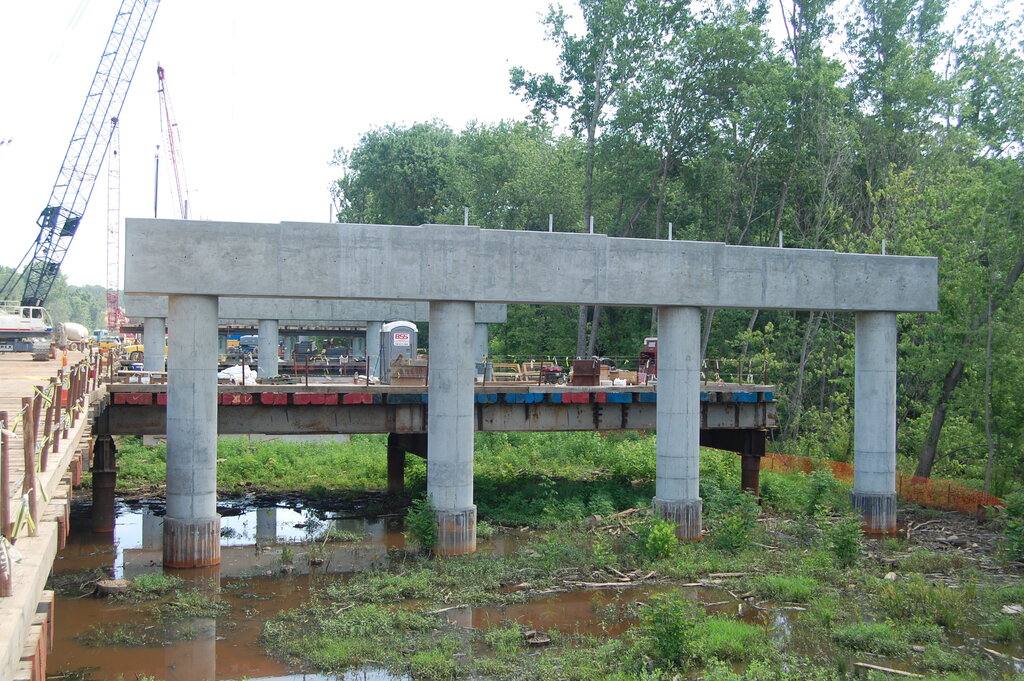
A pad foundation is an isolated block of concrete, usually square or rectangular, placed directly under a single column. It works like a snowshoe, spreading the heavy point load from the column over a wide enough area of soil to support it. This approach is efficient because concrete is only placed where it's needed, directly under the points of highest stress.
You can often see the structures that sit on pad foundations, like the piers that hold up a bridge.
Raft Foundations
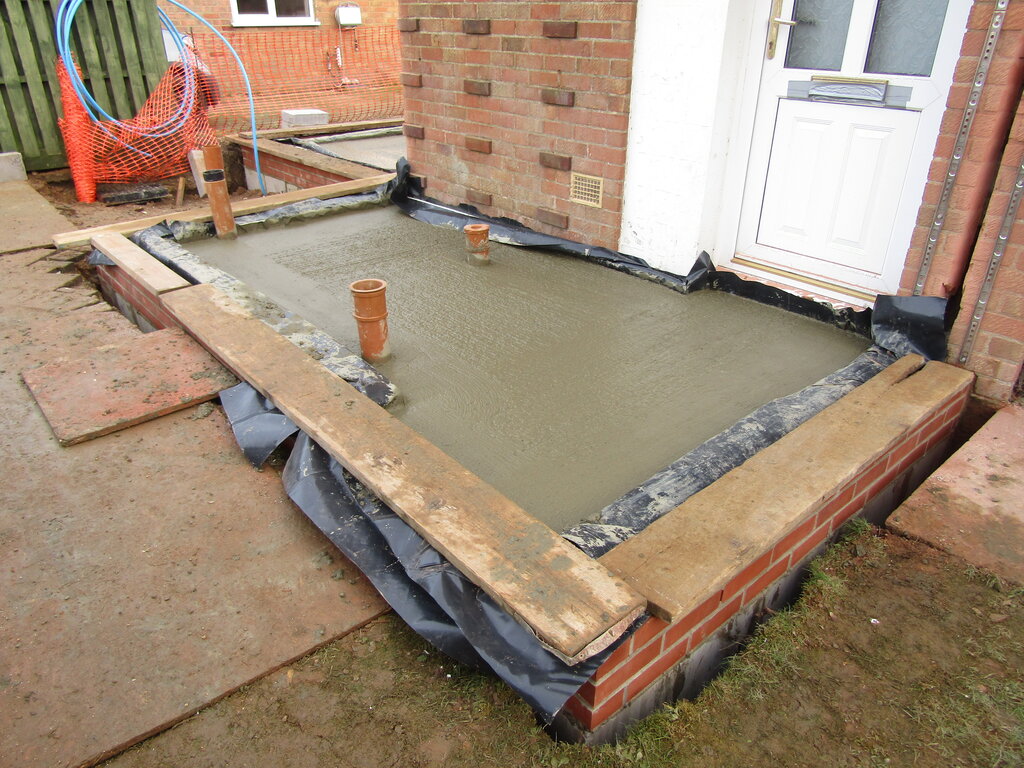
What if the soil is very weak or unpredictable? If you used strip or pad foundations, some parts of the building might sink more than others, causing cracks and structural damage. The solution is to connect all the individual foundations into one giant slab. This is called a raft foundation.
Also known as a mat foundation, it's essentially a single, thick concrete slab that covers the entire footprint of the building. By doing this, the building's weight is spread out over the largest possible area. The structure effectively "floats" on the soil like a raft on water. This minimizes the pressure on the ground and ensures any settlement happens evenly across the whole building. Raft foundations are common in areas with soft clay or soil that has a low bearing capacity.
Pile Foundations
Sometimes, the soil near the surface is just too weak to support a large building, no matter how much you spread the load. In these cases, you have to bypass the weak soil entirely and transfer the building's weight to a stronger layer of soil or rock located much deeper underground.
This is done with pile foundations. Piles are long, slender columns made of concrete, steel, or wood. They are driven or drilled deep into the ground until they reach a solid stratum. The building is then constructed on top of a concrete cap that connects the tops of the piles, effectively resting the entire structure on stilts that are hidden underground. Pile foundations are essential for skyscrapers, bridges, and any heavy structure built on unstable ground.
Now that you know about the different ways buildings connect to the ground, let's test your knowledge.
What is the primary purpose of a building's foundation?
A large warehouse is being designed with a support structure based on a grid of individual columns. Which foundation type is most suitable for this design?
Choosing the right foundation is one of the first and most important decisions in any construction project. By matching the foundation type to the building's needs and the ground's conditions, engineers ensure our structures remain safe and stable for decades to come.