Foundation for Advanced Learning
Systems Thinking Synthesis
Seeing the Whole Picture
Thinking in systems moves us beyond a simple list of parts. It’s about understanding the dance between them. Instead of seeing a car as just an engine, wheels, and a chassis, you see how they work together to create motion. This is the essence of synthesis: understanding the whole by examining the connections.
Consider a project delay. Linear thinking might blame a single missed deadline. A systems thinker asks about the ripple effects. How did that delay in writing technical documents affect the marketing team's launch schedule? Did it erode stakeholder trust, making future funding harder to secure? You start to see that a project isn't a straight line of tasks, but a web of interconnected dependencies. Problems in one area often signal stress in another.
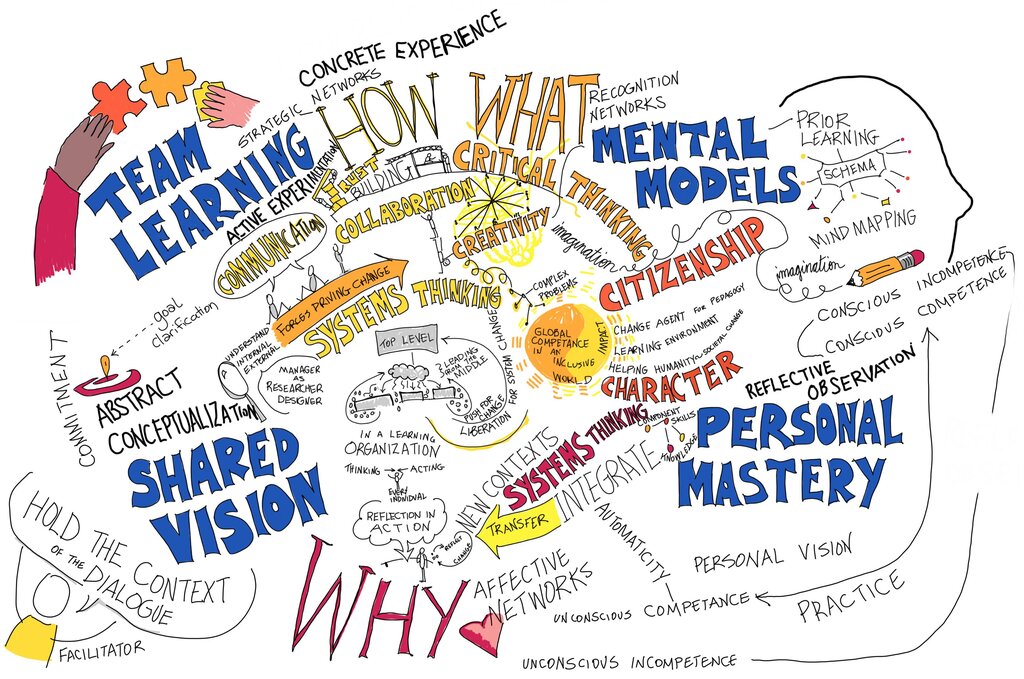
The Engines of Change
Systems are rarely static. They change and evolve, driven by feedback loops—chains of cause and effect that circle back on themselves. These loops are the engines that produce growth, create stability, or cause collapse. There are two main types.
Reinforcing (or Positive) Feedback Loops amplify change. They create exponential growth or decline. Think of a viral video: the more views it gets, the more the algorithm promotes it, leading to even more views.
Balancing (or Negative) Feedback Loops stabilize a system. They work to maintain equilibrium. A thermostat is a classic example: when the room gets too hot, the AC kicks in to cool it down, and vice-versa.
Recognizing these loops in the wild is a crucial skill. Urban planning provides a clear example. Building more highways to ease congestion often encourages more people to drive, leading to even more traffic—a reinforcing loop known as induced demand. A balancing loop might be that worsening traffic pushes people to demand and use public transit, which can, over time, reduce the number of cars on the road.
Drawing the Line
You can't analyze everything at once. A critical step in synthesis is defining the system's boundary—deciding what's in and what's out. This choice is crucial because it determines the insights you'll generate. Are you analyzing a company's sales problem by only looking at the sales team? Or does your boundary include marketing, product development, and customer support? A narrow boundary might pinpoint an inefficient sales script. A wider boundary might reveal that the root cause is poor marketing leads or a buggy product.
There’s no single “correct” boundary. The goal is to be intentional. Draw a boundary that’s useful for the problem you’re trying to solve, but remain aware of the larger systems it connects to. In software development, this idea is formalized in concepts like a from Domain-Driven Design, where different parts of a large application are deliberately isolated to keep their internal logic clean and manageable.
Effective synthesis isn't about finding the one true cause of a problem. It’s about creating a richer, more holistic map of reality that reveals multiple points of influence and potential intervention.
What is the primary focus of "synthesis" in systems thinking?
A city builds more highways to reduce traffic, but this encourages more people to drive, leading to even worse congestion. This phenomenon, known as induced demand, is an example of what?
Synthesis is a skill that grows with practice. By looking for connections, identifying feedback loops, and consciously setting boundaries, you shift from reacting to isolated events to understanding and shaping the underlying structures that drive them.