Formula One Aerodynamic Engineering
Front Wing Vortex Dynamics
The Aerodynamic Engine
The front wing on a Formula 1 car is far more than just a simple device for generating downforce. It’s the car’s aerodynamic engine, the first point of contact with the oncoming air. Its primary, and most complex, job is flow conditioning. Every surface, curve, and element is meticulously shaped to manipulate the airflow, not just for its own benefit, but to prepare a clean, high-energy path for the air to follow over and under the rest of the car.
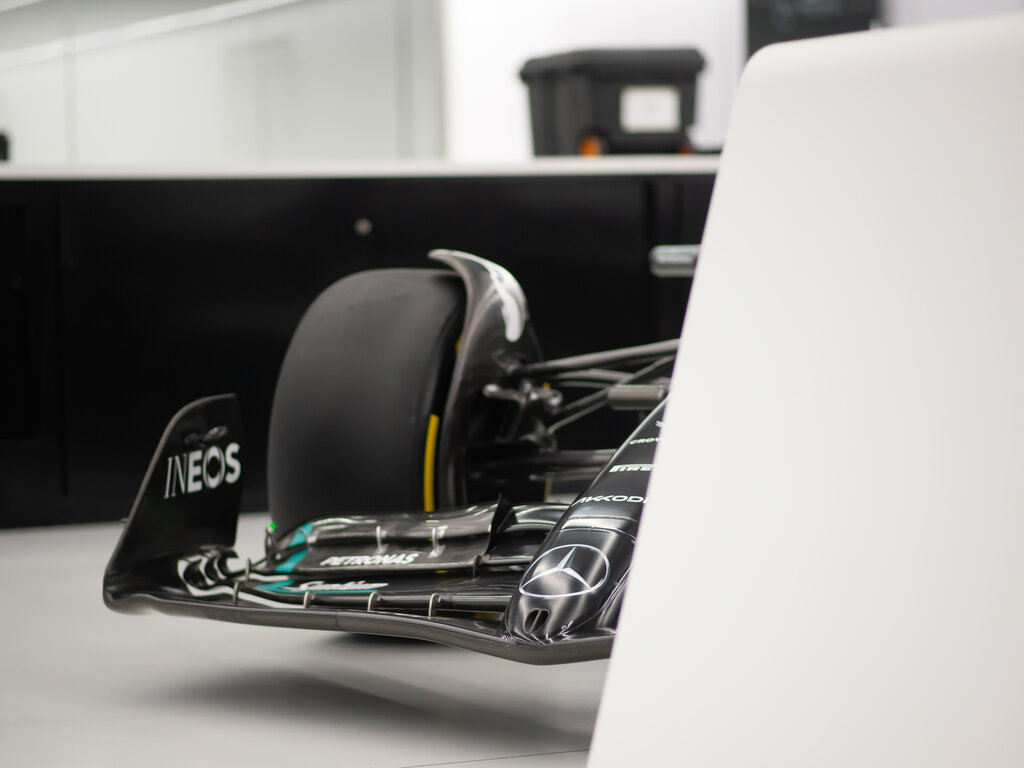
The single biggest challenge for the front wing is managing the wake generated by the front wheels. A spinning, deforming tire creates a chaotic, turbulent mess of low-pressure air. If left unchecked, this 'dirty air' spills inwards, choking the inlets of the underfloor tunnels and disrupting the flow to the sidepods. This severely compromises the car's ability to generate downforce through ground effect. The front wing's task is to fight this chaos with precision.
The Y250 Vortex
Before the 2022 regulations, the dominant tool for this task was the a powerful, intentionally generated spiral of air. Its name comes from its origin point: the area 250mm from the car's centerline. Here, the innermost section of the front wing elements were designed to create a sharp pressure difference. High-pressure air from the top surface would spill over to the low-pressure underside, rolling up into a concentrated, high-energy vortex.
This vortex acted like a powerful air-curtain, shielding the sensitive underfloor from the disruptive wake of the front wheels.
The Y250 was the cornerstone of an 'outwash' philosophy. The vortex, along with other aerodynamic structures on the wing, worked to aggressively push the front wheel wake outwards, away from the car's body. The goal was to create as wide a path as possible for clean air to reach the floor and rear of the car. However, this powerful outwash also created a large, turbulent wake behind the car, making it difficult for following cars to overtake. The 2022 regulations were specifically written to eliminate the Y250 vortex and curb excessive outwash in the name of better racing.
Modern Flow Control
With the Y250 vortex outlawed, teams have developed new strategies. The current regulations promote a more subtle approach to managing the front wheel wake. Instead of one dominant vortex, wings now generate a complex system of smaller, less aggressive vortices to control the airflow. The focus has shifted from aggressive outwash to narrowing the wheel wake and channeling it carefully around the sidepods.
The wing's endplates and any attached are critical here. The endplate itself prevents high-pressure air from simply spilling off the wingtip, which would create drag. Instead, it helps direct the flow, working with the wing elements to form the desired vortex structures. Dive planes, which are the small winglets mounted on the endplate, create their own smaller vortices. These can be used to fine-tune the shape and trajectory of the main wheel wake, nudging it into the desired path with surgical precision.
Front wing ride height is also more sensitive than ever. Because the cars now rely heavily on ground effect tunnels that start right behind the front wheels, the initial state of the air feeding those tunnels is paramount. A millimeter change in ride height can alter the angle at which the wing meets the air, changing the strength and position of the vortices it sheds. This can have a cascading effect, potentially detaching the flow from the underfloor and causing a massive loss of downforce.
What is considered the primary and most complex job of a modern Formula 1 front wing?
Prior to 2022, the 'Y250 vortex' was a key aerodynamic tool. What was its main function?
The front wing is a masterpiece of fluid dynamics, turning the chaotic challenge of oncoming air into a precisely managed flow that brings the entire car to life.