Formation of the Sierra Nevada
Introduction to Plate Tectonics
A Cracked Shell
The ground beneath your feet feels solid, but it's part of a giant, cracked puzzle. Earth's rigid outer layer, the lithosphere, isn't a single, unbroken shell. It's fractured into massive pieces called tectonic plates. These plates are composed of the crust and the very top portion of the mantle.
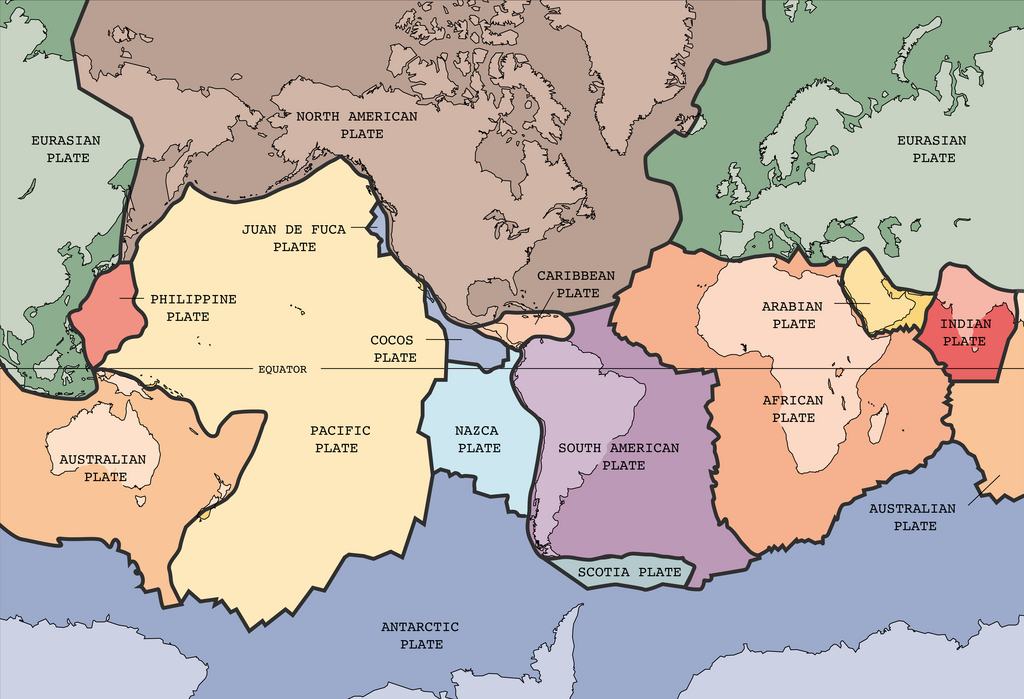
These plates aren't static. They are constantly in motion, floating on a hotter, more fluid layer of the mantle known as the asthenosphere. You can think of it like large crackers floating on a thick, hot soup. The plates drift across the planet at a rate of a few centimeters per year, about the same speed your fingernails grow.
Where Plates Meet
Since the plates are always moving, they inevitably interact with each other along their edges, or boundaries. These interactions are responsible for most of the planet's geological activity, like earthquakes and volcanoes. There are three main ways plates can interact.
Divergent Boundaries: This is where two plates are pulling away from each other. As they separate, molten rock, or magma, from the mantle rises to fill the gap, creating new crust. This process often happens on the ocean floor, forming mid-ocean ridges, which are essentially underwater mountain ranges.
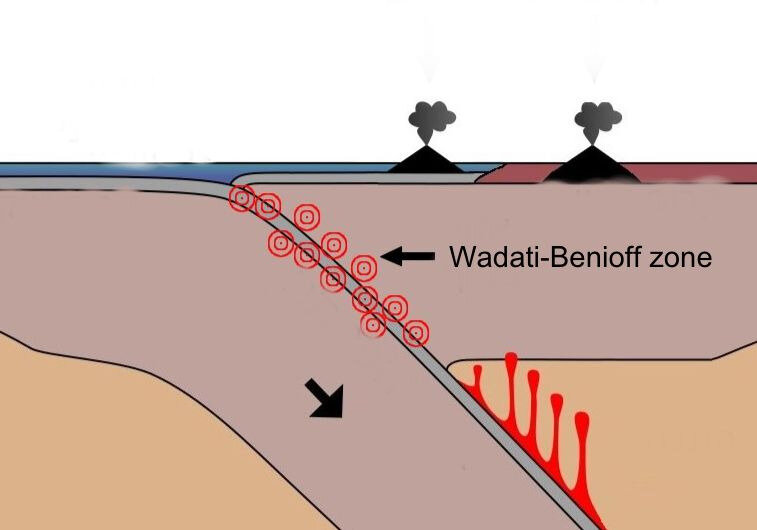
Convergent Boundaries: Here, two plates collide. What happens next depends on the type of plates involved. When a dense oceanic plate collides with a less dense continental plate, the oceanic plate is forced to bend and slide underneath the continental plate. This process is called subduction. The subducting plate sinks into the mantle and melts, which can lead to volcanic activity on the surface. If two continental plates collide, neither can easily subduct, so they crumple and fold, pushing rock upwards to form enormous mountain ranges.
Transform Boundaries: At these boundaries, plates slide horizontally past one another. The movement isn't smooth. The rough edges of the plates snag and lock, building up stress over time. When the stress becomes too great, the rock breaks and the plates suddenly slip, releasing a massive amount of energy. This is what causes earthquakes.
The Driving Force
What powers the slow, relentless movement of these colossal plates? The engine is the immense heat deep within the Earth. This heat drives several mechanisms that work together to move the plates.
convection
noun
The movement of heat by the physical movement of the heated substance, such as hot rock rising and cooler rock sinking.
One major driver is mantle convection. The rock in the mantle is heated from below by the Earth's core. As it heats up, it becomes less dense and slowly rises. When it reaches the base of the lithosphere, it cools, becomes denser, and sinks back down. This slow, circular motion creates currents that drag the tectonic plates along with them.
Two other forces, slab pull and ridge push, also play key roles. Slab pull occurs at subduction zones. The edge of the dense, subducting plate is cold and heavy, so gravity pulls it down into the mantle. This pulling force acts like an anchor, dragging the rest of the plate behind it.
Ridge push happens at divergent boundaries. The newly formed crust at a mid-ocean ridge is hot and elevated. Gravity causes this higher, younger crust to slide downhill, away from the ridge, pushing the plate forward. Scientists believe that slab pull is the strongest of these forces, acting as the primary driver of plate tectonics.
Earth's tectonic plates are primarily composed of which layers?
The process where a dense oceanic plate slides beneath a less dense continental plate is called ______.
These fundamental principles of plate tectonics—the moving plates, their varied interactions at boundaries, and the forces that drive them—shape the world we see, from the highest mountains to the deepest ocean trenches.