Forex Trend Reversal Strategies
Introduction to Forex Market
What Is the Forex Market?
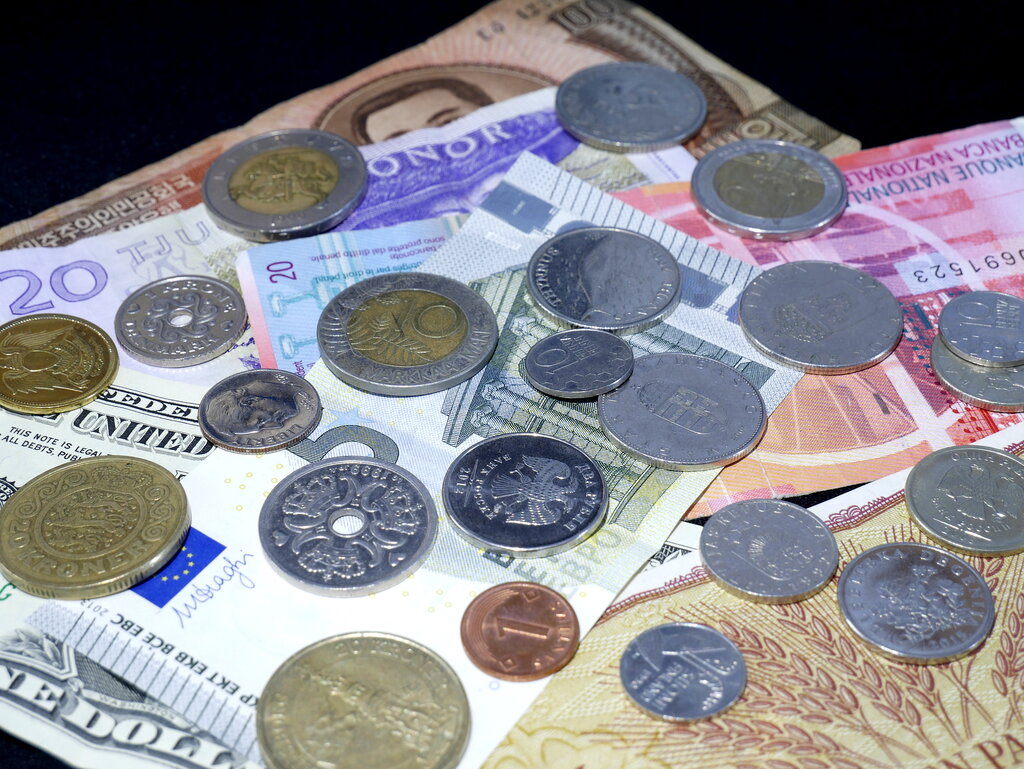
The foreign exchange market, or forex (FX), is where currencies are traded. It’s the largest financial market in the world, with trillions of dollars changing hands every day. Think of it as a massive, decentralized marketplace where instead of buying and selling goods, participants buy and sell national currencies.
Its primary purpose is to facilitate international trade and investment. If a German company wants to buy parts from a supplier in the United States, it needs to convert its euros into U.S. dollars to complete the transaction. The forex market makes this possible. Beyond commerce, it's also a hub for speculation, where traders aim to profit from changes in currency values.
The Main Players
The forex market isn't a single entity but a network of participants. Different players have different motivations and levels of influence.
The four main types of participants are central banks, large financial institutions, corporations, and individual retail traders.
-
Central Banks: These are government-run institutions like the U.S. Federal Reserve or the European Central Bank. They manage their nation's currency, money supply, and interest rates. Their policy decisions and public statements can cause significant shifts in currency value.
-
Financial Institutions: These are the heavyweights. Major commercial banks (like JPMorgan Chase or Deutsche Bank) provide liquidity to the market, executing trades for their clients and for their own accounts. They handle the vast majority of all forex trading volume.
-
Corporations: Companies of all sizes participate in the forex market out of necessity. An automaker in Japan buying steel from Australia needs to exchange Japanese yen for Australian dollars. These transactions are for business operations, not speculation.
-
Retail Traders: This group includes individuals who trade currencies to speculate on future price movements. While their individual trade sizes are small compared to banks, the collective volume of retail trading is substantial.
Currency Pairs
In forex, you don't just buy a currency; you simultaneously buy one currency and sell another. This is why currencies are always quoted in pairs. For example, when you see a quote for EUR/USD, it represents the value of the euro relative to the U.S. dollar.
The first currency in a pair is the base currency, and the second is the quote currency. The price shows how much of the quote currency is needed to buy one unit of the base currency.
So, if the EUR/USD price is 1.08, it means that one euro is worth 1.08 U.S. dollars. A handful of pairs, known as the "majors," account for the majority of all trading. They all involve the U.S. dollar on one side.
| Pair | Currencies | Nickname |
|---|---|---|
| EUR/USD | Euro / U.S. Dollar | Fiber |
| USD/JPY | U.S. Dollar / Japanese Yen | Gopher |
| GBP/USD | British Pound / U.S. Dollar | Cable |
| USD/CHF | U.S. Dollar / Swiss Franc | Swissy |
| AUD/USD | Australian Dollar / U.S. Dollar | Aussie |
| USD/CAD | U.S. Dollar / Canadian Dollar | Loonie |
| NZD/USD | New Zealand Dollar / U.S. Dollar | Kiwi |
What Moves the Market?
Currency values are in constant flux, pushed and pulled by a variety of forces. Understanding these drivers is key to understanding the market.
Economic Indicators: Data releases paint a picture of a country's economic health. Key reports include Gross Domestic Product (GDP), inflation rates (like the Consumer Price Index), and employment figures. A strong, growing economy typically leads to a stronger currency, as it attracts foreign investment.
Geopolitical Events: Political stability is crucial. Elections, trade negotiations, conflicts, and government policy changes can create uncertainty. Investors tend to move their money away from currencies of countries with political turmoil, causing their value to drop.
Market Sentiment: This is the collective mood of traders. When sentiment is positive, or "risk-on," traders may buy currencies of countries with higher growth prospects. When sentiment is negative, or "risk-off," they often flock to "safe-haven" currencies like the U.S. dollar, Swiss franc, or Japanese yen.
Now that you know the basics of the forex market, let's review some of the key terms.
Ready to test your knowledge? This quiz will cover the structure of the forex market and the factors that influence it.
What is the primary purpose of the foreign exchange market?
Which group of participants accounts for the vast majority of all trading volume in the forex market?
Understanding these core elements provides a solid foundation for analyzing how and why currencies move.