Forex Trading Strategies Made Simple
Forex Market Basics
What is the Forex Market?
If you've ever traveled to another country, you've participated in the foreign exchange market. Exchanging your home currency for the local currency is a forex transaction. On a massive scale, this is what the Forex (FX) market is all about: a global marketplace for exchanging national currencies.
Unlike the New York Stock Exchange, the Forex market has no central location or a single exchange. Instead, it's a decentralized network of banks, brokers, institutions, and individual traders. Transactions happen electronically, connecting major financial centers like London, New York, Tokyo, and Sydney. This creates a market that operates 24 hours a day, five days a week.
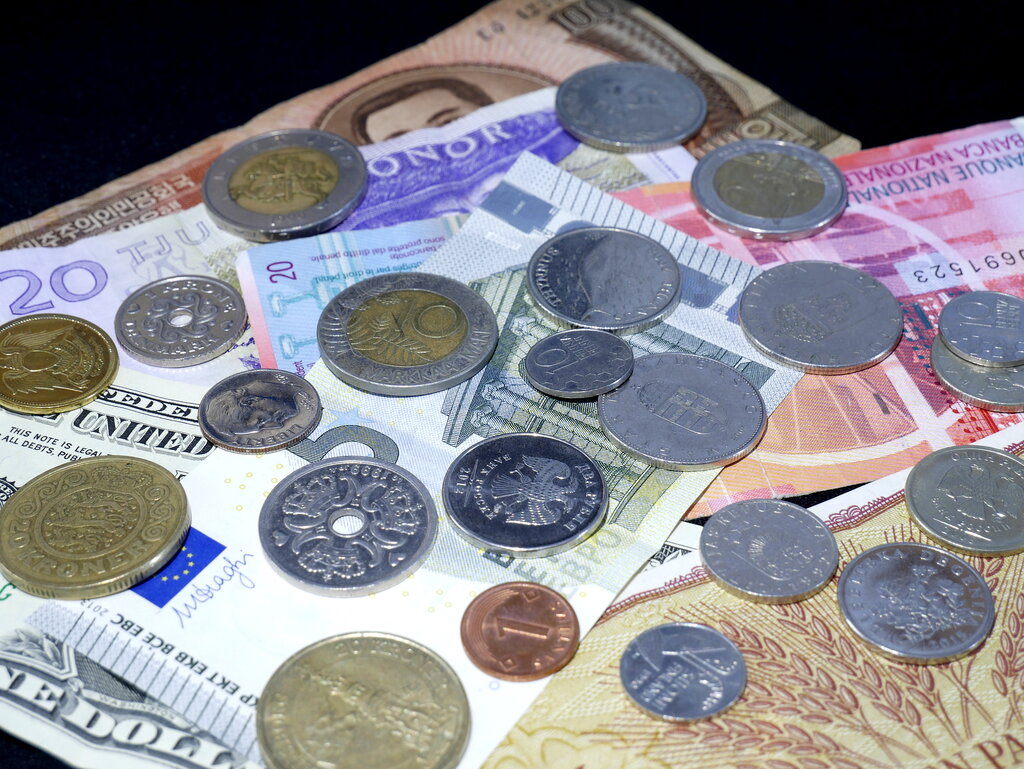
The primary function of the Forex market is to facilitate international trade and investment. A company in the United States wanting to buy goods from Japan needs to pay in Japanese yen. The Forex market makes that possible. It's the largest financial market in the world, with trillions of dollars traded daily, far exceeding the volume of stock markets.
The Forex market is a decentralized, global network for currency trading that enables everything from international tourism to multinational corporate finance.
The Language of Forex
In the Forex market, currencies are always traded in pairs. You don't just buy U.S. dollars; you buy U.S. dollars with another currency, like the euro or the Japanese yen. This means every trade involves simultaneously buying one currency and selling another.
Currency pairs are the essential building blocks of forex trading.
A currency pair is quoted as a ratio. For example, if the EUR/USD pair is priced at 1.08, it means one euro (€1) is worth $1.08.
The first currency in the pair (EUR) is the base currency. It's the one you are buying or selling. The second currency (USD) is the quote currency. Its value indicates how much of the quote currency is needed to buy one unit of the base currency.
Currency pairs are categorized based on their trading volume. Major pairs involve the U.S. dollar and are the most traded. Minor pairs (or cross-currency pairs) consist of two major currencies other than the USD. Exotic pairs match a major currency with one from a smaller or emerging economy.
| Pair | Currencies Involved | Nickname | Type |
|---|---|---|---|
| EUR/USD | Euro / U.S. Dollar | Fiber | Major |
| USD/JPY | U.S. Dollar / Japanese Yen | Gopher | Major |
| GBP/USD | British Pound / U.S. Dollar | Cable | Major |
| AUD/USD | Australian Dollar / U.S. Dollar | Aussie | Major |
| EUR/GBP | Euro / British Pound | Chunnel | Minor |
| USD/TRY | U.S. Dollar / Turkish Lira | (none) | Exotic |
Who's in the Market?
The Forex market is a diverse ecosystem with participants of all sizes, each with different goals. They range from massive institutions that trade billions to individuals trading smaller amounts from home.
Central Banks: These are national banks, like the U.S. Federal Reserve or the European Central Bank. They participate in the Forex market to manage their country's currency reserves, control the money supply, and influence interest rates. Their actions can have a massive impact on currency values.
Commercial and Investment Banks: These are the heavyweights of the Forex market. They trade huge volumes on behalf of their clients (like multinational corporations) and also for their own accounts (speculative trading). The largest banks collectively determine the exchange rates that the rest of the market follows.
Corporations: Multinational corporations trade currencies as part of their business operations. An American company selling products in Europe will earn euros, which it must eventually convert back to U.S. dollars. They use the Forex market to hedge against the risk of unfavorable currency fluctuations.
Individual Traders: Often called retail traders, this group includes individuals who trade currencies for speculative reasons, hoping to profit from changes in exchange rates. Thanks to online brokers, this segment of the market has grown significantly, making it accessible to almost anyone.
What is the primary characteristic of the Forex market's structure?
In the currency pair AUD/JPY, the AUD is referred to as the...
That covers the essential structure of the Forex market. Understanding these core components provides the foundation for exploring how and why currencies move.