Forex Trading Fundamentals
Introduction to Forex
The World's Biggest Market
The foreign exchange market, or Forex (FX), is where currencies are bought and sold. Think of it as a massive, decentralized marketplace that connects buyers and sellers from all over the globe. It isn’t located in a single building; instead, it's a vast electronic network of banks, corporations, and individuals.
Its primary purpose is to make international trade and investment possible. If a company in the United States wants to buy goods from Japan, it needs to convert its U.S. dollars into Japanese yen. The Forex market is where that happens. Because of its global nature, it's the largest financial market in the world, with trillions of dollars traded every single day. It operates 24 hours a day, five and a half days a week, following the sun from financial centers in Sydney to Tokyo, London, and New York.
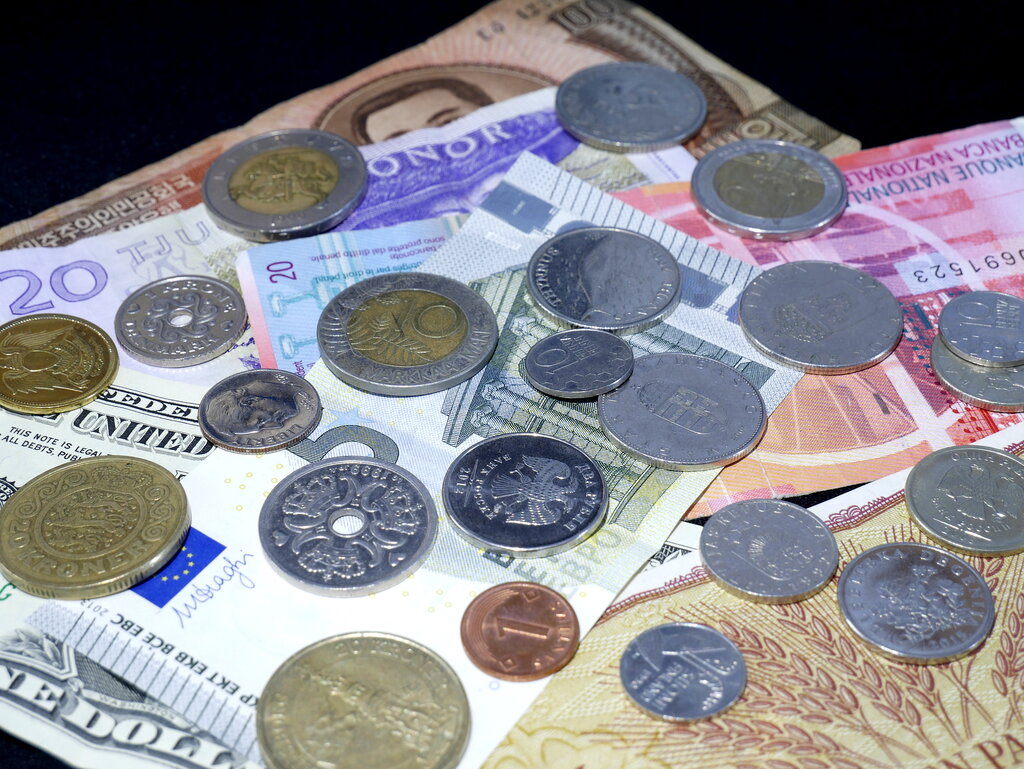
Trading in Pairs
In the Forex market, you never just buy or sell a currency in isolation. Currencies are always traded in pairs. When you trade a currency pair, you are simultaneously buying one currency and selling another.
Each pair has a base currency (the first one listed) and a quote currency (the second one). For example, in the pair EUR/USD, the Euro (EUR) is the base currency and the U.S. dollar (USD) is the quote currency. The price of the pair tells you how many units of the quote currency are needed to buy one unit of the base currency. If EUR/USD is trading at 1.08, it means you need $1.08 to buy €1.
When you buy a currency pair, you're buying the base currency and selling the quote currency. When you sell, you're doing the opposite.
Currency pairs are generally grouped into three categories:
| Category | Description | Examples |
|---|---|---|
| Majors | The most traded pairs, all involving the U.S. dollar. They are highly liquid. | EUR/USD, USD/JPY, GBP/USD, USD/CHF |
| Minors | Pairs that don't include the U.S. dollar but feature other major currencies. | EUR/GBP, EUR/JPY, GBP/JPY, AUD/CAD |
| Exotics | Pairs consisting of one major currency and one from a smaller or emerging economy. | USD/MXN, EUR/TRY, JPY/NOK, GBP/ZAR |
Reading the Numbers
When you look at a currency quote, you'll see two prices: a bid price and an ask price. The bid is the price at which the market is willing to buy the base currency from you. The ask is the price at which the market will sell the base currency to you. The ask price is always slightly higher than the bid price.
The small difference between these two prices is called the spread. This is how brokers make their money. For you as a trader, the spread is a cost of trading.
Price movements are measured in tiny units called pips.
pip
noun
Short for "percentage in point" or "price interest point," a pip is the smallest price move that a given exchange rate can make. For most currency pairs, a pip is one ten-thousandth of a unit, or the fourth decimal place (0.0001).
Let's look at how this appears in a quote. If you see a price for GBP/USD quoted as 1.2567, the '7' represents the pips.
For pairs involving the Japanese yen, like USD/JPY, a pip is the second decimal place (0.01) instead of the fourth.
The Market Movers
The Forex market is a diverse ecosystem with many different types of participants, each with their own reasons for trading. They can be broadly categorized based on their size and influence.
At the very top is the interbank market, made up of the world's largest banks. They trade currencies directly with each other and handle enormous volumes, which creates the liquidity for the rest of the market.
Central banks and governments are also major players. Central banks, like the U.S. Federal Reserve or the European Central Bank, manage their country's currency, money supply, and interest rates. They may intervene in the Forex market to influence their currency's value for economic stability.
Next are institutional investors and large corporations. This includes hedge funds, pension funds, and multinational companies. They trade for two main reasons: to speculate on future currency movements or to hedge. A company might hedge to protect itself from losses if the currency value changes while conducting international business.
Finally, there are retail traders—individuals who trade their own money, usually through a Forex broker. While the retail segment is growing rapidly, it still represents a small fraction of the total market volume.
What is the primary purpose of the foreign exchange (Forex) market?
If the GBP/USD currency pair is priced at 1.27, what does this number represent?
These core concepts provide the foundation for understanding how the global currency market works. Everything from international commerce to your vacation spending money is connected to this dynamic system.