Forex Trading Fundamentals
Introduction to Forex
What is the Forex Market?
The foreign exchange market, or Forex (FX), is a global marketplace for exchanging national currencies. It's where you might go to swap dollars for euros before a trip to Paris, or where a multinational company converts its revenue from one currency to another.
Unlike a stock market, there's no central location for Forex trading. Instead, it's a decentralized network of banks, corporations, and individuals. This market underpins international trade and investment by enabling currency conversion. With trillions of dollars traded daily, it is the largest and most liquid financial market in the world.
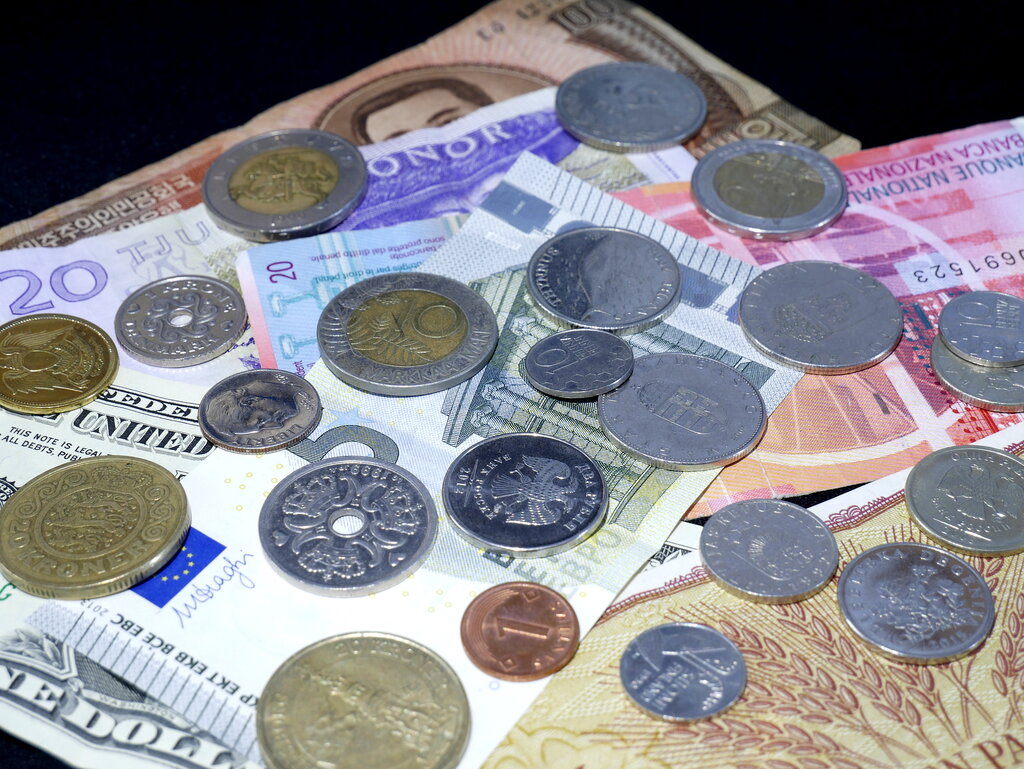
The core concept of Forex trading is simple: you're always trading one currency's value against another. This means currencies are always quoted and traded in pairs.
Trading in Pairs
When you see a Forex quote, it will always show two currencies, like EUR/USD. This is a currency pair. The first currency listed is the base currency, and the second is the quote currency (or counter currency).
The exchange rate tells you how much of the quote currency is needed to buy one unit of the base currency. For example, if the EUR/USD exchange rate is 1.08, it means you need $1.08 to buy €1.
Base Currency / Quote Currency = Exchange Rate
While countless currency pairs exist, most trading focuses on a handful of "majors." These pairs involve the U.S. dollar and another major world currency. They are the most traded pairs, meaning they have the most liquidity.
| Pair | Currencies | Nickname |
|---|---|---|
| EUR/USD | Euro / U.S. Dollar | Fiber |
| USD/JPY | U.S. Dollar / Japanese Yen | Gopher |
| GBP/USD | British Pound / U.S. Dollar | Cable |
| USD/CHF | U.S. Dollar / Swiss Franc | Swissy |
| AUD/USD | Australian Dollar / U.S. Dollar | Aussie |
| USD/CAD | U.S. Dollar / Canadian Dollar | Loonie |
The exchange rates for these pairs are constantly fluctuating. This movement is driven by a combination of factors, including a country's economic health (like inflation and employment data), interest rate decisions by its central bank, and political stability. When traders believe a country's economy is strong, they buy its currency, pushing its value up relative to others.
A 24-Hour Market
The Forex market operates around the clock, five days a week. This is possible because trading follows the sun around the globe, moving from one major financial center to the next. The main trading sessions are Sydney, Tokyo, London, and New York.
Key participants include large commercial banks that trade on behalf of their clients, central banks that manage their country's currency reserves, multinational corporations that need to convert currencies for business operations, and retail traders who speculate on currency movements.
The market is most active when multiple sessions overlap. The most significant overlap occurs when both the London and New York markets are open. A large portion of all Forex transactions happen during this window, leading to higher liquidity and bigger price movements.
Ready to check what you've learned? Give these questions a try.
What is the primary characteristic of the Forex market's structure?
In the currency pair EUR/USD, which is the 'base currency'?
Understanding these fundamentals—what Forex is, how currency pairs work, and when the market operates—is the first step into the world of foreign exchange.