Forex Trading Fundamentals
Introduction to Forex
The World's Biggest Market
The foreign exchange market, or Forex (FX), is where currencies are bought and sold. Think of it as a massive, global marketplace that never sleeps. When a German company buys parts from Japan, they need to exchange euros for yen. When you travel from the United States to Mexico, you swap dollars for pesos. These transactions are all part of the Forex market.
Unlike the stock market, Forex isn't centered in one physical location. It's a decentralized network of banks, brokers, and traders connected electronically. This global nature means it operates 24 hours a day, five days a week, following the sun from financial centers in Tokyo to London to New York.
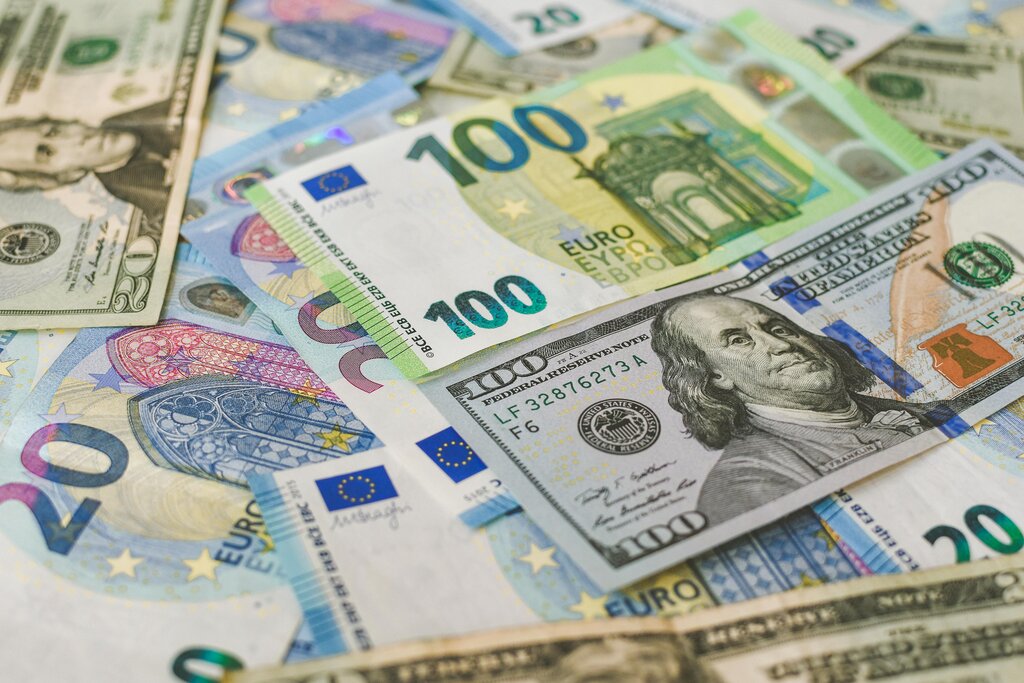
The sheer volume of trading is staggering, with trillions of dollars exchanged daily. This makes it the largest financial market in the world, dwarfing all stock markets combined. Its primary purpose is to facilitate international trade and investment by allowing businesses to convert one currency into another.
Who's in the Game?
The Forex market isn't just for globetrotters. It has several key players, each with different motivations.
Central Banks: These are the government banks, like the U.S. Federal Reserve or the European Central Bank. They trade currencies to manage their country's money supply, control inflation, and stabilize their own currency's value.
Financial Institutions: Major commercial banks are the backbone of the market. They trade huge volumes for their clients—corporations, other financial firms, and wealthy individuals—and also for their own accounts.
Corporations: Businesses that operate internationally need Forex to do business. An American company selling software in the UK will be paid in British pounds. They need to convert those pounds back into U.S. dollars to pay their employees and report profits.
Individual Traders: Also known as retail traders, these are individuals who speculate on the movements of currency prices to try and make a profit. Thanks to online brokerage platforms, this part of the market has grown significantly.
From central banks managing national economies to individuals trading from their laptops, the Forex market includes a diverse range of participants.
The Language of Forex
In Forex, currencies are always quoted in pairs. You don't just buy "euros"; you buy euros by selling another currency, like U.S. dollars. This relationship creates a currency pair, such as EUR/USD.
The first currency in the pair (EUR) is the base currency. The second (USD) is the quote currency. The price of the pair tells you how many units of the quote currency it takes to buy one unit of the base currency.
So, if the EUR/USD exchange rate is 1.07, it means one euro costs $1.07.
Currency pairs are generally sorted into three main categories based on how frequently they are traded.
| Category | Description | Examples |
|---|---|---|
| Majors | The most traded pairs, all involving the US dollar (USD). They have high liquidity. | EUR/USD, USD/JPY, GBP/USD, USD/CHF |
| Minors | Pairs of major currencies that do not include the US dollar. Also called cross-currency pairs. | EUR/GBP, EUR/JPY, AUD/CAD |
| Exotics | A major currency paired with the currency of an emerging economy. They are less liquid. | USD/MXN, EUR/TRY, JPY/SGD |
What Moves the Market
Currency values are constantly shifting. Several key forces are behind these changes.
Economic data is a huge driver. Reports on a country's employment rate, inflation (the rate at which prices rise), or economic growth (GDP) can make its currency stronger or weaker. A strong economy typically leads to a strong currency.
Interest rates set by central banks are also critical. Higher interest rates tend to attract foreign investment, as investors can earn a better return. This increased demand for the currency can drive its value up.
Finally, political stability and geopolitical events matter. Elections, major policy changes, or international conflicts can create uncertainty, often causing investors to sell a country's currency in favor of one from a more stable region. All these factors combine to create the dynamic, constantly moving world of the Forex market.
Now, let's test your understanding of these foundational concepts.
What is the primary characteristic of the Forex market's structure?
A country's central bank announces a significant increase in its interest rates. What is the most likely immediate effect on its currency's value?
Understanding these basics is the first step into the world of foreign exchange. It's a market driven by global economics, policy, and the simple act of converting one currency to another.