Forex Trading Essentials
Introduction to Forex
What is Forex?
The foreign exchange market, or forex, is the world's largest financial market. Think of it as a massive, decentralized hub where global currencies are traded. Unlike a stock market with a central location, forex trading happens electronically all over the world. It’s a 24-hour market, opening on Monday morning in Sydney and closing on Friday afternoon in New York.
At its core, forex is about converting one currency into another. This is something you've likely done if you've ever traveled abroad. When you exchange your dollars for euros, you're participating in the forex market. The key players aren't just tourists, though. Major participants include large international banks, global corporations, governments, and individual traders.
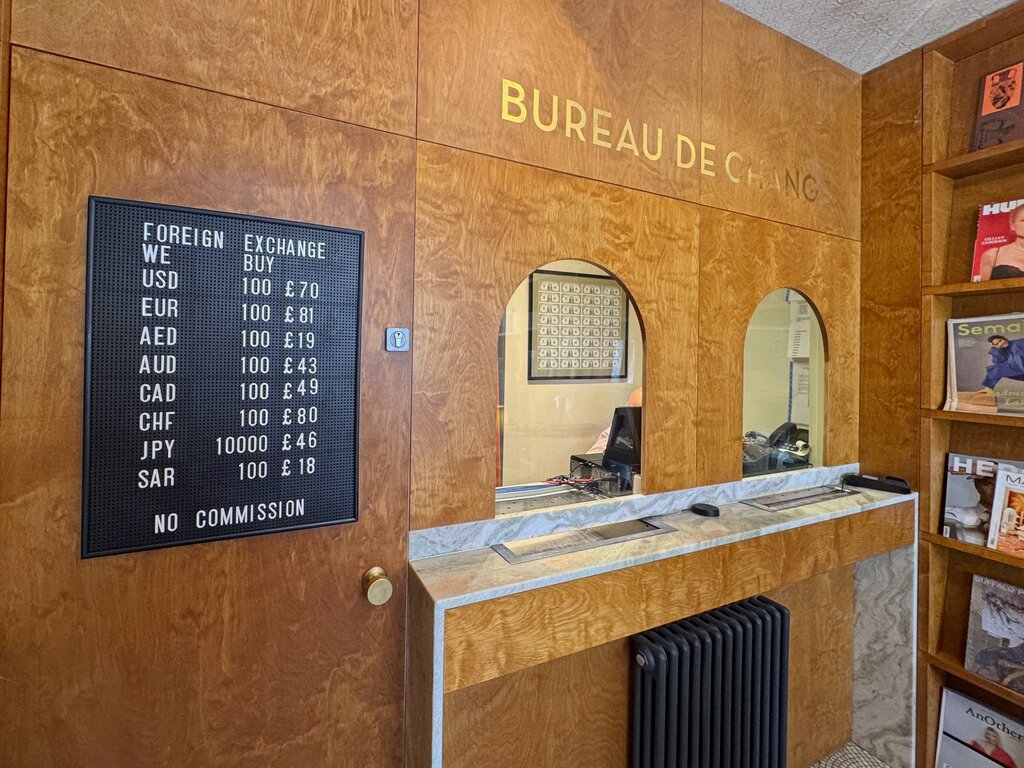
Trading in Pairs
In forex, you don't just buy a currency; you trade one currency for another. This is why currencies are always quoted in pairs.
Each currency pair has a base currency and a quote currency. The base currency is the first one listed, and the quote currency is the second. For example, in the pair EUR/USD, the euro is the base currency, and the U.S. dollar is the quote currency.
The price of a currency pair tells you how much of the quote currency you need to buy one unit of the base currency. If EUR/USD is trading at 1.08, it means you need 💲1.08 to buy €1.
Currency pairs are generally split into two main categories: majors and minors.
Major pairs involve the U.S. dollar and another major currency, like the euro (EUR), Japanese yen (JPY), British pound (GBP), or Swiss franc (CHF). These pairs are the most traded in the world, which means they have high liquidity and typically lower transaction costs.
Minor pairs, also known as cross-currency pairs, do not include the U.S. dollar. Examples include EUR/GBP or AUD/JPY. There are also exotic pairs, which pair a major currency with one from a smaller or emerging economy, like USD/ZAR (U.S. dollar vs. South African rand).
| Pair | Currencies | Nickname |
|---|---|---|
| EUR/USD | Euro / U.S. Dollar | Fiber |
| USD/JPY | U.S. Dollar / Japanese Yen | Gopher |
| GBP/USD | British Pound / U.S. Dollar | Cable |
| USD/CHF | U.S. Dollar / Swiss Franc | Swissy |
| AUD/USD | Australian Dollar / U.S. Dollar | Aussie |
| USD/CAD | U.S. Dollar / Canadian Dollar | Loonie |
Understanding Exchange Rates
The exchange rate is simply the price of one currency in terms of another. These rates are in constant flux, influenced by a wide range of economic, political, and even social factors. Supply and demand are the ultimate drivers. If demand for the euro is high, its value will rise against other currencies.
An exchange rate quote always includes two prices: the bid and the ask.
- Bid: The price at which a broker will buy the base currency from you in exchange for the quote currency.
- Ask: The price at which a broker will sell the base currency to you in exchange for the quote currency.
The difference between these two prices is called the spread. This is how brokers make their money.
Think of it this way: The ask price is what you pay to buy, and the bid price is what you get when you sell. The ask price is always slightly higher than the bid price.
Let's say the quote for GBP/USD is 1.2500 / 1.2502. This means:
- The bid price is 1.2500. You can sell £1 for $1.2500.
- The ask price is 1.2502. You must pay $1.2502 to buy £1.
The spread here is 0.0002, or 2 pips. A pip is the smallest price move that a given exchange rate can make.
The Power of Leverage
Currency exchange rates often move in very small increments. To make meaningful profits from these tiny movements, traders often use leverage.
Leverage allows you to control a large position with a small amount of capital. It's essentially a loan provided by your broker. It's expressed as a ratio, like 50:1 or 100:1. A 100:1 leverage ratio means that for every $1 in your account, you can control a position worth $100.
leverage
noun
The use of borrowed capital to increase the potential return of an investment. In forex, it allows traders to control a large currency position with a small deposit.
While leverage can dramatically amplify your profits, it's a double-edged sword. It can also amplify your losses just as quickly. If a trade moves against you, you could lose your entire initial deposit and even owe more. Managing risk is critical when trading with leverage.
Now that you understand the basics of what forex is, how currencies are traded, and the role of leverage, it's time to test your knowledge.
Which statement best describes the structure of the foreign exchange (forex) market?
In the currency pair AUD/CHF, the Australian Dollar (AUD) is the __________.
These core concepts are the foundation for understanding how the foreign exchange market operates.