Forex Trading Essentials
Introduction to Forex Trading
The World's Biggest Marketplace
The foreign exchange market, or Forex (FX), is where currencies are traded. It’s not a physical marketplace like a stock exchange. Instead, it’s a global, decentralized network of banks, brokers, institutions, and individual traders. Think of it as the world’s financial hub, operating 24 hours a day, five days a week.
Its primary purpose is to facilitate international trade and investment. If a German company wants to buy parts from Japan, it needs to convert its euros into Japanese yen. This exchange happens on the Forex market. On a smaller scale, if you've ever traveled abroad and exchanged your home currency for the local one, you've participated in Forex. Beyond trade, much of the market’s activity comes from speculation—traders buying and selling currencies in hopes of profiting from changes in their value.
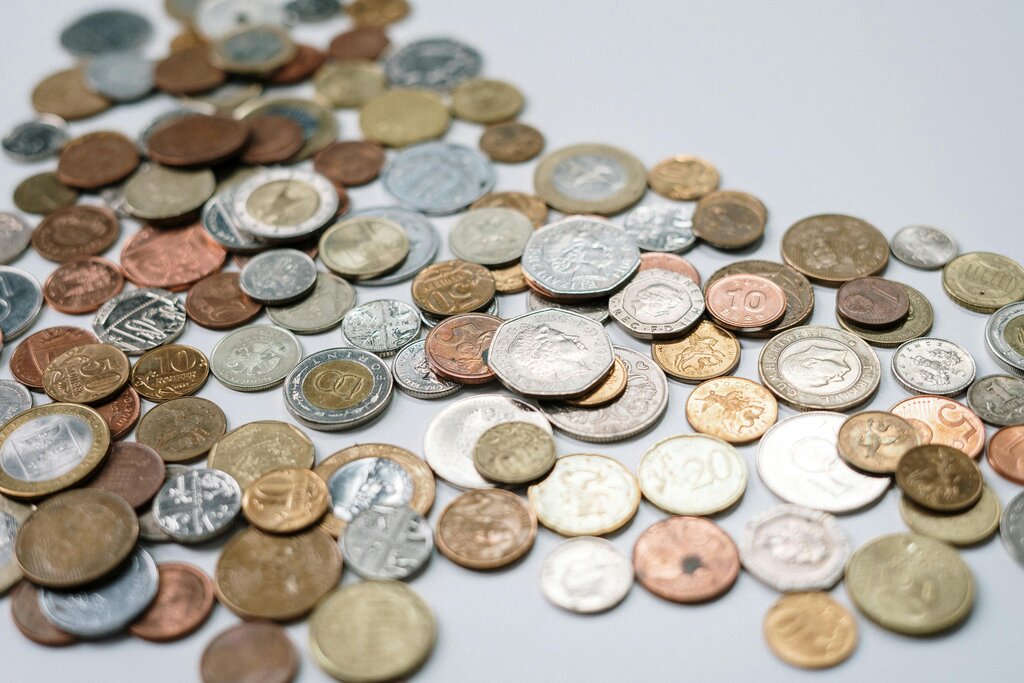
The scale is immense. Trillions of dollars are exchanged every single day, making Forex the largest and most liquid financial market in the world. This high liquidity means that under normal conditions, you can almost always find a buyer or seller for major currencies.
The Players in the Market
The Forex market isn't just one big pool of traders. It has a clear hierarchy, with different participants having different levels of influence and access to pricing.
At the very top is the interbank market. This is a global network where major banks trade directly with each other. This is where the best prices are found. Central banks, like the U.S. Federal Reserve, also operate here to manage their country's currency reserves and influence monetary policy.
Below them are other large financial institutions, hedge funds, and multinational corporations. They trade through the big banks but don't have access to the absolute best prices. Finally, at the bottom, are the retail traders—individuals who speculate on currency movements. They access the market through brokers who, in turn, get their pricing from the larger banks.
Trading in Pairs
In Forex, you're never just buying or selling a single currency. You're always exchanging one currency for another. This is why they are quoted in pairs.
The first currency in a pair is the base currency, and the second is the quote currency. For example, in the pair EUR/USD, the euro (EUR) is the base, and the U.S. dollar (USD) is the quote.
A price quote like EUR/USD = 1.0850 means that one euro is worth 1.0850 U.S. dollars. If you believe the euro will strengthen against the dollar, you would buy the EUR/USD pair. If you think it will weaken, you would sell it.
When you buy a currency pair, you are buying the base currency and selling the quote currency. When you sell a pair, you do the opposite.
Currency pairs are grouped into three main categories:
| Category | Description | Examples |
|---|---|---|
| Major Pairs | The most traded pairs, all involving the U.S. dollar (USD). They have the highest liquidity. | EUR/USD, USD/JPY, GBP/USD, USD/CHF |
| Minor Pairs | Also known as cross-currency pairs. They feature major currencies traded against each other, without the USD. | EUR/GBP, EUR/JPY, GBP/JPY |
| Exotic Pairs | A major currency paired with the currency of an emerging economy. They are less liquid and more volatile. | USD/TRY (Turkish Lira), EUR/ZAR (South African Rand) |
The Language of Trading
To trade Forex, you need to understand a few key terms. These are the building blocks of every transaction.
Bid Price
noun
The price at which a broker is willing to buy the base currency from you. It's the price you see when you sell.
Ask Price
noun
The price at which a broker is willing to sell the base currency to you. It's the price you see when you buy. The ask price is always slightly higher than the bid price.
The difference between these two prices is the spread. This is the broker's commission for executing your trade. In our example above (1.0850 bid / 1.0852 ask), the spread is 2 pips.
Spread = Ask Price - Bid Price
Pip
noun
Short for 'Percentage in Point,' a pip is the smallest unit of price movement for a currency pair. For most pairs, it's the fourth decimal place (0.01).
Finally, trades are measured in standard amounts called lots. A standard lot is 100,000 units of the base currency. Most retail brokers also offer smaller sizes like mini lots (10,000 units) and micro lots (1,000 units) to allow traders to participate with smaller amounts of capital.
When to Trade
Because Forex is a global market, it operates around the clock during the workweek. It follows the sun around the world, opening in Sydney, then moving to Tokyo, London, and finally New York. This creates a 24-hour cycle.
| Session | Main Currencies Active |
|---|---|
| Sydney | AUD, NZD |
| Tokyo | JPY |
| London | EUR, GBP, CHF |
| New York | USD, CAD |
The most active trading times occur when two sessions overlap. The busiest period is the London/New York overlap, as traders from the two largest financial centers are active at the same time. This overlap usually leads to higher trading volume and bigger price movements, offering more opportunities.
What is the primary purpose of the foreign exchange (Forex) market?
In the Forex market's structure, which group has access to the best pricing?
This covers the essential concepts of the Forex market. Understanding these fundamentals is the first step before exploring how to analyze prices and manage trades.