Forex Trading Essentials
Introduction to Forex
The World's Marketplace for Money
The foreign exchange market, or Forex (FX), is where currencies are traded. It’s the largest financial market in the world, with trillions of dollars changing hands every day. Unlike a stock market, there's no central location. Instead, trading happens electronically over-the-counter (OTC) through a global network of banks, brokers, and other financial institutions.
Why does it exist? At its core, the Forex market facilitates international trade and investment. If a European company wants to buy goods from Japan, it needs to convert its euros into yen. If an American tourist wants to visit London, they need to exchange their dollars for British pounds. These transactions are the foundation of the Forex market.
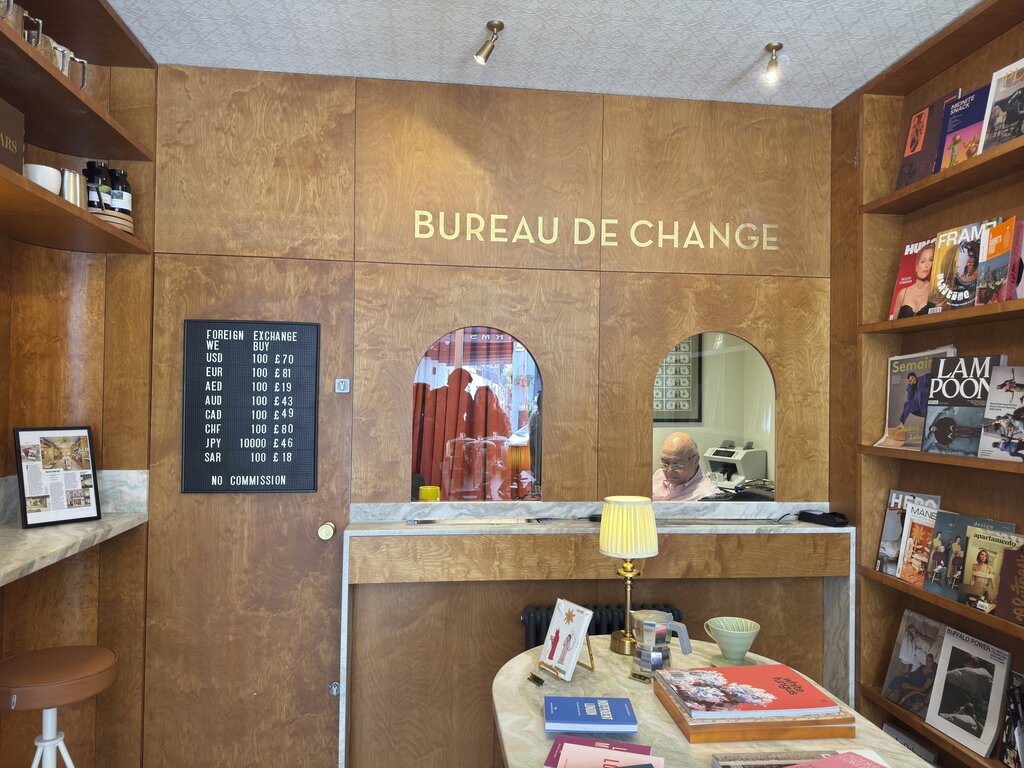
Beyond these practical needs, a huge portion of trading is done for speculative purposes. Traders aim to profit from the constant fluctuations in currency values, buying a currency they believe will strengthen and selling one they think will weaken.
Because it operates across global time zones, the Forex market is active 24 hours a day, five days a week.
Currency Pairs Explained
Currency pairs are the foundation of forex trading.
In Forex, you always trade one currency for another. This is why currencies are quoted in pairs, like EUR/USD or USD/JPY. A currency pair shows how much of the second currency it costs to buy one unit of the first.
Base Currency
noun
The first currency listed in a pair. It's the currency you are buying or selling. In EUR/USD, the base currency is the Euro.
Quote Currency
noun
The second currency listed in a pair. It's the currency used to price the base currency. In EUR/USD, the quote currency is the U.S. Dollar.
Let's look at an example. If the EUR/USD pair is quoted at 1.07, it means one Euro is worth $1.07. To buy €1, you would need to sell $1.07. If you believe the Euro will get stronger against the dollar, you would buy the EUR/USD pair. If you think it will weaken, you would sell it.
Measuring Price Moves
Currency values change in very small increments. To measure these tiny movements, traders use a unit called a 'pip'.
Pip
noun
Short for 'percentage in point', a pip is the smallest standard price move a currency can make. For most currency pairs, a pip is the fourth decimal place.
For pairs involving the Japanese yen (JPY), like USD/JPY, a pip is the second decimal place. A move from 157.50 to 157.51 is one pip.
To standardize trade sizes, Forex uses the concept of 'lots'. A standard lot represents 100,000 units of the base currency. Most retail brokers also offer smaller sizes.
- Standard Lot: 100,000 units
- Mini Lot: 10,000 units
- Micro Lot: 1,000 units
The lot size determines the value of each pip. For a standard lot of EUR/USD, a one-pip move is typically worth $10. For a mini lot, it's $1, and for a micro lot, it's $0.10.
Market Hours and Sessions
The Forex market is a global, 24-hour market that follows the sun around the world. It opens with the Sydney session, then moves to Tokyo, London, and finally New York, before starting all over again.
The busiest times in the market are when sessions overlap. The most significant overlap is between the London and New York sessions, from 13:00 to 17:00 UTC. During these hours, trading volume and liquidity are at their highest, which can lead to tighter spreads and more significant price movements.
Ready to check your understanding? Let's see what you've learned about the basics of the Forex market.
What is the primary characteristic of the Forex market's structure?
If the EUR/USD currency pair is quoted at 1.08, what does this signify?
You've now covered the essential building blocks of the Forex market. These concepts are the starting point for exploring how currency trading works.