Forex Trading Essentials
Introduction to Forex Trading
Welcome to the Currency Market
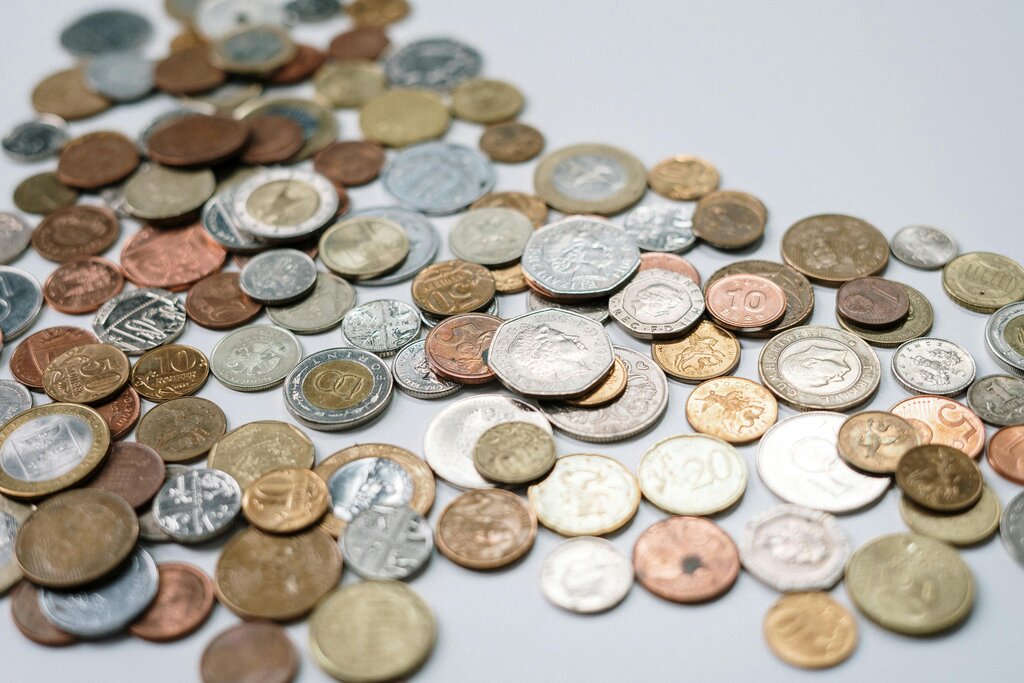
The foreign exchange market, or Forex (FX), is where the world's currencies are traded. It's not a single building or exchange, but a massive, decentralized network of banks, financial institutions, and individuals. Every time you travel abroad and exchange your money, you're participating in the Forex market. For traders, the goal is different: to profit from the changing values of these currencies.
Unlike the stock market, the Forex market operates 24 hours a day, five days a week. It opens with the trading day in Sydney, then moves to Tokyo, London, and finally New York, following the sun around the globe. This constant activity makes it the largest and most liquid financial market in the world, with trillions of dollars exchanged daily.
The Players in the Game
The Forex market isn't just for individual traders. Several key participants drive the flow of currencies.
- Central Banks: These government bodies (like the U.S. Federal Reserve or the European Central Bank) manage their country's currency, money supply, and interest rates. Their decisions can have a huge impact on currency values.
- Major Banks: The largest banks in the world make up the interbank market. They trade currencies with each other on behalf of themselves and their clients, accounting for the bulk of Forex trading volume.
- Multinational Corporations: Companies that operate in multiple countries need to exchange currencies to pay for goods, services, and employees in different parts of the world.
- Retail Traders: This includes individuals like you who speculate on currency movements, often through online brokers.
Decoding Currency Pairs
In Forex, you're never just buying or selling a single currency. You're always exchanging one for another. This is why currencies are quoted in pairs, like EUR/USD or USD/JPY.
The first currency in a pair is called the base currency, and the second is the quote currency. The price of the pair shows how much of the quote currency you need to buy one unit of the base currency.
For example, if the EUR/USD exchange rate is 1.08, it means that one euro is worth 1.08 U.S. dollars. If you think the euro will strengthen against the dollar, you would buy the EUR/USD pair. If you think it will weaken, you would sell it. Currency pairs are generally grouped into three categories.
| Category | Description | Examples |
|---|---|---|
| Major Pairs | The most traded pairs, all involving the U.S. dollar (USD). They have the highest liquidity. | EUR/USD, USD/JPY, GBP/USD |
| Minor Pairs | Pairs that don't include the USD but feature other major currencies. Also known as cross-currency pairs. | EUR/GBP, GBP/JPY, AUD/CAD |
| Exotic Pairs | A major currency paired with the currency of an emerging or smaller economy. They are less liquid and more volatile. | USD/TRY, EUR/PLN, GBP/MXN |
What Moves the Market?
Currency values are in constant flux, driven by the forces of supply and demand. Several factors can influence a currency's value:
- Interest Rates: Central bank decisions on interest rates are a major driver. Higher rates often attract foreign investment, increasing demand for the currency.
- Economic Data: Reports on inflation, employment numbers, and economic growth (GDP) provide a snapshot of a country's economic health, affecting its currency's strength.
- Political Stability: A stable political environment is usually seen as favorable for a country's currency. Elections, conflicts, and policy changes can create volatility.
- Market Sentiment: Sometimes, the market moves based on expectations or speculation about future events rather than current data.
A Word on Leverage
One of the unique features of Forex trading is the availability of leverage. Leverage allows you to control a large position in the market with a relatively small amount of your own money, known as margin. Brokers offer this as a way for traders to potentially make significant profits from small price movements.
Leverage
noun
The use of borrowed capital to increase the potential return of an investment. In Forex, it's typically expressed as a ratio, like 50:1 or 100:1.
While leverage can amplify your profits, it's a double-edged sword. It can also magnify your losses just as quickly. If a trade moves against you, you can lose your initial investment rapidly. Understanding and respecting the risks associated with leverage is a critical first step for any new trader.
For example, with 100:1 leverage, a 1% move against your position could wipe out 100% of your trading capital for that trade. Always use leverage cautiously.
Now that you understand the basic mechanics, you have a foundation for exploring the world of Forex trading.
Time to test your knowledge on these foundational concepts.
What is a primary characteristic of the Forex (FX) market?
If a trader believes the US Dollar (USD) will weaken against the Japanese Yen (JPY), what action should they take with the USD/JPY currency pair?
Understanding these core ideas is the first step. Next, we'll look at how to actually place a trade and read a Forex chart.