Forex Day Trading Mastery
Forex Market Basics
The Global Currency Marketplace
The foreign exchange market, or forex, is where currencies are traded. It’s the largest financial market in the world, with trillions of dollars changing hands every day. Unlike the stock market, forex doesn't have a central location or exchange. Instead, it's an over-the-counter (OTC) market, where trading happens 24 hours a day, five days a week, across a global network of banks, corporations, and individuals.
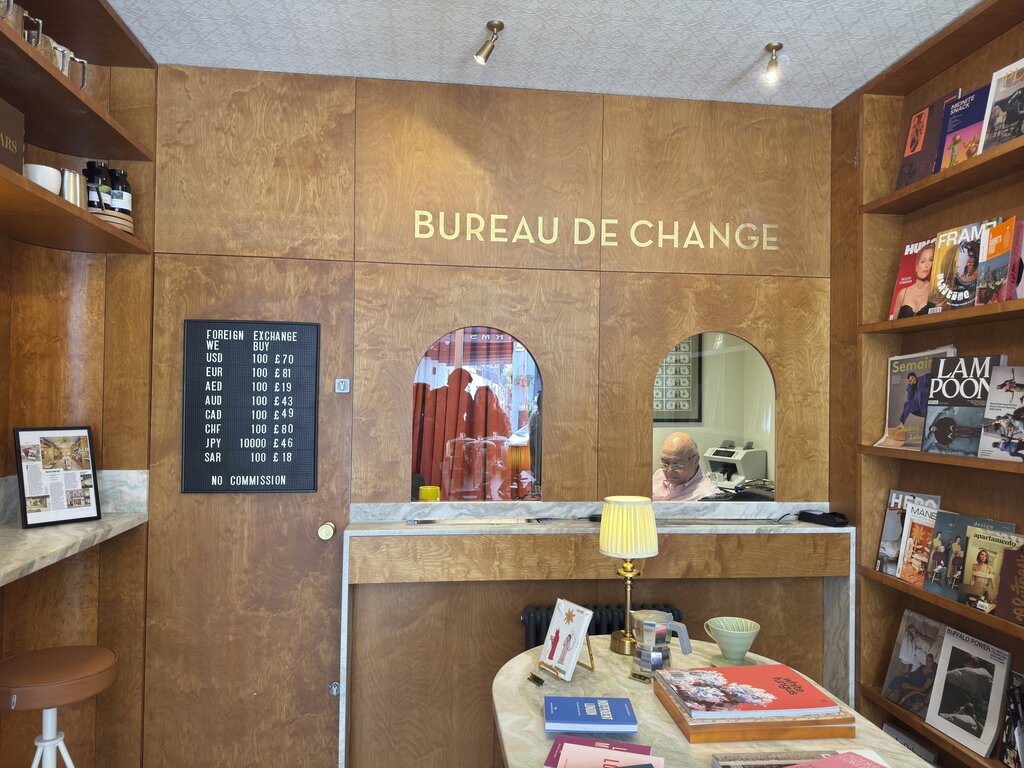
This decentralized structure means you can trade forex almost anytime, from the market opening in Sydney on Monday morning to its close in New York on Friday afternoon. This constant activity is driven by a wide range of participants, each with different goals.
Who Trades Forex?
The forex market is a diverse ecosystem. While small individual traders participate, the vast majority of trading volume comes from large institutions. These are the main players:
| Participant | Primary Role in the Market |
|---|---|
| Central Banks | Manage their country's currency, money supply, and interest rates. |
| Commercial & Investment Banks | Facilitate most trades, acting on behalf of clients or for their own accounts. |
| Multinational Corporations | Exchange currencies to conduct business, like paying for foreign goods. |
| Hedge Funds & Investment Managers | Speculate on currency movements for profit. |
| Retail Traders | Individuals who trade on their own behalf, often through a broker. |
The giant commercial and investment banks form what's known as the interbank market. They trade currencies directly with each other and set the exchange rates that trickle down to the rest of the market. Retail traders are a small but growing part of this world, accessing the market through specialized forex brokers.
Understanding Currency Pairs
A fundamental concept of the Forex fundamentals is the idea of currency pairs.
In forex, you never just buy or sell a single currency. You are always exchanging one currency for another. This is why currencies are quoted in pairs. The first currency listed is the base currency, and the second is the quote currency.
The exchange rate tells you how much of the quote currency you need to buy one unit of the base currency.
Let's look at the most traded pair: EUR/USD. Here, the euro (EUR) is the base currency, and the US dollar (USD) is the quote currency. If the EUR/USD rate is 1.08, it means one euro costs 1.08 US dollars.
If you believe the euro will strengthen against the dollar, you would buy the EUR/USD pair. If you think it will weaken, you would sell it.
Majors, Minors, and Exotics
Currency pairs are generally split into three categories. The majors are the most liquid and widely traded pairs, and they all involve the US dollar. They account for the vast majority of forex trading.
| Pair | Nickname | Currencies Involved |
|---|---|---|
| EUR/USD | Fiber | Euro / US Dollar |
| USD/JPY | Gopher | US Dollar / Japanese Yen |
| GBP/USD | Cable | British Pound / US Dollar |
| USD/CHF | Swissy | US Dollar / Swiss Franc |
| AUD/USD | Aussie | Australian Dollar / US Dollar |
| USD/CAD | Loonie | US Dollar / Canadian Dollar |
| NZD/USD | Kiwi | New Zealand Dollar / US Dollar |
Minor pairs (or cross-currency pairs) do not include the US dollar but feature other major currencies, like EUR/GBP or AUD/JPY. Exotic pairs match a major currency with one from a smaller or emerging economy, such as USD/TRY (US dollar vs. Turkish Lira). These are traded less frequently and can be more volatile.
What Moves the Market?
Exchange rates are constantly shifting based on supply and demand. If demand for a currency is high, its value rises. If supply is high and demand is low, its value falls. Several key factors drive these shifts.
Interest Rate
noun
The rate at which a central bank lends money to commercial banks. It is one of the most significant drivers of currency value.
Other major influences include economic reports like inflation rates and GDP growth, political stability, and overall market sentiment. For example, positive economic news from a country can strengthen its currency, while political uncertainty can weaken it.
Forex vs. Stocks
While both involve trading, the forex and stock markets are very different beasts.
| Feature | Forex Market | Stock Market |
|---|---|---|
| What You Trade | Currency Pairs | Shares of a company |
| Market Size | Largest in the world (~$6.6 trillion/day) | Much smaller (~$200 billion/day) |
| Trading Hours | 24 hours, 5 days a week | Typically 8 hours, 5 days a week |
| Main Influences | Macroeconomic factors | Company performance, industry trends |
| Liquidity | Extremely high for major pairs | Varies greatly by stock |
In the stock market, you analyze individual companies. In forex, you analyze the economic health and outlook of entire countries. The sheer scale and continuous nature of the forex market create a unique environment with distinct opportunities and challenges.
Time to check your understanding of these core concepts.
What is a key characteristic of the foreign exchange (forex) market?
In the currency pair USD/JPY, the US dollar (USD) is referred to as the ________ currency.
You've now covered the foundational concepts of the forex market. You know its structure, who participates, and how currencies are traded in pairs. Next, we'll build on this knowledge to explore how trading actually works.