Forces and Free-Body Diagrams in Mechanics
Introduction to Forces
Pushes and Pulls
In physics, a force is simply a push or a pull. It's an interaction between two objects that has the potential to change an object's motion. When you kick a soccer ball, you apply a force that sends it flying. When you catch it, you apply another force to stop it. Forces are all around us, constantly starting, stopping, or changing the direction of things.
Even when an object isn't moving, forces are at play. A book resting on a table is being pulled down by gravity, while the table pushes up with an equal force, keeping it perfectly still.
Two Kinds of Forces
Forces can be sorted into two main categories based on how the objects interact: contact forces and non-contact forces.
Contact Force
noun
A force that acts on an object through direct physical contact.
Most of the forces we experience daily are contact forces. Think about pushing a shopping cart, the friction that keeps your feet from slipping, or the tension in a rope during a game of tug-of-war. Air resistance is another contact force, where air molecules physically collide with a moving object, like a cyclist or a falling leaf.
Non-Contact Force
noun
A force that acts on an object without coming into physical contact with it.
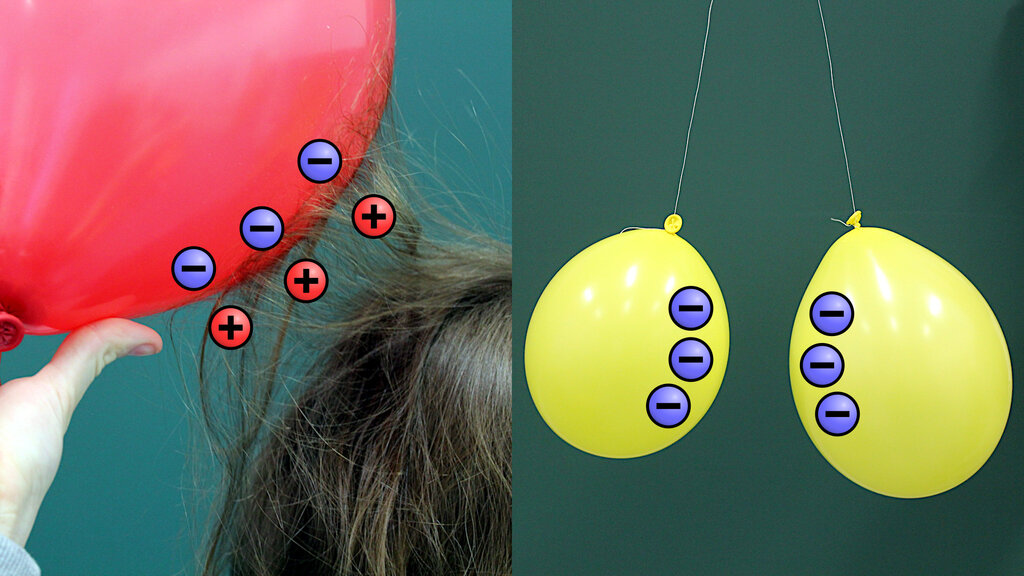
Non-contact forces, sometimes called "action-at-a-distance" forces, seem a bit more mysterious. They can push or pull on objects from afar. The most familiar example is gravity, the invisible force that pulls you toward the Earth. Magnetism is another, allowing a magnet to attract a paperclip without touching it. Static electricity, which makes a balloon stick to a wall after you rub it on your hair, is also a non-contact force.
Forces Have Direction
It's not enough to say you pushed a box with a certain amount of force. Which way did you push it? To the left? To the right? Upwards? The direction of a force is just as important as its strength, or magnitude. Because they have both magnitude and direction, forces are vector quantities.
When multiple forces act on an object, we need to consider both their magnitudes and their directions to figure out the overall effect. This combined effect is called the net force.
The net force is the vector sum of all the individual forces acting on an object. It's the one force that could replace all the others and produce the same change in motion.
Imagine two people pushing a heavy box. If they both push in the same direction, their forces add up, and the net force is strong. If they push in opposite directions with equal strength, their forces cancel each other out. The net force is zero, and the box won't move. If one person pushes harder than the other, the box will move in the direction of the stronger push. The net force is the difference between their forces, pointing in the direction of the winner.
Understanding net force is the first step toward predicting how an object's motion will change. It's the total push or pull that truly matters.
In physics, what is the most accurate definition of a force?
Which of the following is an example of a non-contact force?