Flutter App Development Fundamentals
Introduction to Flutter
What Is Flutter?
Flutter is a toolkit for building applications that can run on mobile, web, and desktop from a single set of code. Developed by Google, it's designed to make the development process faster and more efficient.
Flutter is Google's UI toolkit for building beautiful, natively compiled applications for mobile, web, and desktop from a single codebase.
The key phrase here is "single codebase." Traditionally, if you wanted to build an app for both iOS and Android, you'd have to build two separate apps. One would be written in a language like Swift for iOS, and the other in Kotlin or Java for Android. This means double the work, double the maintenance, and often, double the cost.
Flutter changes that. You write your app's code once using a language called Dart, and Flutter compiles it to run natively on different platforms. This saves a huge amount of time and effort, allowing developers to focus on creating great features instead of managing different versions of the same app.
Key Advantages
So why has Flutter become so popular? A few core features make it stand out.
First, it's fast. Not just in terms of app performance, but also in the development cycle itself. Flutter has a feature called "Hot Reload," which lets developers see the changes they make to the code reflected in the app almost instantly. This means no more waiting for the app to rebuild every time you move a button or change a color.
Imagine painting a picture and seeing every brushstroke appear immediately. That's what Hot Reload feels like for a developer.
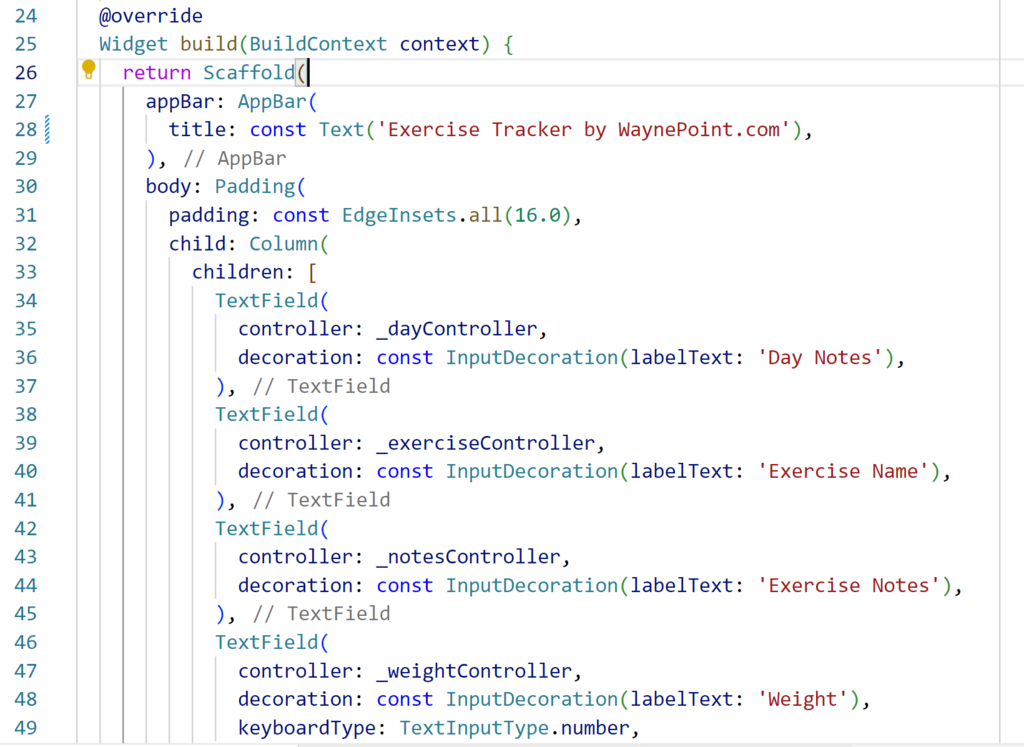
Second, Flutter gives developers complete control over the user interface (UI). In Flutter, everything is a "widget." A button is a widget, a line of text is a widget, and even the layout of the page is a widget. These are like building blocks that can be combined and customized to create beautiful, expressive interfaces that look and feel consistent across all platforms.
Widgets are the core building blocks of every Flutter app.
Finally, apps built with Flutter offer excellent performance. Because the code is compiled directly into native machine code (the language a device's processor understands), the apps are fast and responsive. Flutter doesn't rely on web technologies or bridges to communicate with the device's native features, which eliminates potential performance bottlenecks.
How It Compares
Flutter isn't the only tool for cross-platform development. Its main competitor is React Native, a framework created by Meta (formerly Facebook). While both aim to solve the same problem, they take different approaches.
| Feature | Flutter | React Native |
|---|---|---|
| Programming Language | Dart | JavaScript |
| UI Components | Renders its own widgets | Uses native OS components |
| Performance | Compiles to native code (generally faster) | Uses a "bridge" to communicate with native code |
| Backed By | Meta (Facebook) |
The biggest difference lies in how they handle the UI. React Native acts as a bridge, translating your JavaScript code into the native UI components of the device. This means a button in your app is the standard iOS or Android button.
Flutter, on the other hand, brings its own rendering engine (called Skia) to draw every pixel on the screen. It doesn't use the platform's native UI components. This gives developers more control and ensures the app looks exactly the same on every device, which is a major advantage for brand consistency.
What is the primary programming language used to develop applications with Flutter?
Which statement best describes Flutter's approach to building user interfaces?
This foundation gives you a sense of what Flutter is and why it's a powerful choice for modern app development.