Fluent English Conversation Responses
Understanding English Sounds
The Building Blocks of Sound
When we learn to speak English, we often start with the alphabet. But the 26 letters don't tell the whole story. English has around 44 distinct sounds, or phonemes, that combine to form every word we say. This is why spelling can be so confusing. The letter 'a' sounds different in "cat," "car," and "cake."
To master English pronunciation, we need to stop thinking about letters and start listening for sounds. These sounds fall into two main categories: vowels and consonants. Understanding how to produce each one is the first step toward clear and confident speech.
Exploring Vowel Sounds
Vowels are the open, flowing sounds that form the core of syllables. When you make a vowel sound, air moves from your lungs out of your mouth without being blocked by your tongue, teeth, or lips. The specific sound you create depends on two things: the shape of your mouth and where you position your tongue.
Think about the difference between the words "seat" and "sit." For "seat," your tongue is high and at the front of your mouth, and your lips are spread wide. For "sit," your tongue is slightly lower and more relaxed. Tiny changes in your mouth create entirely different sounds.
Practice this pair: "cheap" and "chip." Say them aloud and feel the subtle shift in your tongue's position. This awareness is key to improving your pronunciation.
Cracking Consonants
If vowels are the open flow of sound, consonants are the opposite. They're formed by partially or completely blocking the airflow with your tongue, teeth, or lips. For example, the /p/ sound in "pat" is made by closing your lips completely, building up air, and then releasing it in a puff.
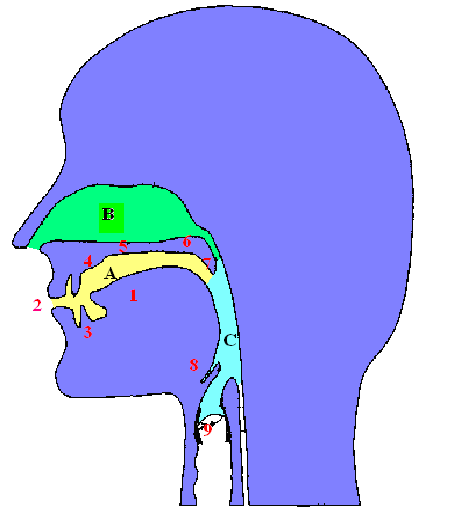
One of the most important distinctions for consonants is whether they are voiced or voiceless. A voiced consonant uses your vocal cords to create a vibration or buzzing sound. A voiceless consonant is made just with air.
You can feel the difference yourself. Place your fingers gently on your throat and say "zoo." You should feel a vibration from the 'z' sound. Now say "sue." The 's' sound has no vibration. It's just air hissing past your tongue and teeth. Many consonants come in these voiced/voiceless pairs.
| Voiceless Sound | Example | Voiced Sound | Example |
|---|---|---|---|
| /p/ | pat | /b/ | bat |
| /t/ | tin | /d/ | din |
| /k/ | cat | /g/ | gap |
| /f/ | fan | /v/ | van |
| /s/ | sip | /z/ | zip |
Practicing these pairs helps train your ear and your mouth to notice the subtle but critical difference that voicing makes.
Common Phonetic Patterns
Beyond single vowels and consonants, English letters often team up to create specific sounds. These combinations, known as digraphs, are consistent patterns you can learn to recognize.
For instance, 'sh' almost always makes the /ʃ/ sound you hear in "shoe" or "crash." Similarly, 'ch' creates the /tʃ/ sound in "chair" and "watch." Recognizing these patterns is like finding a shortcut through the maze of English spelling.
Common patterns to watch for include:
- sh as in share
- ch as in check
- th as in think (voiceless) or this (voiced)
- ph as in phone (makes an /f/ sound)
- ng as in sing
Another quirk of English is the silent letter. Sometimes, a letter is written but not pronounced. Think of the 'k' in "know," the 'b' in "doubt," or the 'w' in "write." There isn't always a perfect rule for these, so they often just need to be memorized as you encounter them. They are remnants of how the words were pronounced hundreds of years ago.
By practicing the precise mouth movements, tongue positions, and vocal cord vibrations associated with each phoneme, learners can develop the muscle memory necessary for more natural and fluent English speech.
Now, let's review some of the key concepts we've covered.
Ready to test your knowledge? This quiz will help you check your understanding of the basic building blocks of English sounds.
Approximately how many distinct sounds, or phonemes, are there in the English language?
What is the primary physical difference between producing a vowel sound and a consonant sound?
Learning to hear and produce these individual sounds is the bedrock of clear pronunciation. With practice, you'll build the muscle memory and auditory skills to speak English with greater accuracy and confidence.