Flexibility and Mobility Science
Muscle Anatomy
The Architecture of Muscle
Your muscles are intricate structures, organized much like a rope. A large rope is made of smaller ropes, which are in turn made of even smaller strands. Skeletal muscle follows a similar pattern.
The entire muscle is wrapped in a protective sheath. Inside, it's bundled into groups called fascicles. Each fascicle is a bundle of individual muscle cells, also known as muscle fibers. This layered structure provides both strength and organization.
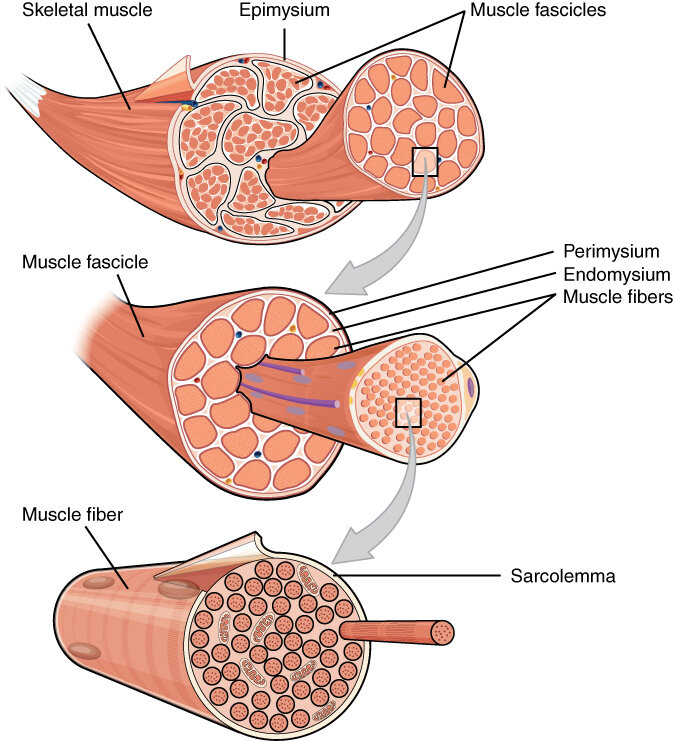
Drilling down even further, each muscle fiber contains thousands of smaller units called myofibrils. These are the engines of the muscle. Myofibrils are made of repeating segments called sarcomeres, which are the fundamental units of contraction.
Within each sarcomere are two key protein filaments: a thin one called actin and a thick one called myosin. The precise interaction between these two proteins is what makes your muscles move.
How Muscles Contract
When you decide to move, your brain sends a signal down a nerve to the target muscle. This signal triggers a chemical chain reaction that causes the myosin filaments to grab onto the actin filaments.
This process is explained by the sliding filament theory. Think of it like a team of rowers in a boat. The myosin filaments are the rowers, and the actin filaments are the water. The myosin heads (the oars) reach out, grab the actin (the water), and pull. This action slides the actin filaments closer together, shortening the sarcomere. When millions of sarcomeres shorten all at once, the entire muscle fiber contracts, generating force.
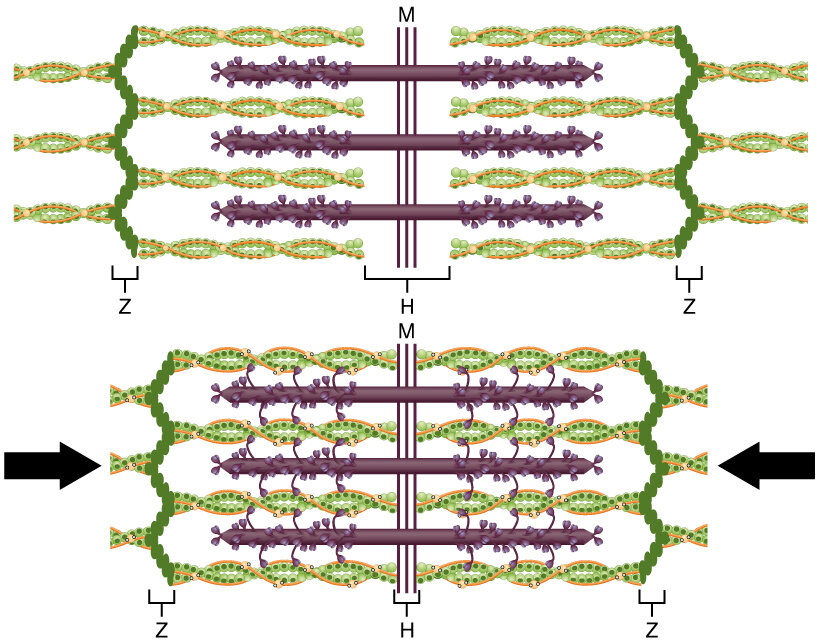
When the nerve signal stops, the process reverses. The myosin heads let go of the actin, the filaments slide back to their resting position, and the muscle relaxes. This entire cycle of grabbing, pulling, and releasing can happen many times per second.
The Supporting Cast
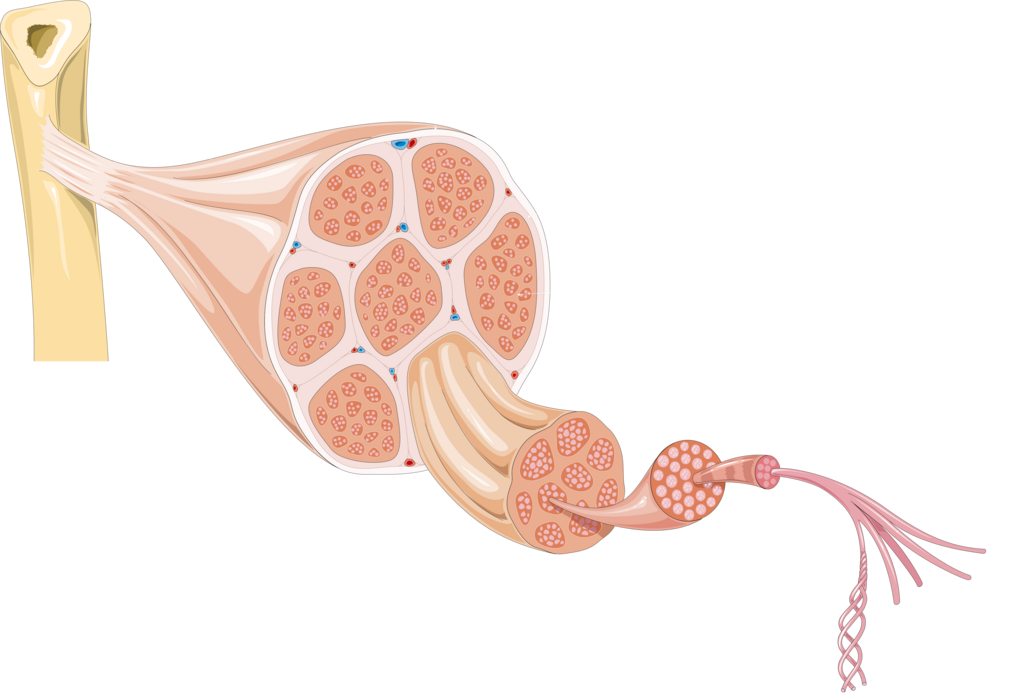
Muscles don't work in isolation. They are interwoven with a network of connective tissues that provide structure and transmit force. The sheaths that wrap the muscle, fascicles, and fibers are all made of this tissue. This web ensures that the force generated deep within the muscle fibers is efficiently transferred to move your bones.
Two of the most important types of connective tissue are tendons and ligaments. While often confused, they have very different jobs.
Tendon
noun
A tough, flexible band of fibrous connective tissue that connects muscle to bone.
Tendons are what allow the pull of your muscles to move your skeleton. They are incredibly strong and act like durable cables.
Ligament
noun
A short band of tough, flexible fibrous connective tissue that connects two bones or cartilages or holds together a joint.
Ligaments are like joint stabilizers, connecting bone to bone to prevent excessive movement and maintain skeletal structure.
Muscle Fiber Types
Not all muscle fibers are the same. They are generally categorized into two main types: slow-twitch (Type I) and fast-twitch (Type II). Most muscles contain a mix of both, but the ratio can vary depending on the muscle's function and a person's genetics and training.
Slow-twitch fibers are endurance specialists. They contract slowly but are very resistant to fatigue, making them ideal for activities like long-distance running or maintaining posture. Fast-twitch fibers are the sprinters. They contract quickly and powerfully but tire out fast, perfect for explosive movements like jumping or lifting heavy weights.
| Feature | Slow-Twitch (Type I) | Fast-Twitch (Type II) |
|---|---|---|
| Contraction Speed | Slow | Fast |
| Fatigue Resistance | High | Low |
| Primary Fuel | Fat (Aerobic) | Carbohydrates (Anaerobic) |
| Best For | Endurance activities | Sprints, powerlifting |
Understanding these different components gives you a clearer picture of how your body creates movement. Let's review some of the key concepts.
Ready to test your knowledge?
Which of the following correctly lists the structures of a muscle from the largest component to the smallest?
According to the sliding filament theory, what causes a sarcomere to shorten during muscle contraction?
From the smallest filaments to the largest muscle groups, this coordinated system of fibers and tissues is what allows for the incredible range of human movement.