Flavonoids and Polyphenols Cellular Health Impacts
Introduction to Flavonoids and Polyphenols
The World of Polyphenols
Plants are incredible chemists. To protect themselves from sun damage, pests, and other stressors, they produce a vast arsenal of chemical compounds. Among the most important are polyphenols, a large family of natural substances found in fruits, vegetables, tea, wine, and other plant-based foods.
What makes a compound a polyphenol? It comes down to its chemical structure. The name gives us a clue: "poly" means many, and "phenol" refers to a specific chemical building block. A phenol unit is a six-carbon ring (called a benzene ring) with a hydroxyl (-OH) group attached. Polyphenols are simply molecules that contain more than one of these phenol units.
There are over 8,000 known types of polyphenols. They are generally divided into a few main categories, including phenolic acids, stilbenes, lignans, and the largest group of all: flavonoids.
Focus on Flavonoids
Flavonoids are the most abundant and diverse group of polyphenols in our diet. They are responsible for the vibrant colors in many flowers, fruits, and vegetables. Think of the deep red of a cherry, the rich purple of a blueberry, or the bright yellow of a lemon peel—flavonoids are at work.
All flavonoids share a common chemical backbone: a 15-carbon skeleton. This structure consists of two benzene rings (labeled A and B) linked by a three-carbon chain that forms a central oxygen-containing ring (C). Small variations in this central ring and the groups attached to the outer rings create the different classes of flavonoids.
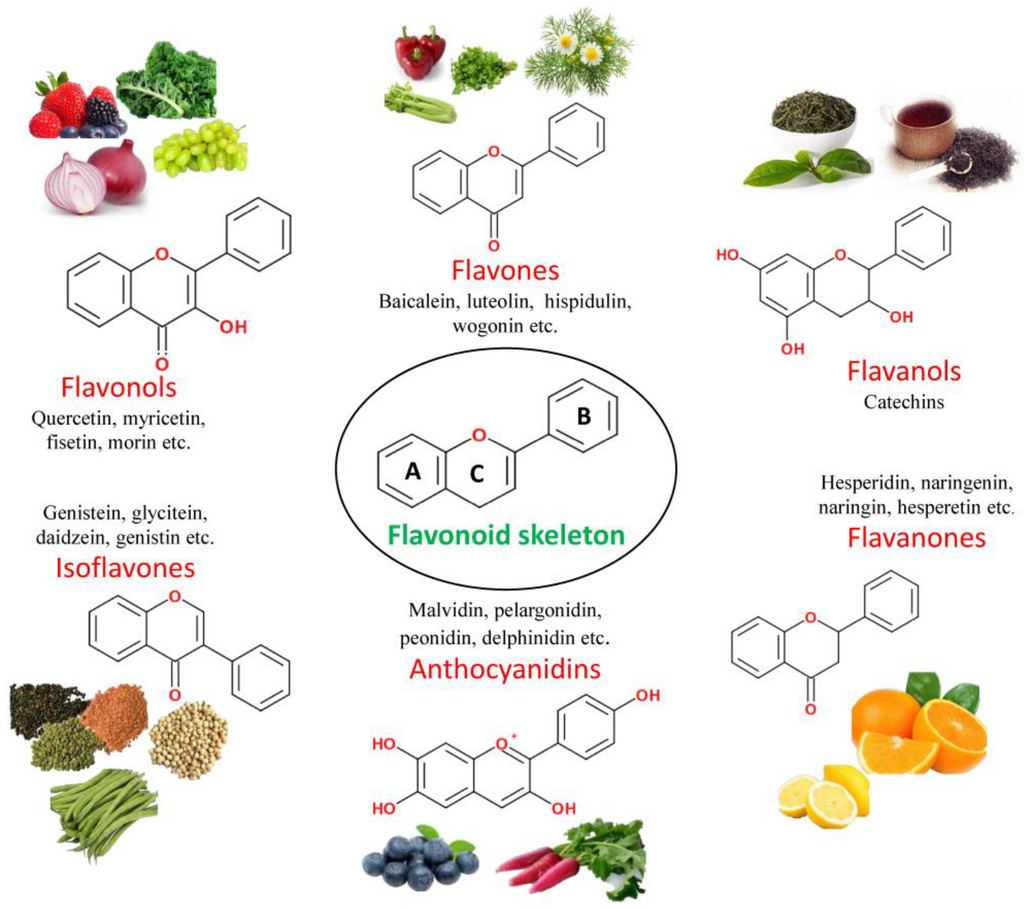
Scientists classify flavonoids into several subgroups based on these structural differences. Here are a few of the most common ones:
- Flavonols: This is a widespread group. Quercetin, found in onions, kale, and apples, is a well-known flavonol.
- Flavones: These are less common in fruits and vegetables than flavonols. Parsley and celery are good sources of the flavone apigenin.
- Isoflavones: These are structurally unique and are sometimes called phytoestrogens. They are found almost exclusively in soy and other legumes.
- Flavanols: Not to be confused with flavonols! This group includes catechins, which are abundant in green tea, cocoa, and grapes.
- Anthocyanidins: These are pigments that create the red, purple, and blue colors in berries, red cabbage, and red wine.
- Flavanones: These are responsible for the bitter taste in citrus peels. Naringenin in grapefruit is a primary example.
Where to Find Them
Polyphenols aren't distributed evenly across the plant kingdom. Different plants produce different types and amounts of these compounds. A balanced diet rich in a variety of plant-based foods is the best way to consume a wide range of polyphenols.
| Polyphenol Class | Subclass/Example | Common Dietary Sources |
|---|---|---|
| Flavonoids | Flavonols (Quercetin) | Onions, kale, apples, broccoli |
| Flavones (Apigenin) | Parsley, celery, chamomile tea | |
| Isoflavones (Genistein) | Soybeans (tofu, edamame), legumes | |
| Flavanols (Catechins) | Green tea, dark chocolate, grapes, apples | |
| Anthocyanidins | Berries, cherries, red grapes, eggplant | |
| Flavanones (Naringenin) | Citrus fruits (oranges, lemons, grapefruit) | |
| Phenolic Acids | Hydroxybenzoic acids | Berries, kiwis, whole grains |
| Hydroxycinnamic acids | Coffee, carrots, tomatoes, cinnamon | |
| Stilbenes | Resveratrol | Grapes (especially skins), red wine, peanuts |
This table gives a glimpse into the diversity of these compounds and their sources. Understanding this foundation is the first step toward exploring how they interact with our cells and influence our health.